Category: Travel Blog

Amman, Jordan

Amman, Jordan

Jarash, Jordan

Leaving Wadi Rum was heart-wrenching because we will never have another chance to be there. We were headed for Amman, Jordan, not knowing that we were going to have a flat-out astounding experience. We arrived at Jarash, which earned its nickname “Pompeii” of the east. Jarash is a Greco-Roman city in Northern Jordan and is located 30 miles north of the capital city Amman.

Whenever I thought or heard about Jordan, visions of trouble in the area haunted me.  I didn’t know about the history, culture, or what a melting pot and a special place it has in the hearts of Middle Easterners. Its neighbors include Israel, Palestine, Egypt, Iraq, Saudi Arabia, and Syria, making it a country surrounded by a tumultuous region.

After traveling through the Dead Sea area, Petra, and Wadi Rum, our first stop was Jarash, and our guide told us that it is described as a city of ruins. But no one could be fooled that it is the best-preserved Roman city in the world, and I can easily say that it is a close second to Petra, and yet not many people know how impressive it is.

On our way to Amman, we stopped at Jarash, the best-preserved archaeological site in the world. Here you can see some of the best ruins in Jarash.

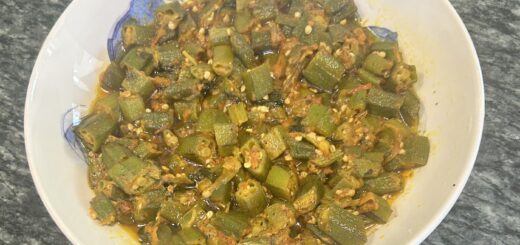
We stopped for lunch, where they served delicious food. I will post two of those recipes, Galayet bandora, and maqluba, on my food blog, which seemed to be a riff on an Indian recipe. We were starving and gorged ourselves on these delicious treats.

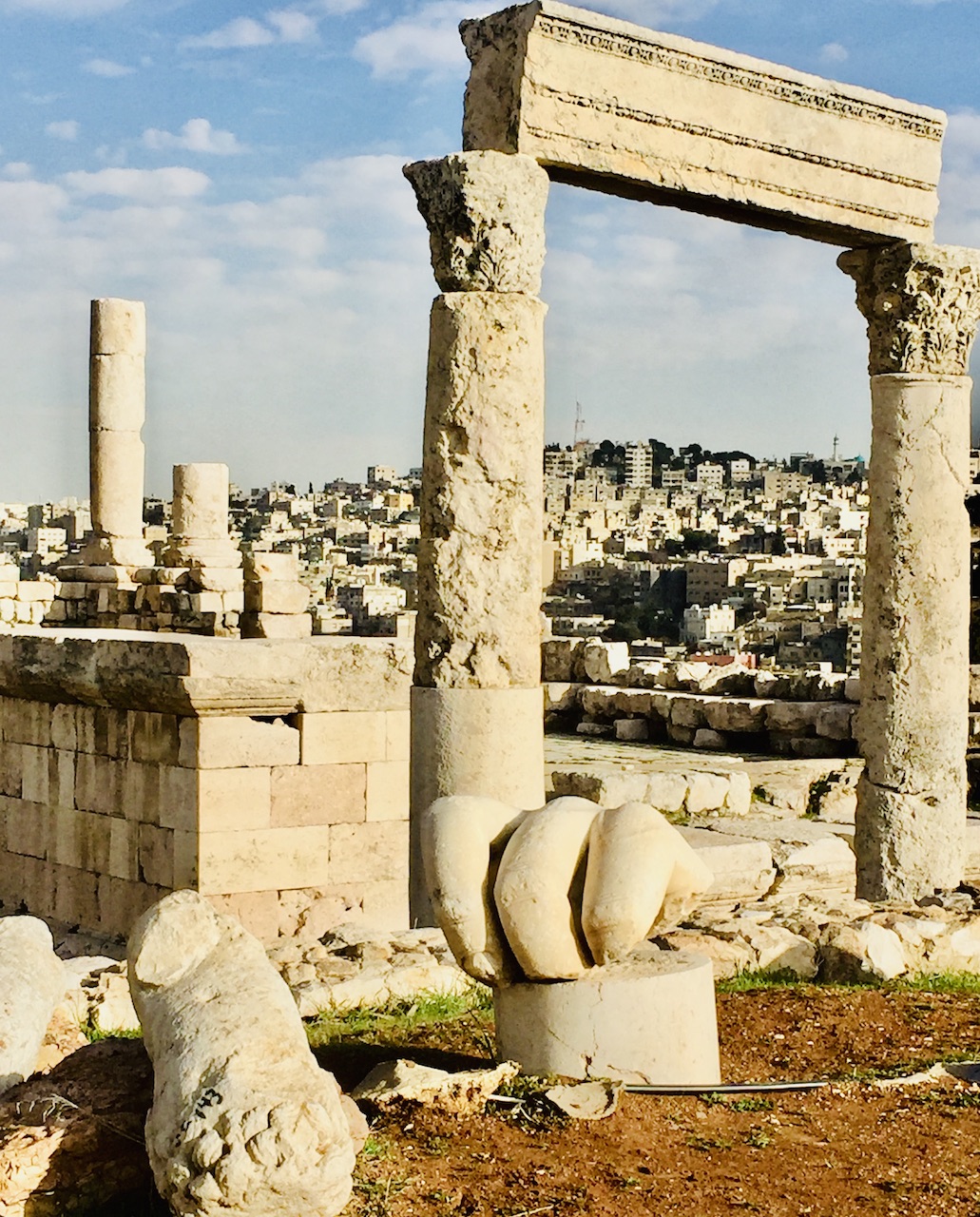
Romans constructed a citadel in Amman. Citadel is a historical site at the center of downtown Amman, The capital of Jordan. Citadel boasts an importance in history because it was occupied by many great civilizations. The major buildings at the site are the Temple of Hercule-the most significant Roman structure-,a Byzantine church, and the Ummayad Palace. We also visited the Jordan Archeological Museum, which was built on the hill in 1951.
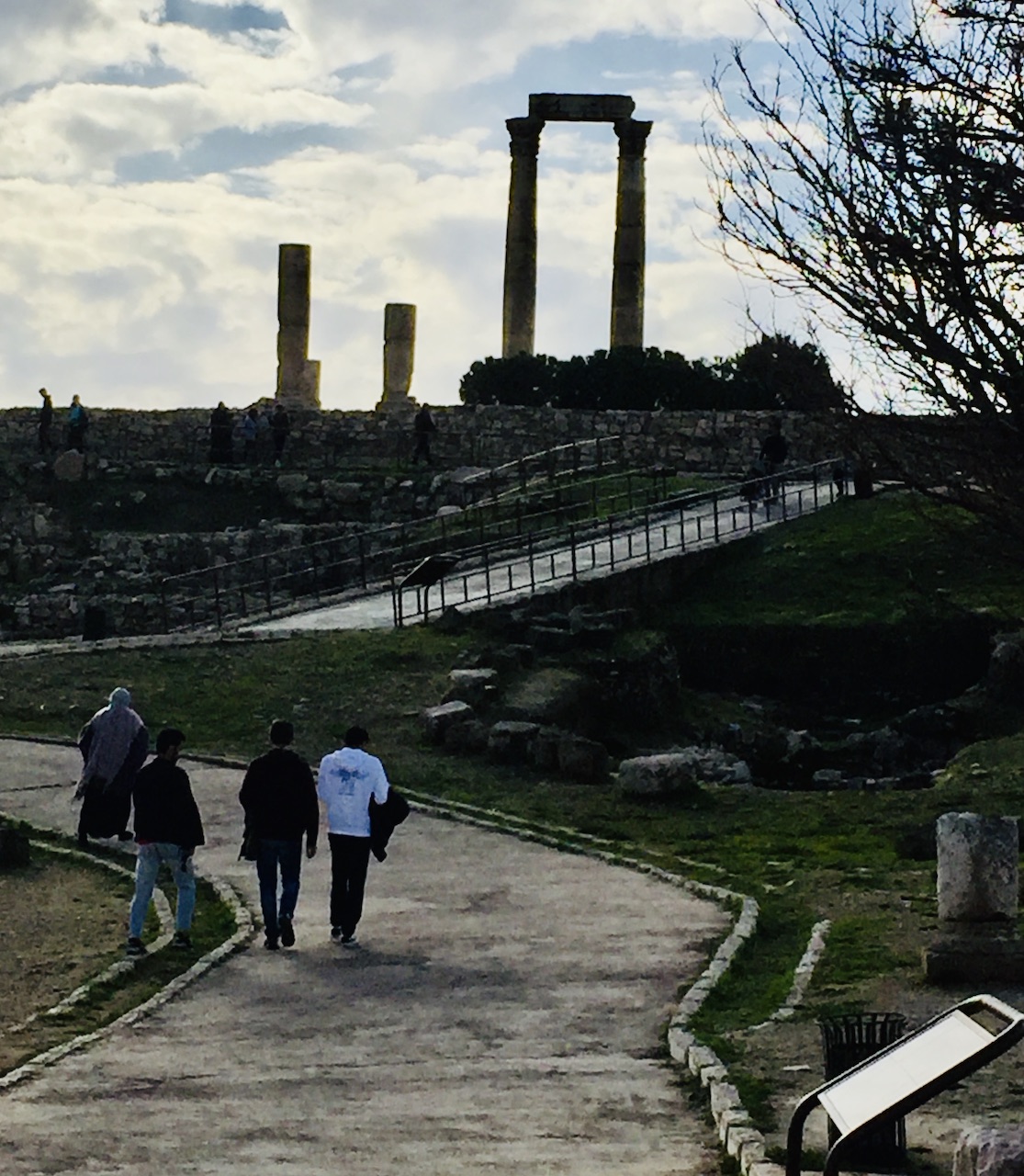
The Temple of Hercule was dedicated to the supreme Roman deity. Hercule was the son of Zeus and a mortal woman and was known for his supernatural physical strength.

The Hand of Hercule is the name given to a massive hand fragment unearthed by archaeologists in Amman, Jordan.

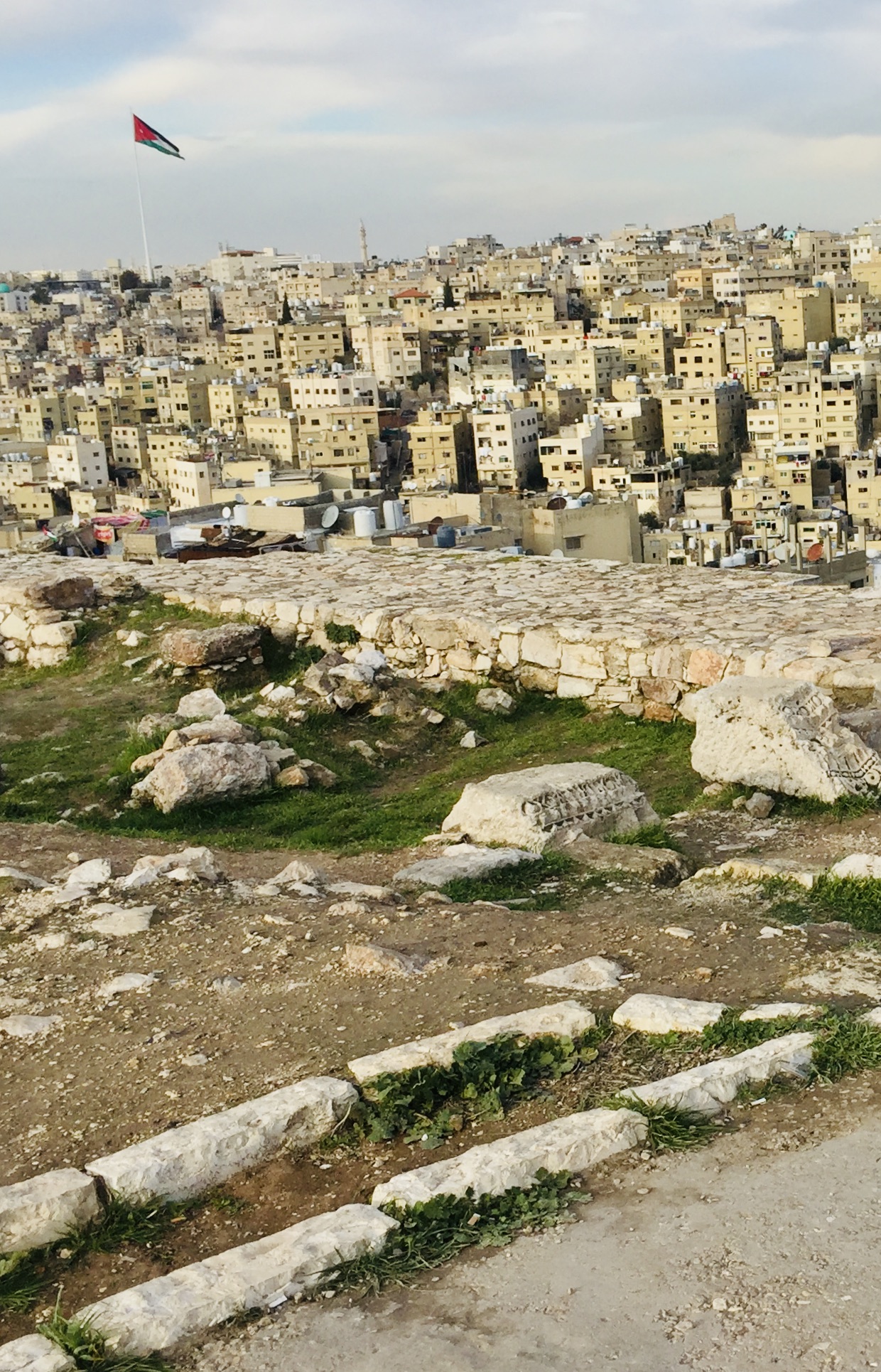
Raghadan Flagpole is a free-standing, 126.8-meter tall steel flagpole on the grounds of Raghadan Palace at the Royal compound of Al-Maquar. It is clearly visible from Citadel Hill.

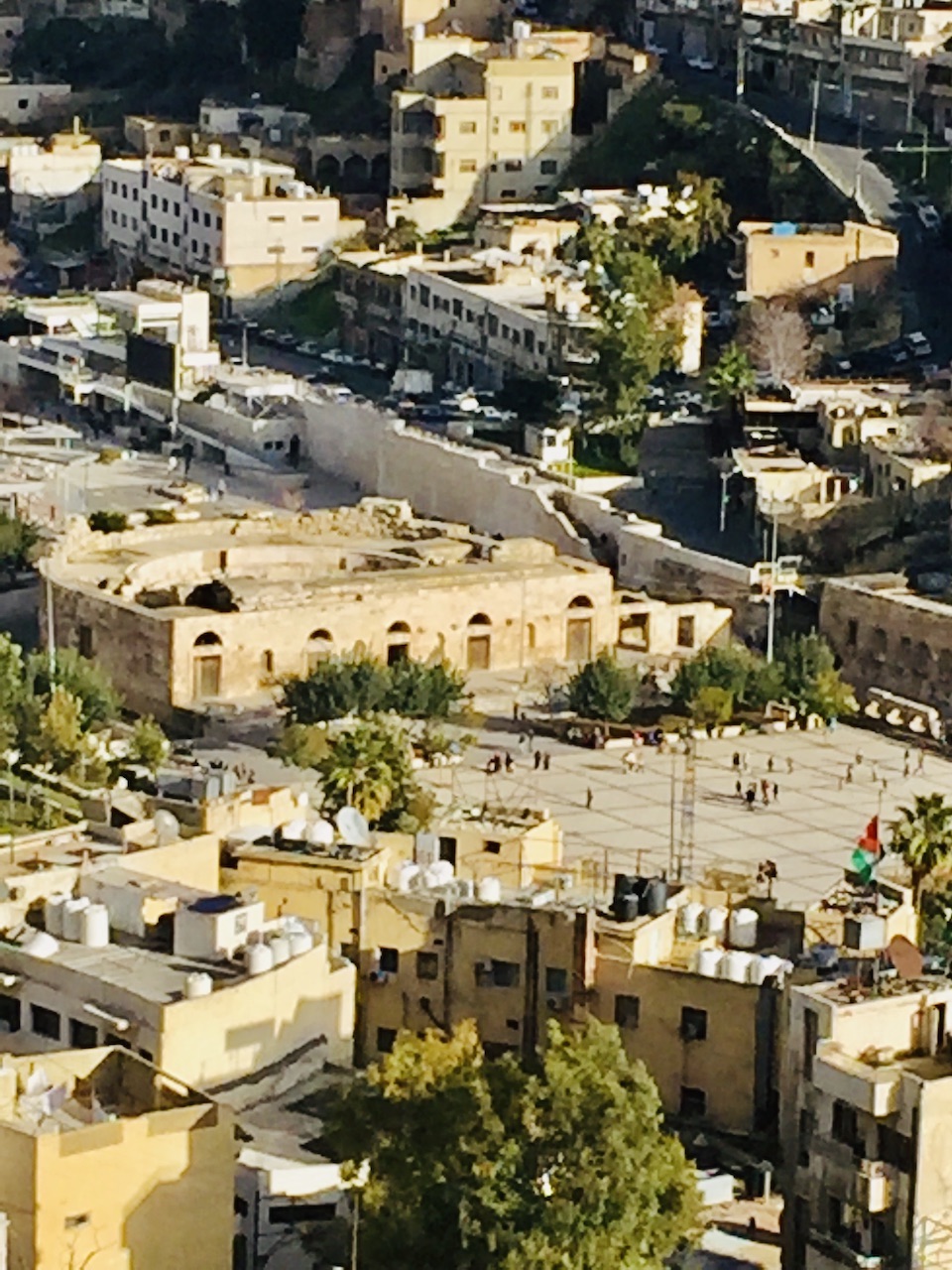
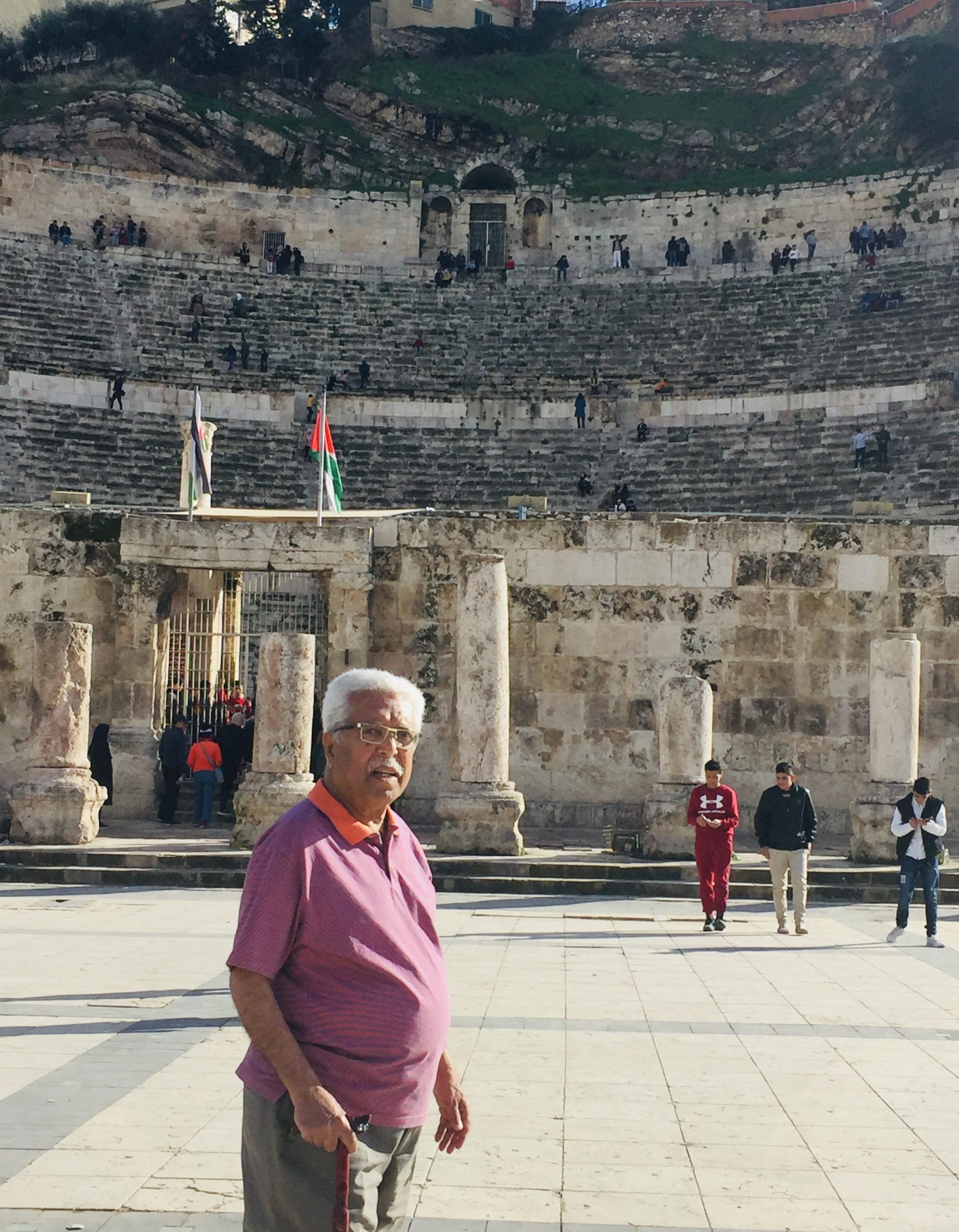
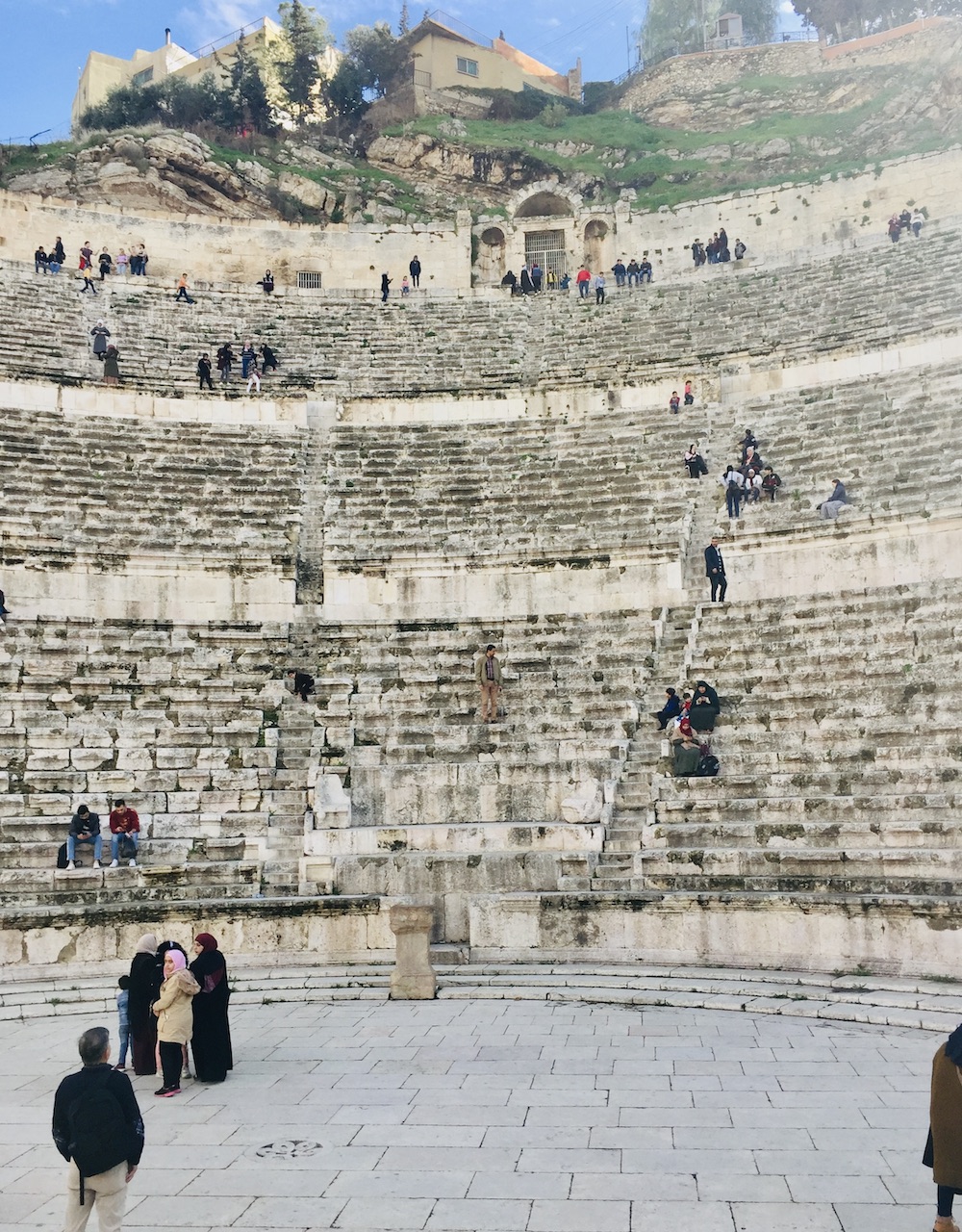
Roman theater was built in 2nd-century when the city was known as Philadelphia, and it borders Hashemite Plaza from the South. It also gives a clear view of downtown Amman.

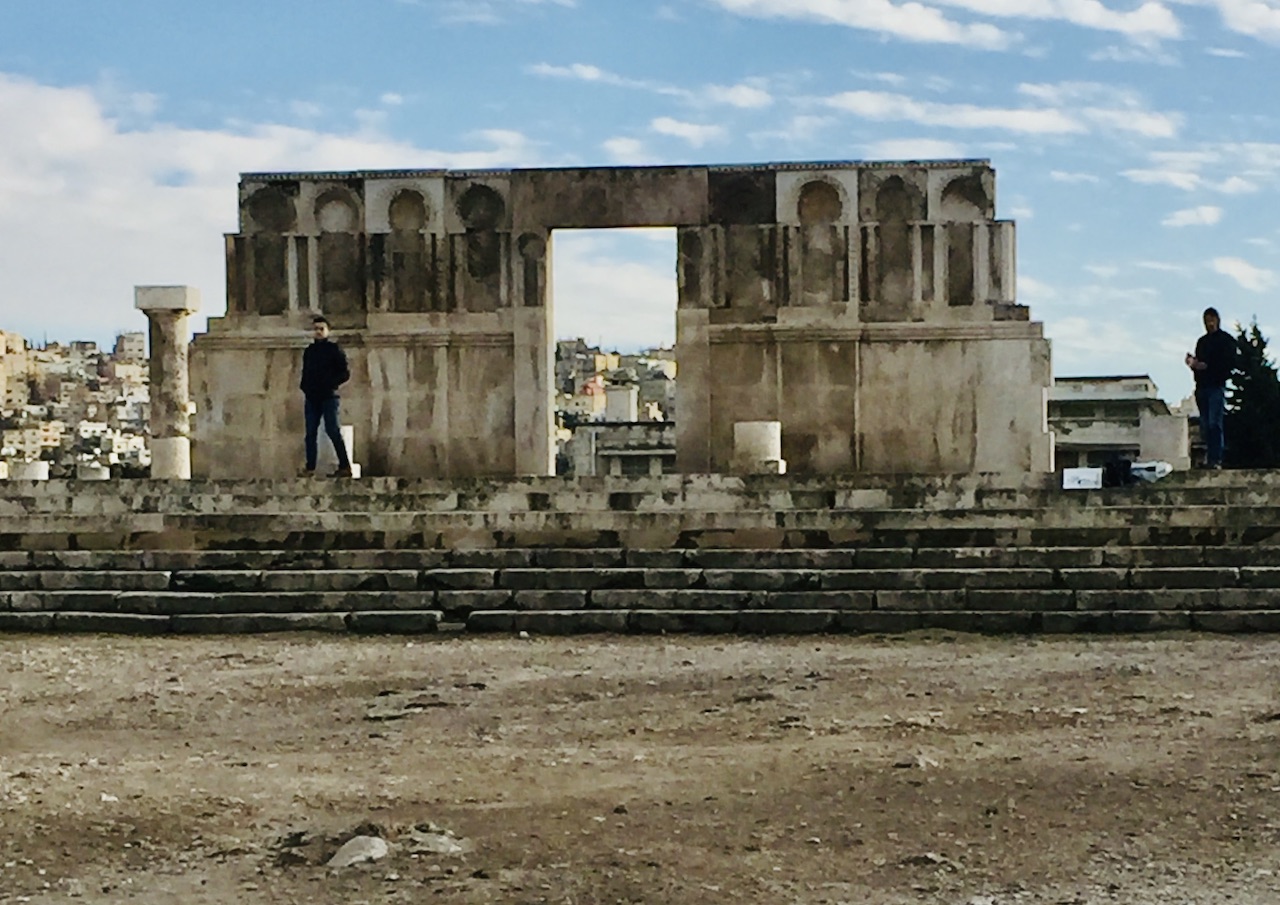
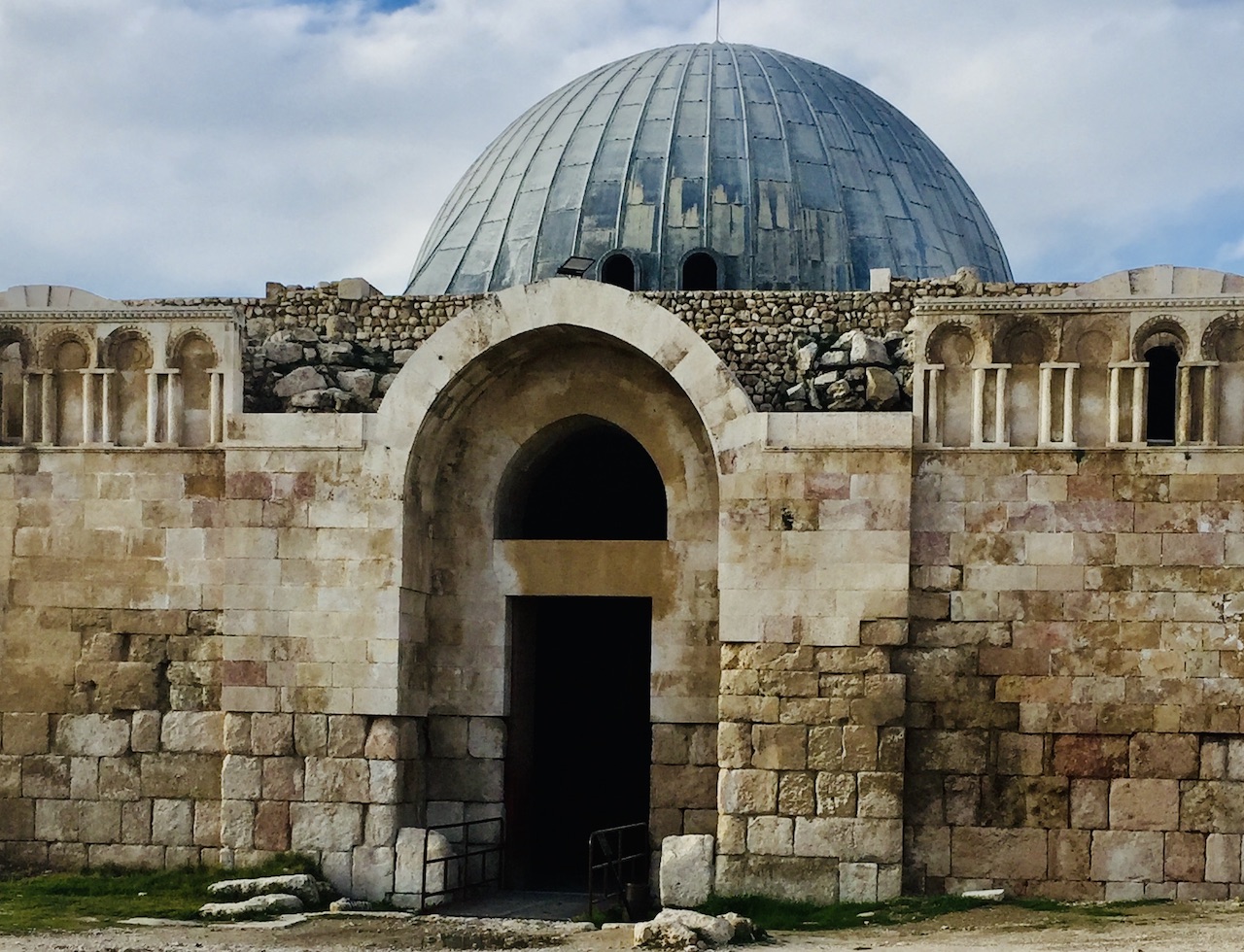
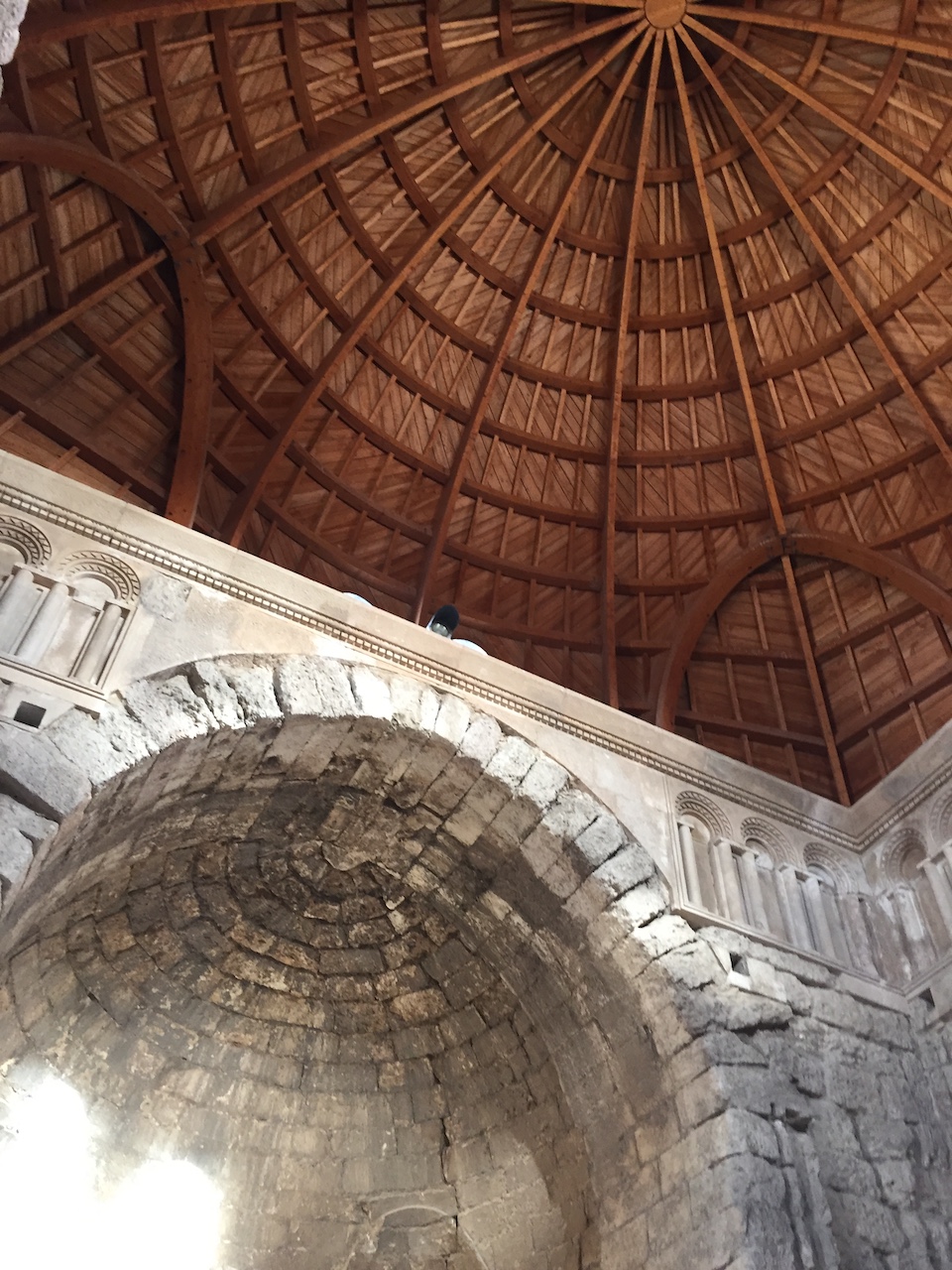
Ummayad Palace was built during the reign of Ummayad Caliph Hisham, between 724 and 743 AD, and was used as an Administrative center and governor’s residence. It is considered the most famous archeological building in the whole of Amman. In 1998 a modern wooden dome was built for modern cultural events. The most significant part of the whole Palace edifice is the audience hall. It is a huge complex where you could easily get lost.

This was the end of our trip to the Middle East with Gate 1 Travels. It was impossible to know which destination topped the list. Every city or site we got to seemed better than the last one we were at, and it was just as painful to depart from each one.

I began to wonder whether we would have done as well without the planning of the travel company; in our case, it was Gate 1 Travels. They were our personal shoppers and designers. They somehow knew what we liked and disliked by choosing destinations for travelers rather than tourists. It felt as though they created the whole trip to match our desires. I came to the conclusion that travel companies are absolute essentials for the quintessential travelers.

At this point, it seems apt to end this blog with a quote from Ibn Battuta:

Travelling – it leaves you speechless, then turns you into a story teller.

Click here for Jornaian Tomato sauce
Petra, Jordan

Petra, Jordan

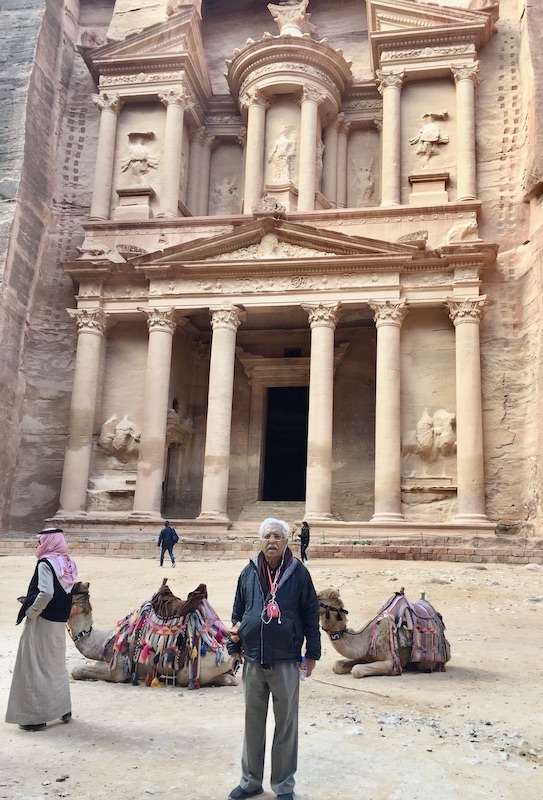
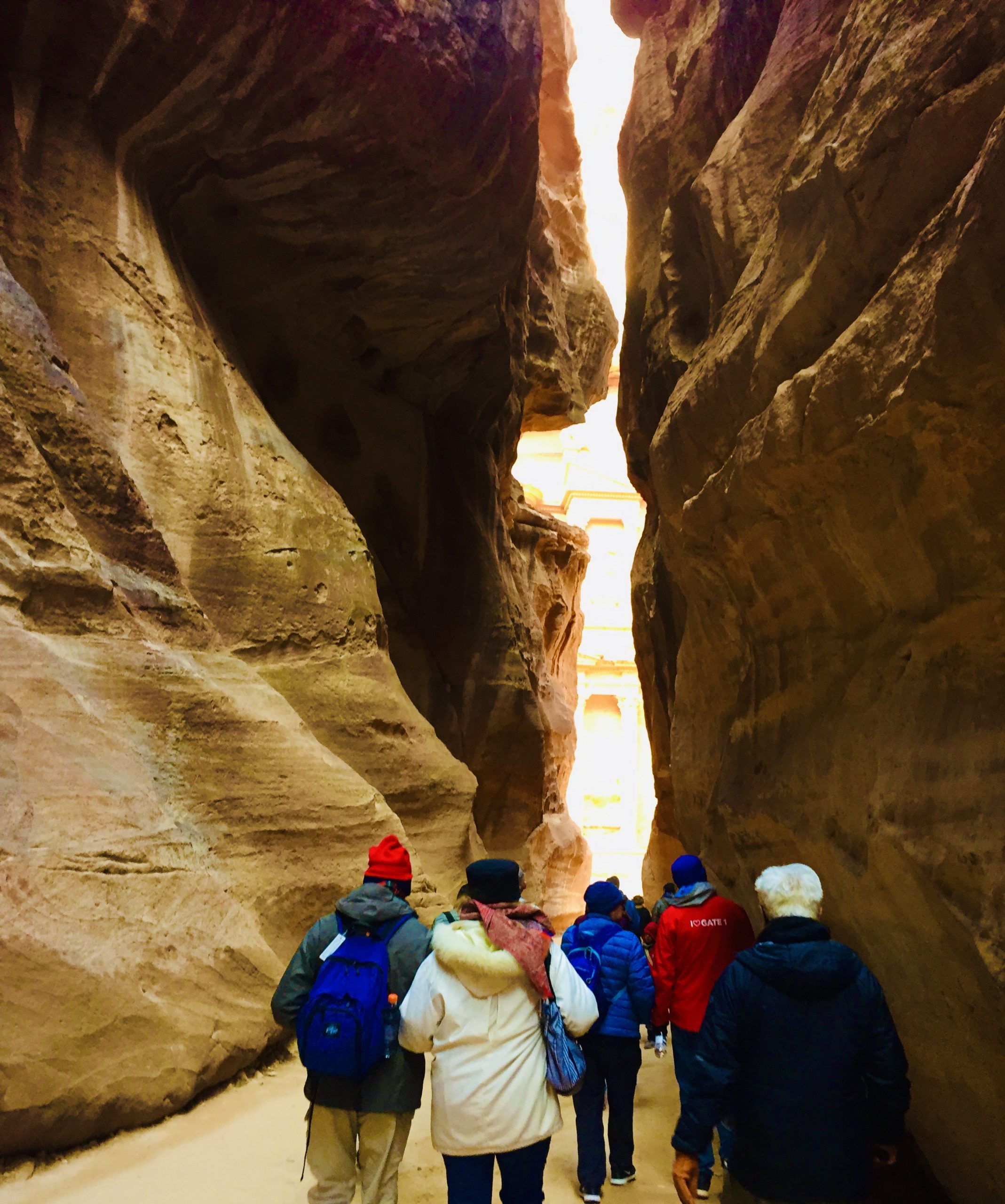
The Treasury has seen from the Siq, Petra, Jordan.

Here we are, on our way to amazing Petra, Jordan. After an overnight stay in the Dead Sea area, we left fairly early in the morning for Petra. This amazing city with rose-red sandstone cliffs was a Nabataean empire from the 1st century BC.  It gets its name as a rose-red city from the wonderful color of the rock. It grew rich and powerful with its prolific business trading spices and silks with China, India, Rome, and Egypt and continued to flourish even after the Romans annexed it. But in 363 AD, a large earthquake destroyed the city, causing its ultimate downfall. It was abandoned and caused the disappearance, from the map, of one of the most enigmatic civilizations that have ever existed.

In 1812 it was rediscovered by a Swiss explorer, and ever since, the lost city of Petra has been the centerpiece of legends and fictional stories. And also, Petra became increasingly known as a fascinating and beautiful city and began to attract visitors. Nabataeans literally carved facades, tombs, temples, and much more out of giant sandstone cliffs.  Movies like “Indiana Jones and Last Crusade” were filmed in Petra. Bringing this famous archaeological site in Jordan more attention and becoming one of the 7 New Wonders of the World. In 1985 it also became a UNESCO World Heritage Site.

When we got to Petra Visiting Center, we were told to visit the restrooms because it was a long way to the next one at the end of the walk, about 2 km long. While we did that, Omar, our guide, paid for the entrance and organized everything he needed to do for the group. 

Petra Visitor Center

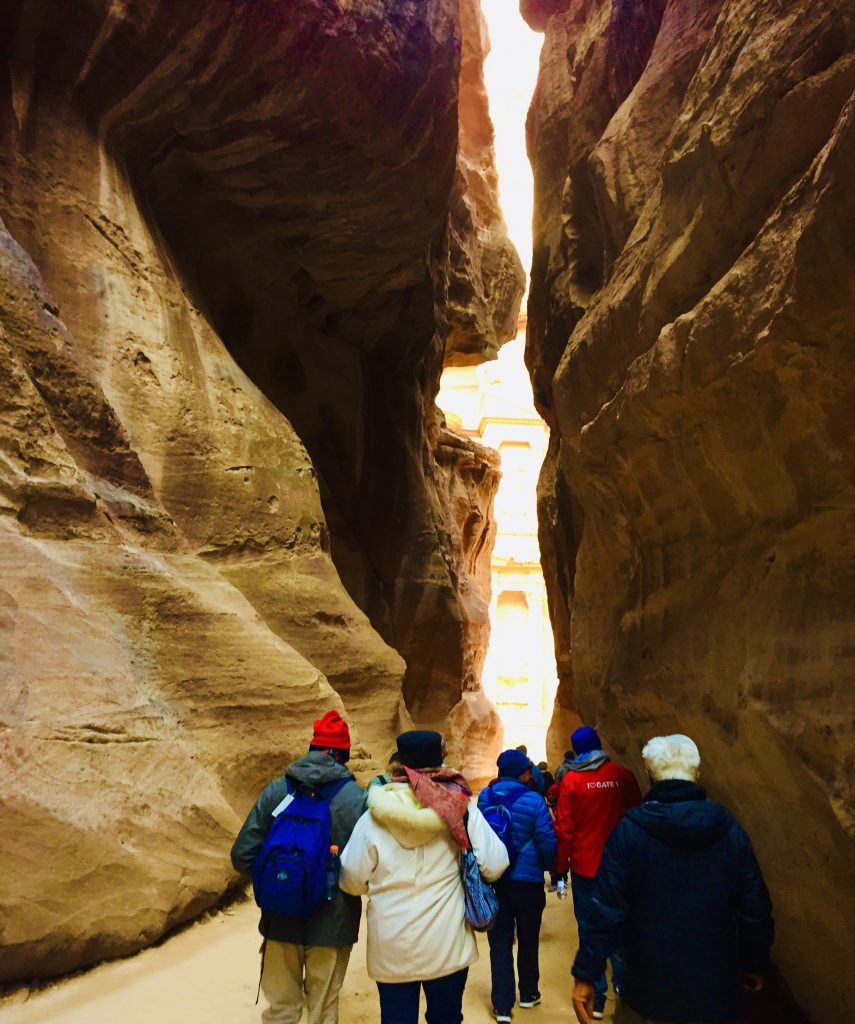
The huge entrance led to a narrow gorge called Siq (canyon). It is a rock canal that measures 3 to 12 meters in width and reaches 80 meters in height. In some places, it was as narrow as 4 meters.  

Spectacular height of the canyon (Siq)
The walk into Siq
Walk into Siq

Just past the gate, there were many donkeys, horses, and horse carriages for people to ride. The rides were inexpensive, but it was a way the local Bedouins made a living. Some people opted for the ride as it was a once-in-a-lifetime opportunity. Many others like us preferred to walk and enjoy the spectacular wonders of nature while considering the possibility of riding a donkey and a horse-drawn carriage on our way back. As we started walking, we realized the wisdom of our decision to walk instead of taking a ride. As the horse carts trotted by, those of us who chose to walk could stop and enjoy the impressive wonders of nature and amazing human feats and take photos.

Our guide’s strategy was to make several stops to talk in detail as we approached each site to give us a better sense of the immediate surroundings, its history, and an insight into the nomadic lifestyle of Nabataeans, ancient inhabitants of Petra. Along the way, we saw unfinished tombs. Omar, our guide, was amazing and pointed out so much we would have missed if we had gone straight through.

The picture below is of one of the major monuments. It has two stories. The top story houses the proper tombs with a façade of four obelisks representing five people buried in the tomb. But the bottom story, apparently, contains a traditional dining hall for Nabataean funerary rites.

Bab al Siq

From the site entrance, it’s almost a 2 km walk through the narrow canyon called Siq, which snakes its way through to Petra.

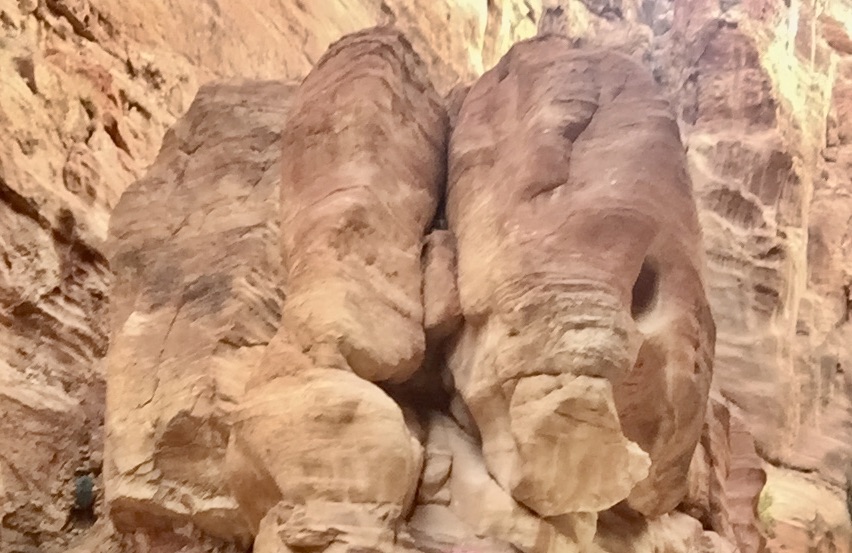
The Siq (canyon) was used by traders, explorers, and travelers from time immemorial. All along the walk, we saw innumerable and elaborate carvings in various shapes and sizes. There were many areas where the mountains were riddled with large holes that were entrances to their temples and houses. This intriguing phenomenon was just a prelude to what was to come in the form of a breathtaking tomb, the Treasury, or Khazneh, in the heart of Petra.

Time to pause and enjoy the beauty

As we got close to the end, we could see a glimpse of a 45m-high temple (the Treasury). I took a picture of this unforgettable moment).

This picture was taken at the narrowest part of the Siq.

We continued our walk until an astonishing monument of craftsmanship was revealed. It was simply mind-blowing to imagine that the Nabataeans were able to carve the sandstone cliffs to create such impressive and awe-inspiring structures with just chisels and hammers.

The Treasury

Treasury is Khazne in Arabic. The name obviously has its roots in the fact that it was once believed to have hidden treasure. It is crowned by a funerary urn, which according to local legend, conceals pharaoh’s treasure, but it is only a solid piece of sandstone. It was most likely constructed in 1stcentury BC and may have represented a memorial to royalty.

We came out of the Siq to find a lot of tourists milling around, Bedouins with their camels hoping to make money by offering rides to tourists, and some tourists taking rides and posing for pictures. 

Treasury

As we walked past the Treasury, we saw a huge amphitheater carved out of the hillside that could seat 10,000 people. Most of its features have been eroded due to the earthquake and flash floods in 363 AD.

Amphitheatre, Petra

The next stop for us was lunch followed by a plan to return to the hotel; those who wanted to go back to the hotel could do so with our tour bus, while those who wanted to spend the rest of the day exploring the area could do so. The transportation was to be arranged at a scheduled time for them to return to the hotel. 

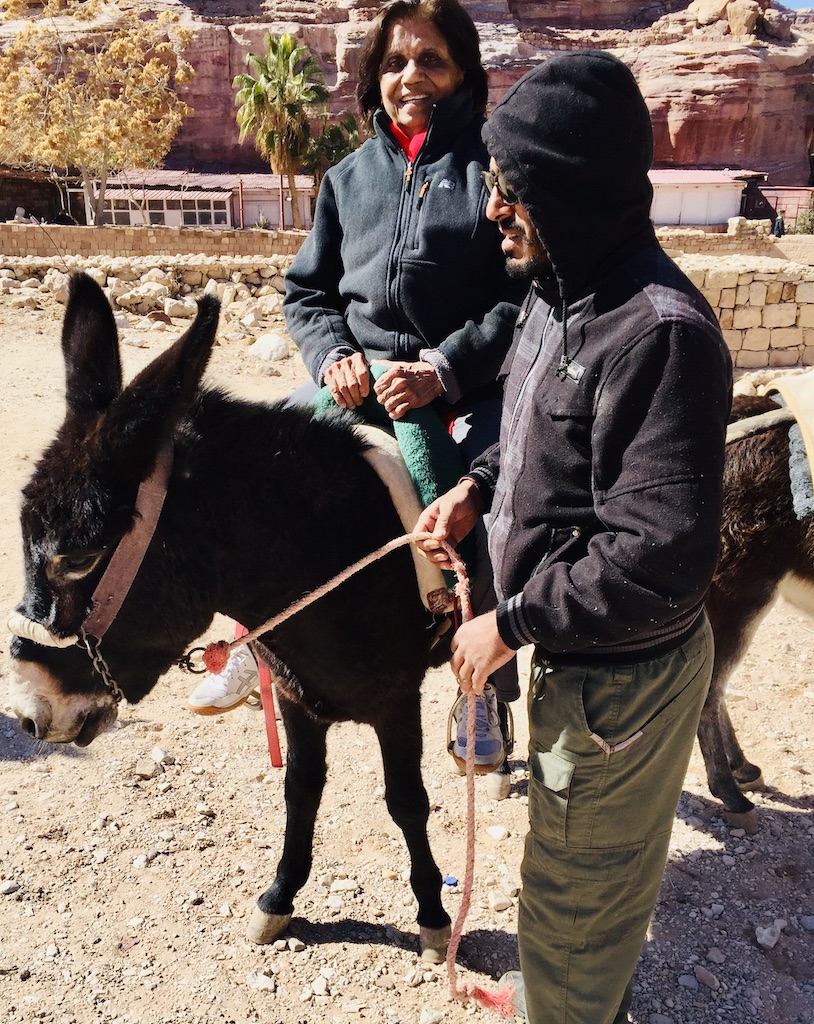
We did not want to stay on for the rest of the day and decided to go back with the first bus. There was a catch, that to get back to the Visitor Center for the bus, we had to either walk back or take a donkey ride only up to a certain point from where we had to take a horse-drawn carriage to the Visitor Center. We decided to ride rather than walk all the way back. The idea of both riding a donkey and a horse-drawn carriage was fascinating for me. It paid off because the donkey ride was a lot of fun.

And after being dropped off, we took a horse-drawn carriage, which was almost bone breaker bumpy. The coachman was racing down the Siq. Luckily we were going back. If we had done the same going up to Petra, we would have missed everything. I think he was in a hurry to get more business, and what was worse, he was merciless with the horse. But we came back in one piece without any mishap, plus, on the whole, the experience seemed well worth the risk.

Horse-drawn Carriage

The Petra experience was truly spectacular and astonishingly beautiful.

Our bus was waiting, ready waiting to take us back to the hotel.

Click here

We were Headed to Petra, Jordan

We are Headed to Petra, Jordan

After spending the night in the Dead Sea Marriott resort Hotel, we had breakfast and left for Petra. En route, we stopped at Mount Nebo, the burial site of Moses, and then on to Madaba, (also known as Queen of Mosaics) where we visited Saint George’s Church that houses an ancient map of the Holy Land, created with 2.2 million tiles, which is set into the floor of the Church. 

Mosaic Map of the Holy Land

The tradition of making mosaics is strong in Jordan and specifically in Madaba. These mosaics are a valuable vehicle for keeping the tradition of storytelling alive by compiling tiny tiles that depict important cultural tales of lifestyles of individuals, families, clans, and tribes. Our stop at a Mosaic Store where they had a Mosaic school and workshop was as inspirational as it was educational – for me, it was an ultimately pleasurable experience. We were able to see artists creating beautifully harmonious mosaics of varied shapes, colors, and sizes.

Creation of a Mosaic Plate
cutting and pasting each piece

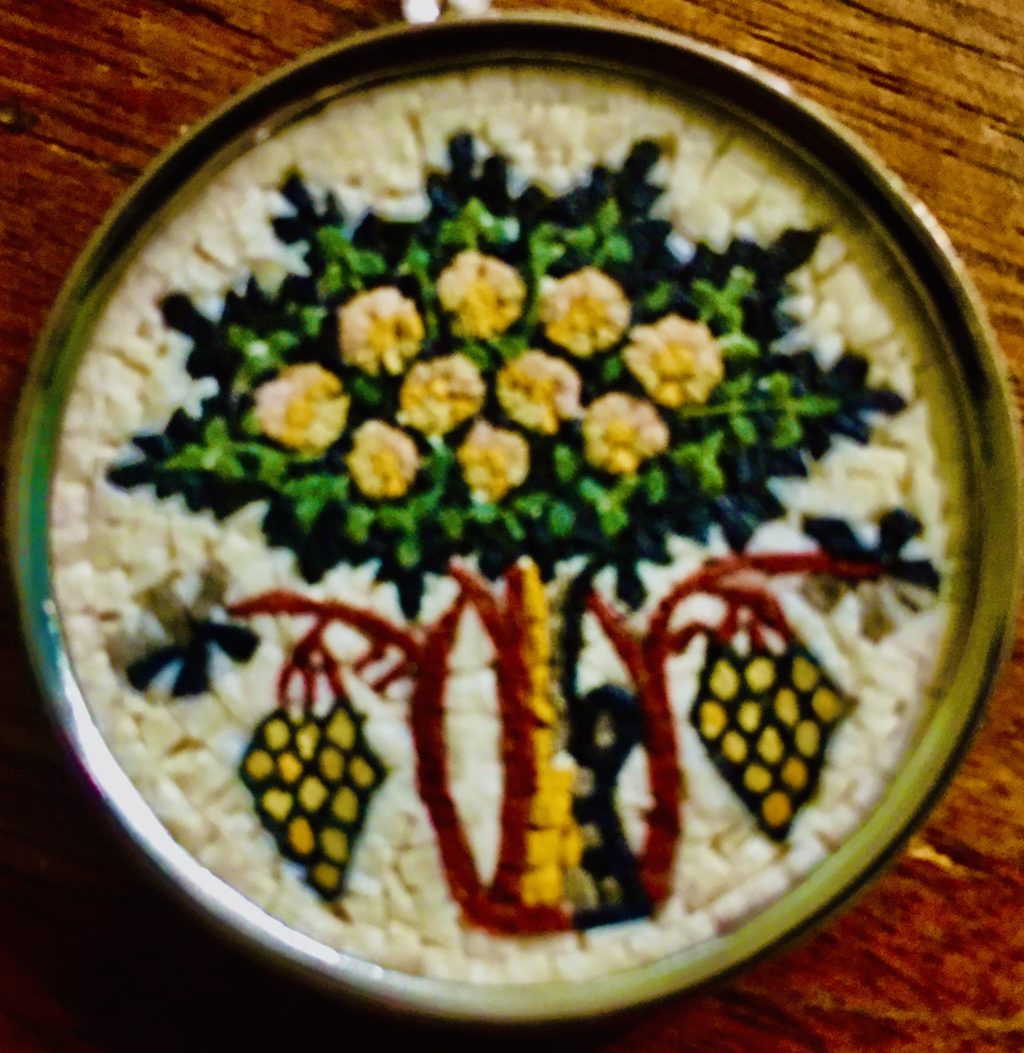
We ended up buying two pieces: one Mosaic pendant, and a camel hair rug with intricate, and delightful patterns of subtle colors.

Mosaic Pendant
Camel hair rug

Although we had coffee and snacks from the little cafeteria they were running in the store, we were starving. We stopped at a Restaurant for sumptuous Jordanian lunch. Our tour manager, Omar, really took care of us and informed us about the traditional ways the meals are served and eaten in Jordan. Meze is the first course. Meze, all over the Mediterranean and Middle East, consists of small dishes is an appetizers served before the main meal.

Hummus, Tabouleh, and olives
Babaghanoush
Appetizer served before the meal

A delicious, and generous amount of Babaghanoush, hummus, labaneh (yogurt sauce), tabouleh with generous serving of olives and salads, with crispy wedges of pita bread was served. It was an absolutely delicious start to an even more generous, and delicious Jordanian main course. The main dish was mansaf, but a variation of mansaf was served with layers of very thin Jordanian bread, fried chicken, and French fries covered with a thin layer of bread.  I was sure that it must be the modern version of mansaf and also, may have been, designed for tourists. I say that because I just can’t imagine a Jordanian traditional meal being served without rice or bulgur as complementary items to the meal.

Mansaf when first served

Traditional Mansaf is Jordan’s national dish and eating it is an acquired taste as it is made with and intensely flavored sauce known as jameed (a sauce of fermented dried yogurt), and served with rice or bulgur.  It is also popular in Israel, Palestine, Iraq, Syria, and Saudi Arabia. Served in a large platter for all to share as it is normally done in communal dinning.   

After lunch we visited some ruins of Crusaders Castle before arriving in Petra for overnight.

Click here for Dead Sea, Jordan

Masada – The Desert Fortress, and the Dead Sea, Israel

Masada – The Desert Fortress, and the Dead Sea, Israel

Masada Mountain, Israel

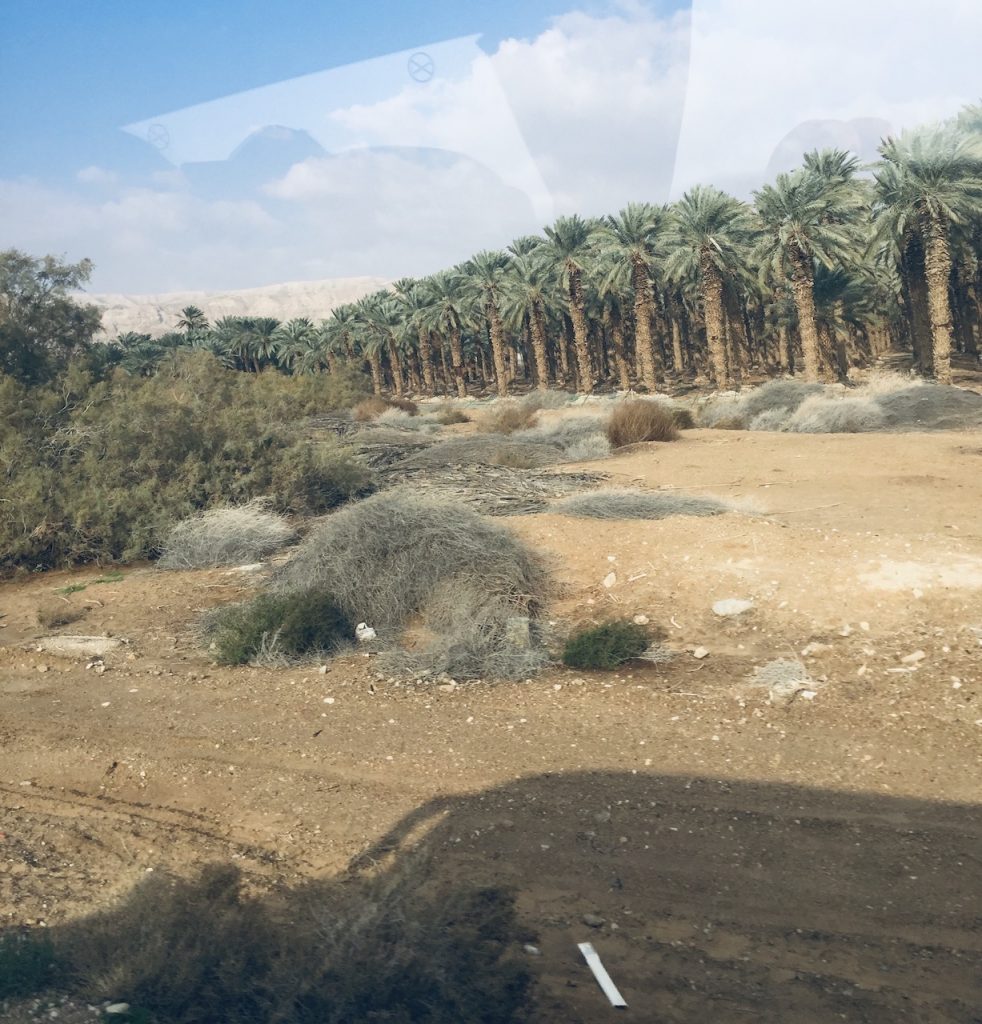
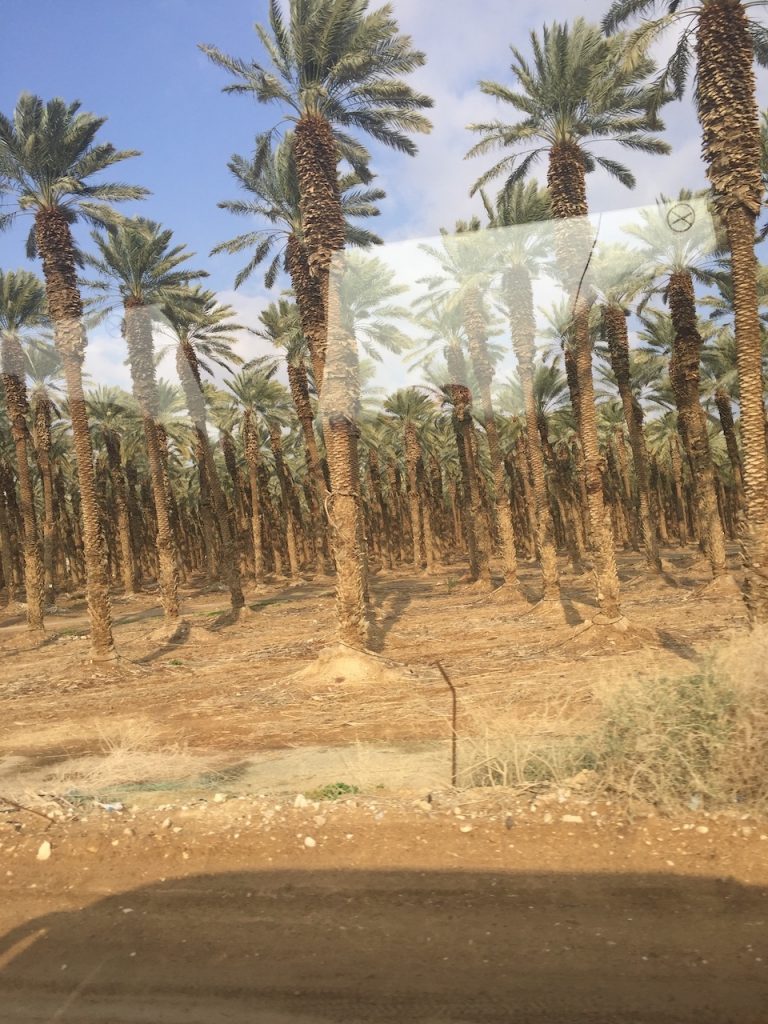
On our last day in Israel, with Gate 1 tours, our vacation in Israel was going to climax with a trip to Masada (an Israeli national treasure and United Nations World Heritage site) and the Dead Sea. Masada and the Dead Sea are two of the most visited sites in Israel. The drive along the shores of the Dead Sea, the lowest point, 430 meters below sea level, was intriguing. As we passed a mélange of brown arid, bare, and dusty land as far as our eyes could see was interrupted by huge Judean date palm plantations, which are, apparently, native only to desert oases, and was amazing and unexpected. 

Along the Dead Sea shores

 We were first headed to Masada, a fortress built by Herod the Great, and he also built two palaces for himself on the mountain and fortified Masada between 37 and 31 BCE. It was one of the best historical sites that we had a chance to visit. There is a path to walk up to the fortress, but that was not an option for our group. We took a cable car to the top of the mountain fortress. An impressive sight for the whole complex and the aerial views below and way beyond. 

Cable car to the top of Mountain Fortress
Aerial view of Masada
Another Aerial view

We ascended to the top to visit the archeological sites, including the remains of Herod’s Palaces, a synagogue, bathhouses, etc. A film of the brave tale of the Zealots who chose to perish rather than live under Roman rule. Watch the video below for information on the Masada fortress.

Story of Masada taken from the tube
Model of Mount Masada in the Museum

We ascended to the top to visit the archeological sites, including the remains of Herod’s Palace, a synagogue, bathhouses, etc. In the end, a visit to the Museum of Masada was worth it. After that, we left for the Dead Sea for a swim in its very buoyant waters.  As everyone who knows anything about the Dead Sea knows, the Dead Sea waters to be heavy with excessive amounts of salt. We were told that once you enter, you could just lie there as if on a recliner and read your paper, an alluring fact which turned out to be a myth for us. The day we were there, the sea was very rough. We didn’t even attempt to get into the water. But those who did found that it was not just the rough sea, but also the fact that they had to navigate slippery rocks, making it very difficult and dangerous to enter into the water, making the experience far from enjoyable. 

Dead Sea, Israel

This image shows that even when the Sea is rough, one person is floating while others are hanging on the ropes.

Swimming in the Dead Sea.
Dead Sea

After spending some time there and relaxing, we left to return to Jerusalem for our “Farewell Dinner” from Israel. We had a good meal with our great group. We feel lucky that we had this chance of vacationing and getting to know many wonderful people.

Farewell Dinner, Jerusalem, Israel

Everyone’s flight was scheduled, and many of the people were leaving at different times all through the night. Since we had another leg of the journey to Jordan, we were taken to the Allenby Bridge border. Our Israeli tour manager escorted us through the border crossing process, where we met our Jordanian tour manager, Omar. We traveled to the Marriott Hotel in the Dead Sea area, the lowest point on earth on the Jordanian side.

Click Here For Tel Aviv

Jerusalem Visit to Haram al-Sharif

Visit to Haram al-Sharif

Temple Mount (Haram al-Sharif

The next morning’s optional tour was to visit Jerusalem’s New City. But those who wanted to do something other than going on that tour had other options available. We took the opportunity to visit Temple Mount (Haram al-Sharif). This Shrine is where Muslims once faced to pray and believed that the Prophet Mohammed ascended to heaven is the third holiest after Mecca and Medina. Jerusalem is the third holiest city after Mecca and Medina for the Muslims. Since Jews consider it the holiest site, it makes it the most contested religious site globally.

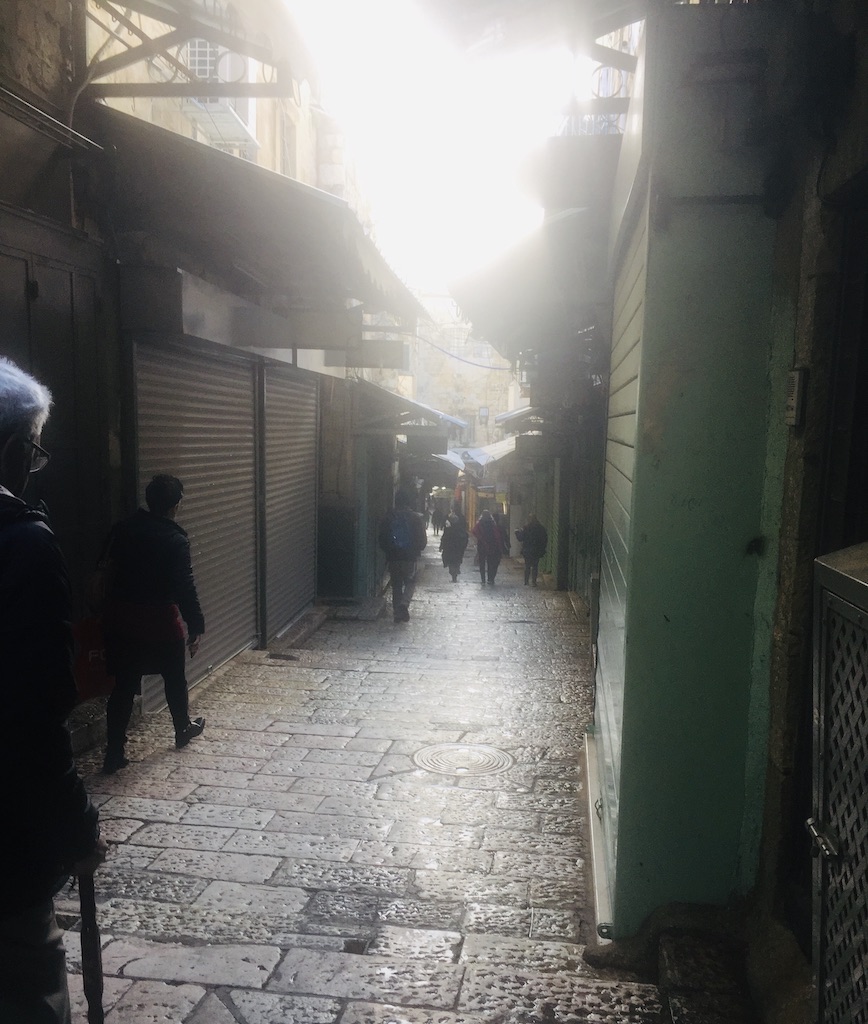
We availed an Uber to go there. The taxi dropped us off at the spot from where we had to walk. It was early in the morning, and the most surprising part was that we were on Via Dolorosa, where only the day before, we struggled to keep up with our group and our tour manager. But at this time of the day, it was blissful and fun to walk as we were doing this on our own on empty streets. All the women were modestly and respectfully dressed with headcovers as they were supposed to follow a dress code. Even men were dressed in long pants and shirts to cover their shoulders as they were expected to do. There was a strict security check at the plaza gate, and everyone’s passports and documents were checked.

Via Dolorosa ( path of Pain)

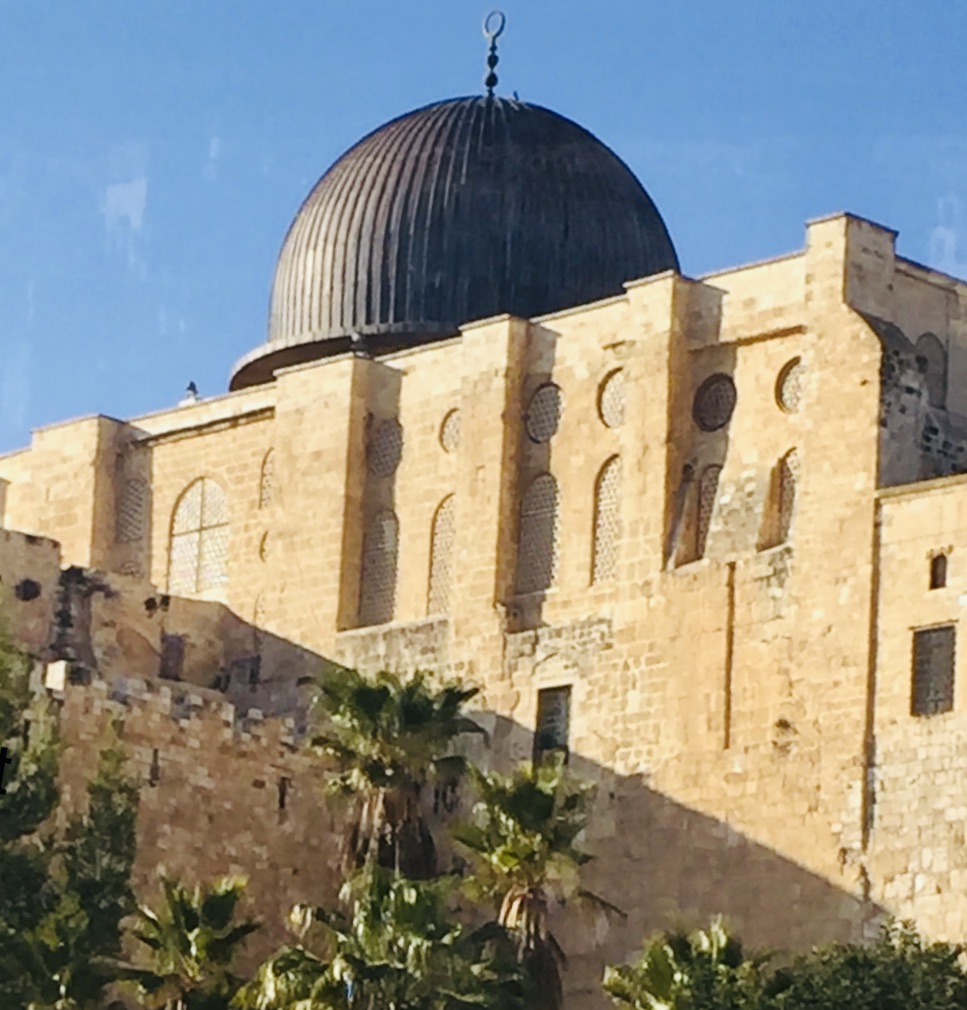
 When we entered, a young man approached us to be our guide. It was lucky for us because without him we would have never known some essential information. He told us that the whole compound is called Al Aqsa Compound, where five Mosques, including Al-Aqsa Mosque,  and Haram al-Sharif, built on the highest spot, are located on 14 hectares of ground. He also showed us where the compound Al-Aqsa Mosque was located. The historical significance of the Al-Aqsa Mosque in Islam is emphasized because it became Qibla that Muslims now face for prayers.

Al Aqsa Mosque

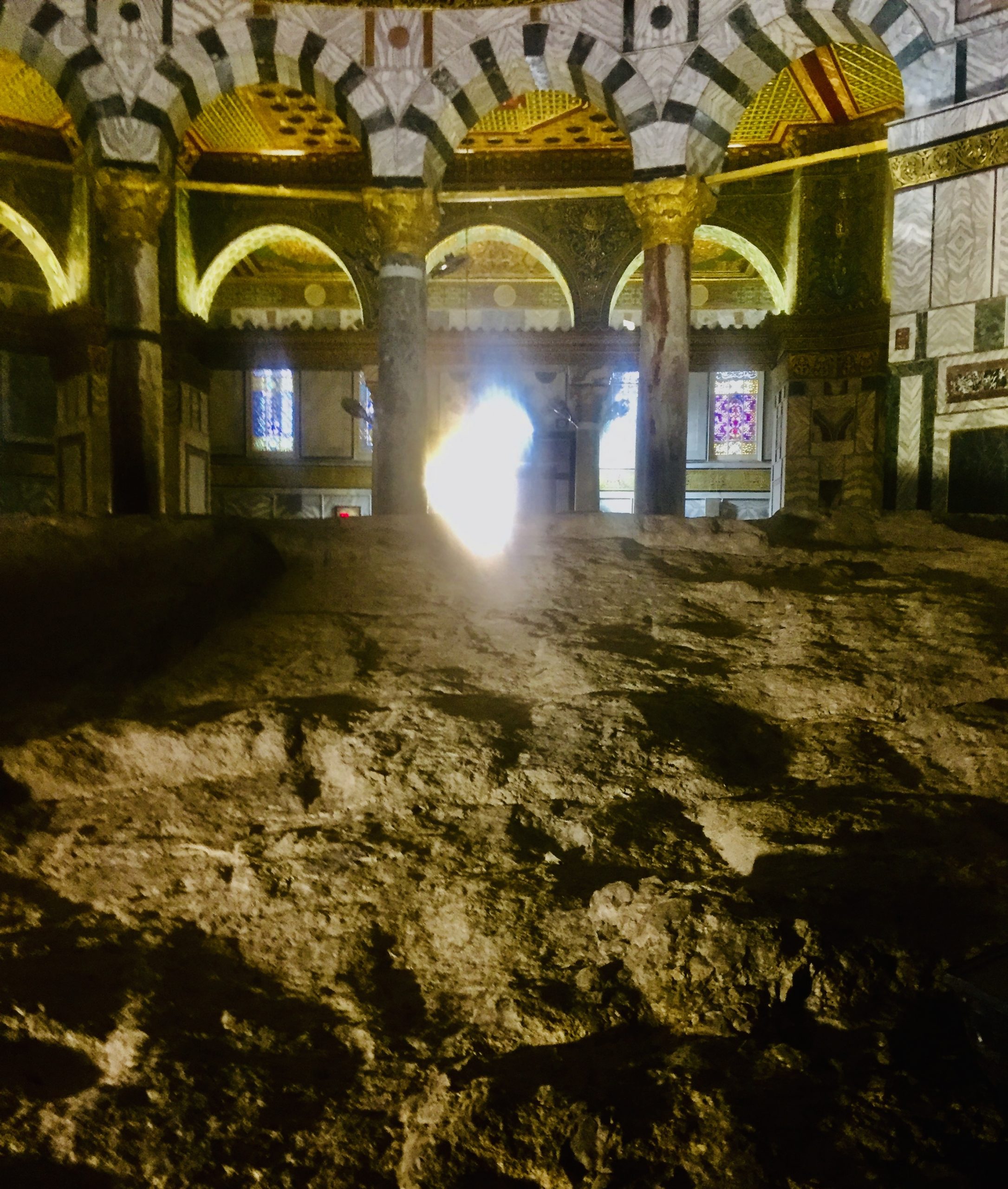
We decided to go inside the Dome of the Rock (Haram al-Sharif) first. Its amazing interior is a sight to behold. Its stunning Interior Dome is decorated with a brilliant mosaic of tiles. The ceilings and the entire area of the walls are spectacularly decorated with striking colors and designs.

Some of the Arches have exactly the same designs as in Cardoba Mosque in Cardoba, Spain.  

Arches similar to Cardoba Mosque, Spain

The rock upon which the whole structure is erected can be seen by walking around it as it is fenced off to protect the sacred rock to both Jews and Muslims alike.

According to Jewish tradition, the stone is the “Navel of the Earth”, the place where the creation began, and the site where Abraham was poised to sacrifice his son. And sacred to Muslims because it is traditionally believed that The Prophet Muhammed, founder of Islam, ascended into heaven from the site.

When we were there, some of the worshippers were reciting Quran, and others just prayed. Stacks of copies of the Quran are available for worshippers to use all around the prayer areas. As we were leaving, One of the ladies approached and welcomed me. She also offered me prayer beads as a gift.

Copies of Quran
Prayer Beads from Haram al-Sharif

After walking around the area to see all the mosques and other religious landmarks of Islamic architecture, We entered Al Aqsa Mosque. It has large prayer areas which are kept meticulously clean for people to pray on the carpet designed as prayer mats where worshippers pray in their individual spots. It was very peaceful and inviting to sit and meditate.

Even though we did this on our own, we had no trouble doing it. Like I mentioned before, the young man, who became our guide, changed the whole visit by giving us the information, in perfect English, so vital to the tour. It is not possible to get such and information by talking to people. With that approach, the most important hurdle would be the language. Even if they were knowledgeable, the language barrier would make it impossible to understand everything… We felt fortunate. When we got back, everyone in our group wanted to know everything about our visit to Haram al-Sharif (Temple Mount). This is how I thought I could offer information to all those who did not have the opportunity this time around.

Click Here Trip to The Middle East

On our way to Jerusalem

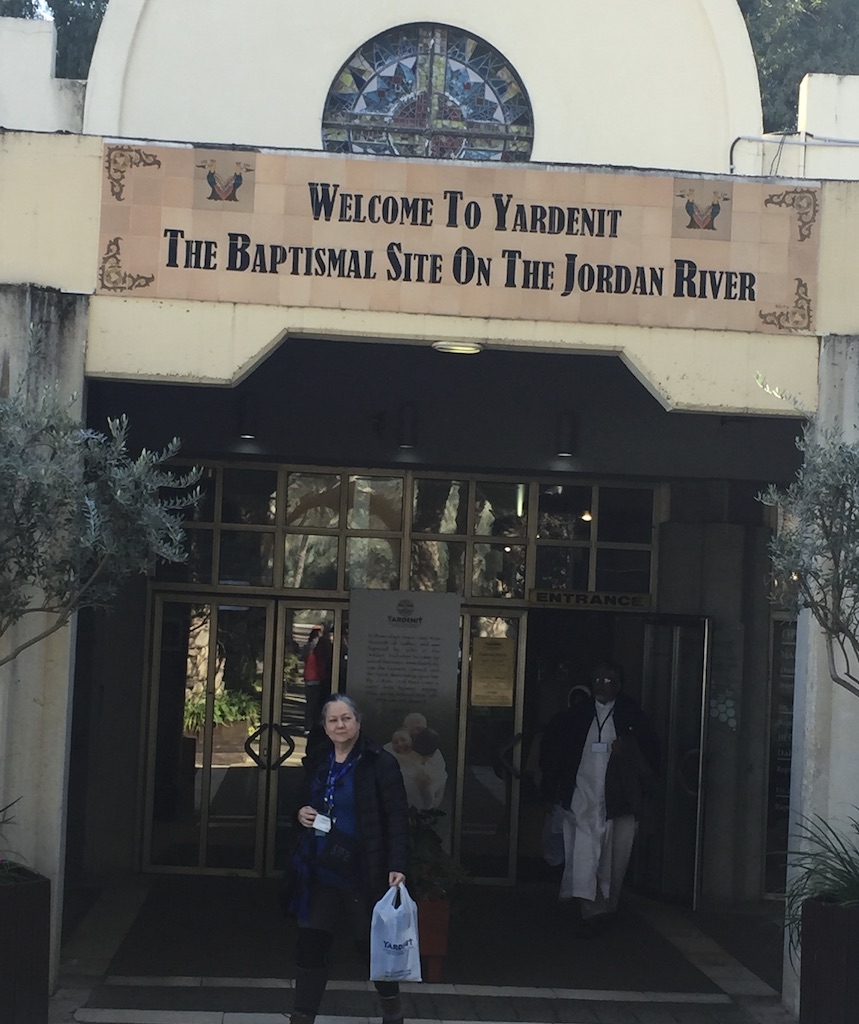
Early in the morning following day, we started for Jerusalem, leaving the Pristine Sea of Galilee behind. It was a whole day driving before we would get to Jerusalem. We stopped at a Diamond Center along the Jordan River. A good business for the Diamond Center and some girls in our group found their best friends right there.

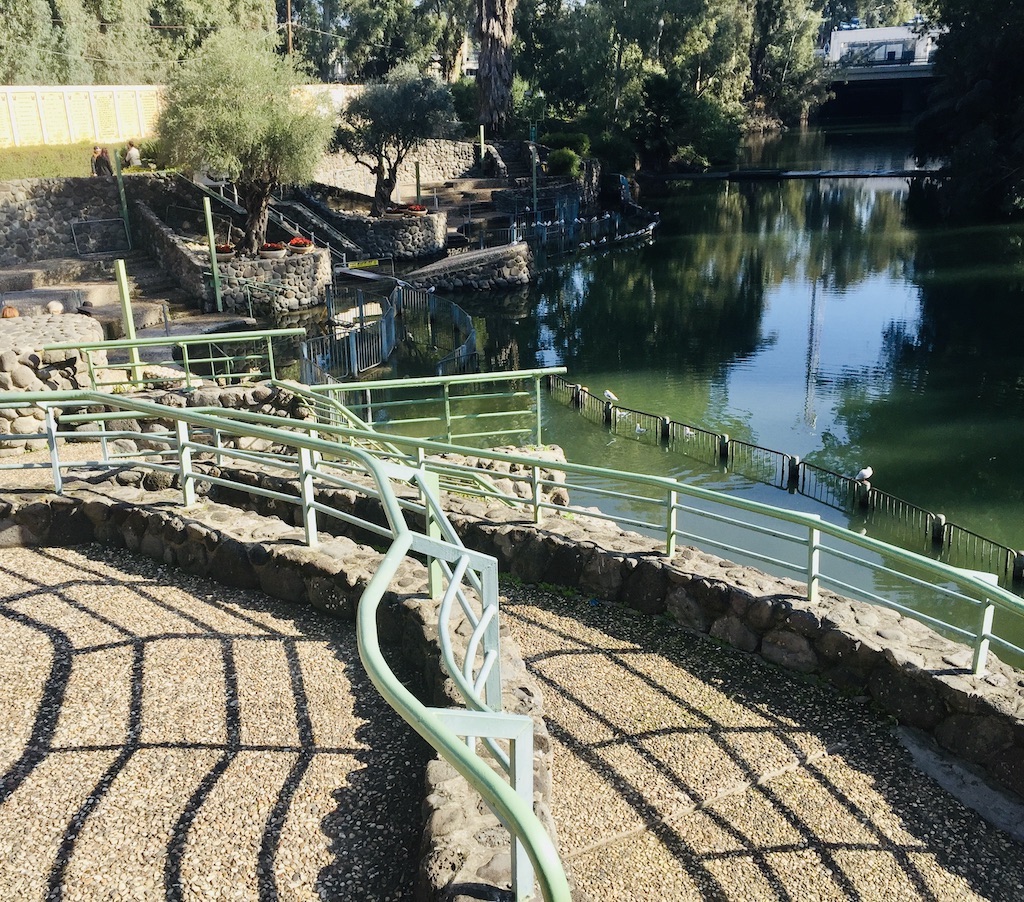
We enjoyed spending time around the beautiful river taking in the meditational view of the surrounding. Also, we had the good luck of watching a live Baptism which I was able to record.

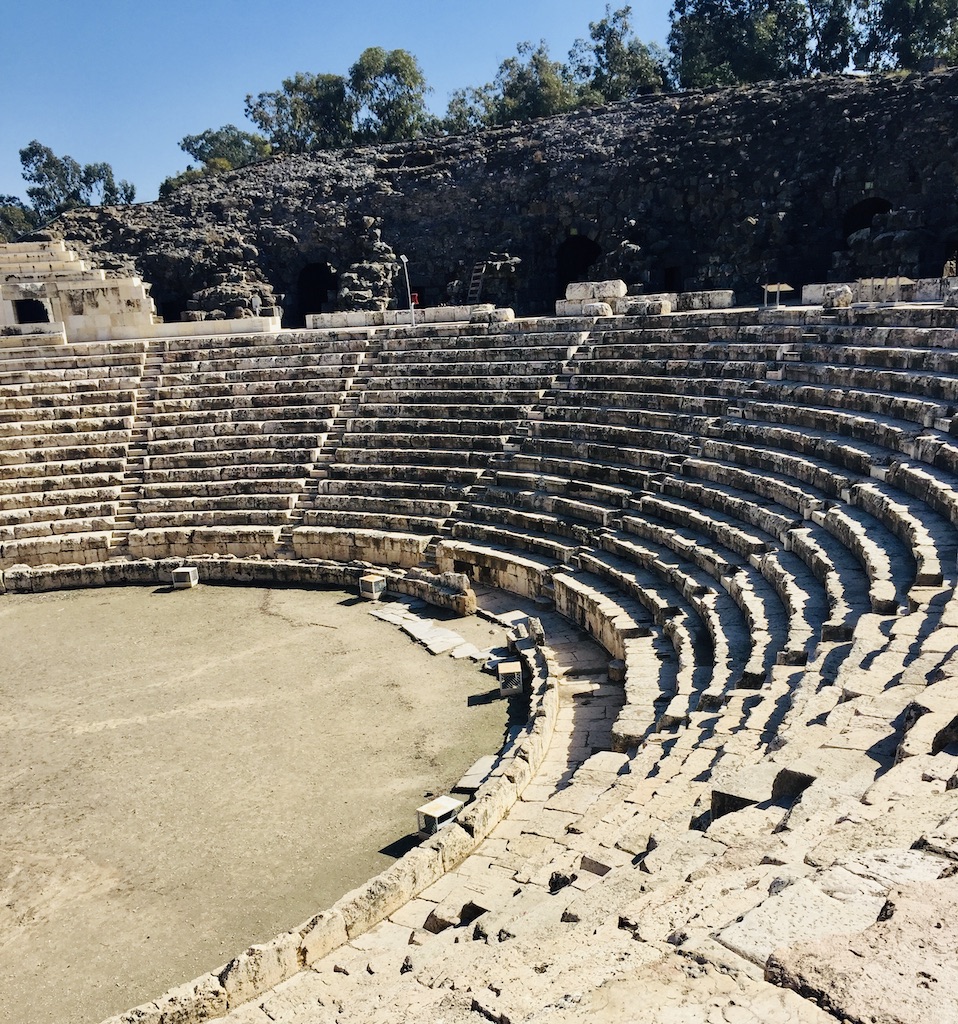
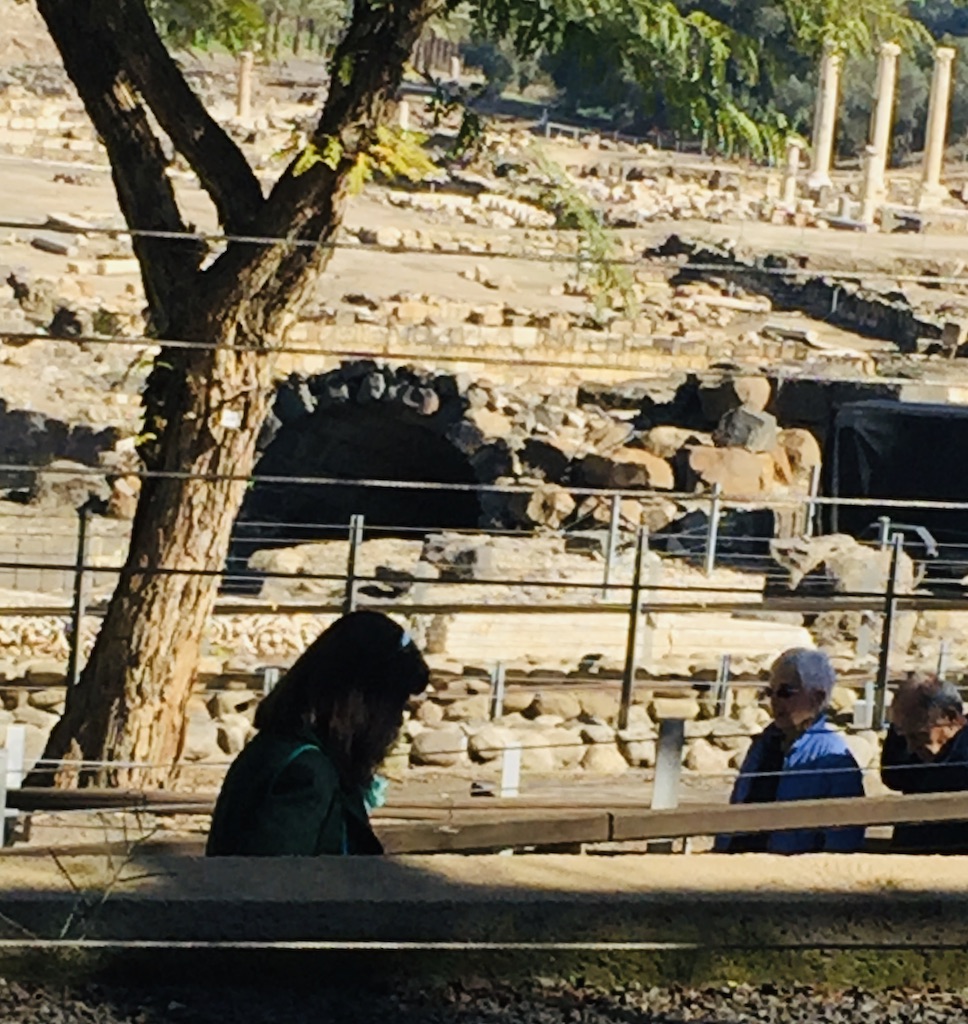
Then we were headed south to the impressive archaeological site of Beit Shean to see the remains of the ancient Roman city. After a long day of sightseeing, we continued to the hotel for dinner and overnight. 

Click here for Tel Aviv. On

Jerusalem Old City Tour

Jerusalem Old City Tour

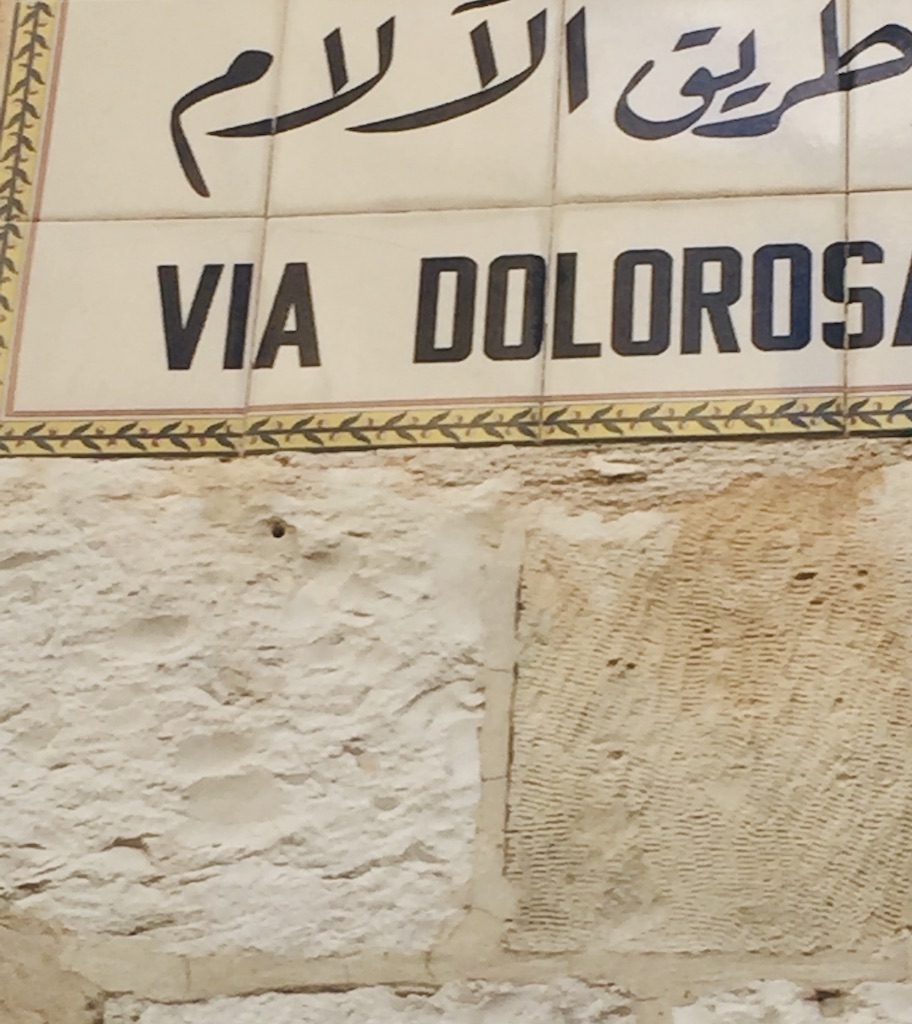
The following day we had an early start and began our walking tour of Old Walled Jerusalem. We walked on Via Dolorosa (Path of Pain), believed to be the path that Jesus walked on the way to his crucifixion. Although we left early to beat the crowds of other tour groups, there was a crowd all the way to the Church of the Holy Sepulchre. 

Via Dolorosa
Via Dolorosa crowded with groups of tourists
Entrance to Church Holy Sepulchre

We continued our walk through the narrow alleys and souks (markets) to visit the Western Wall (wailing Wall), a major Jewish sacred site for centuries. It is an open-air plaza that, apparently, holds about 60 thousand people.

Western Wall

Even today, hundreds of people visit the Western (Wailing) wall. But during the Jewish religious holidays, up to 100 thousand Jews visit it each day. One popular devotional practice at this site is stuffing prayer notes in the cracks of the wall’s stones. We saw notes stuffed in the cracks of the wall as people were doing it. The rationale behind placing notes in the wall has been traced to an idea that all prayers ascend to Heaven through the Temple Mount of which Western Wall is the boundary, as is seen clearly in the photo below.

Prayer notes stuffed in the cracks of western (wailing) Wall
western wall forming a boundary to the Temple Mount

We continued to Mount Zion and arrived at the Gate of Zion Temple.

Zion Temple

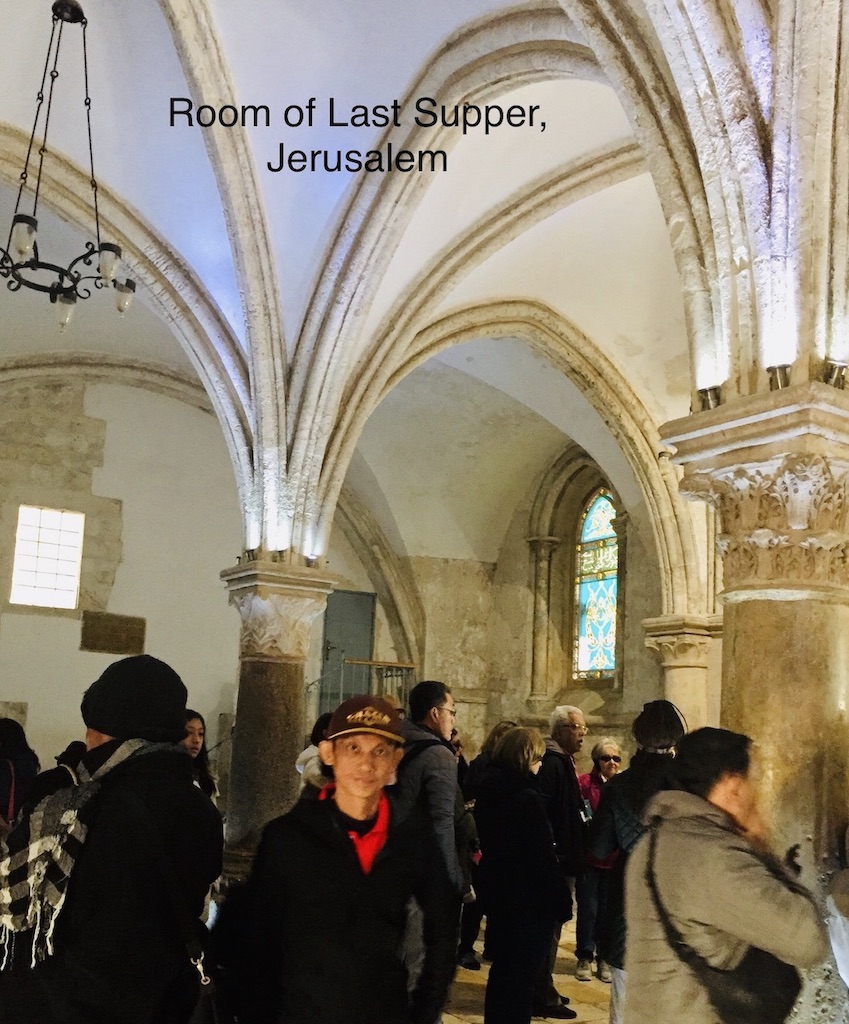
We went in to visit the traditional tomb of King David, which is on the ground floor, and the Room of the Last supper, which is on the floor above where the Last Supper took place. Presently, the Room of the Last Supper, also called Cenacle, is considered one of the holiest sites sacred to Christians. Jews hold the ground floor Tomb of David sacred.

Room of the Last Supper

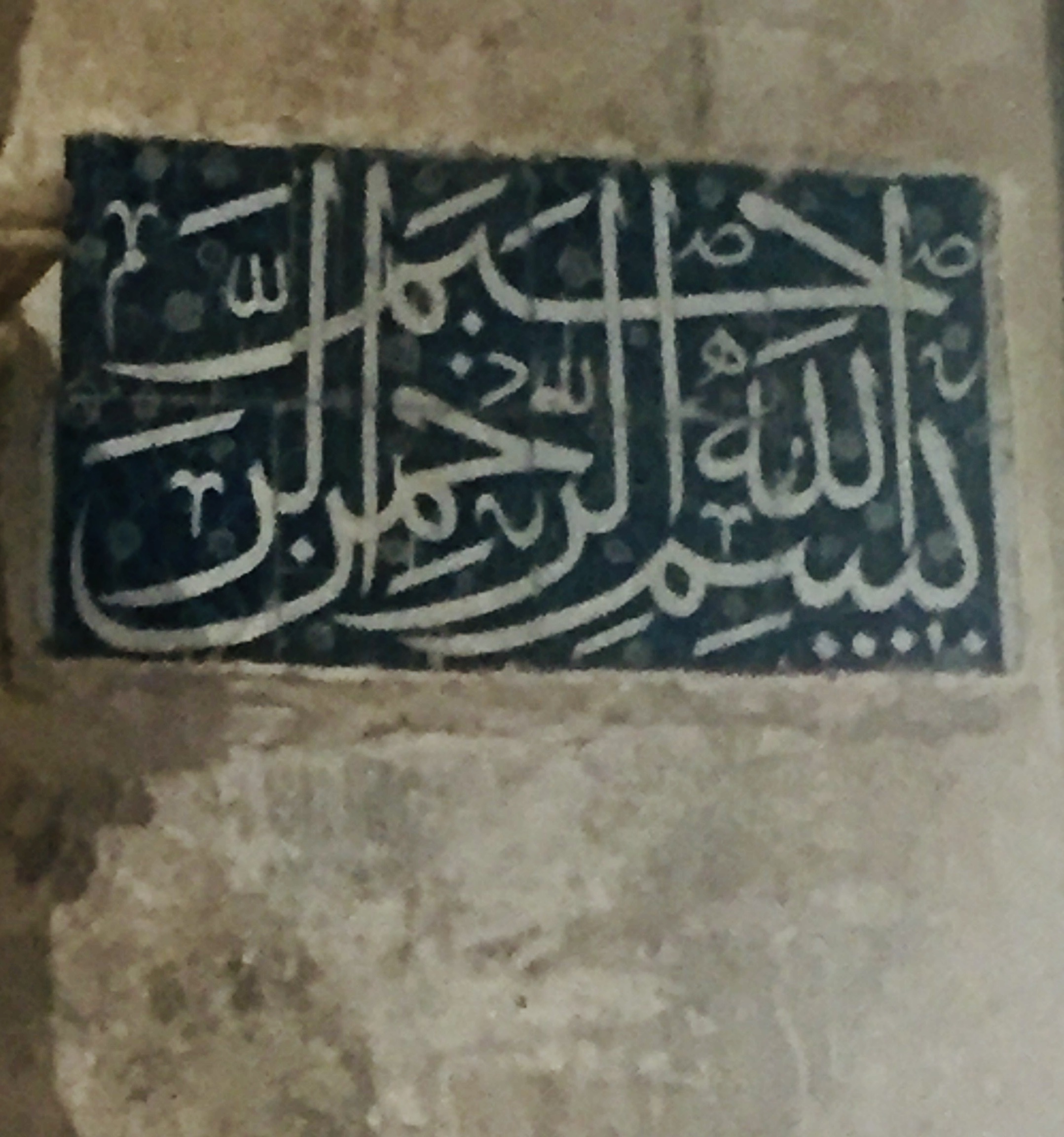
Evidently, when the Ottomans arrived in the 16th century, they converted the Room of Last Supper into a mosque. It has a Muslim prayer niche, a stained glass window with Quranic Verse, and another wall art with an Arabic verse. It is intriguing to see layers of three religions, Jewish, Christianity, and Islam, not just in Jerusalem but everywhere you travel in the Middle East.

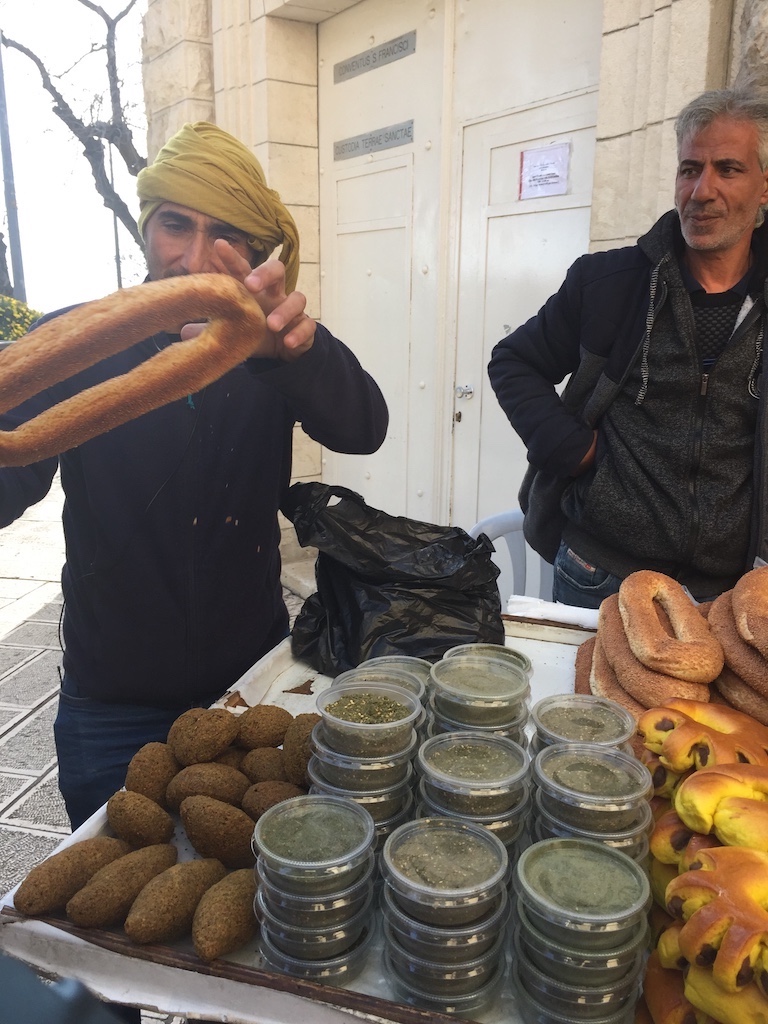
As we exited the Zion Temple, we were greeted with the aroma of freshly baked bread, Kibbe, and sauces to go with. Tal, our tour guide to the left, helped us with this welcome snack to hold us over before we got to the hotel.

Outside Zion Temple

Click here for Tel Aviv.


Click here for Tel Aviv.

Kibbutz, Israel

Amiad Kibbutz, Sea of Galilee Region

For our next jaunt, we visited a working kibbutz called Ami’ad.  The kibbutz is a unique settlement in Israel. The first Kibbutz was established in 1910 by groups of young Jews who wanted to build a community for themselves. Their idea was to make a living through agriculture. The basic idea was diversified for the kibbutz to function in a capitalistic manner and move with the times. They established different enterprises and now are a large part of the economy.

At Ami’ad we received all the details of how the kibbutz functions as we walked around the buildings in the compound. Giving us an insight into the communal living where everyone was given a job and adults lived, and worked in a communal system. Everyone ate in a common dining room. Kids lived separately and they were the responsibility of caregivers, and they only saw their parents for a short time every day. There is a huge artwork on one of the walls which is a large mosaic of leaves, and each leaf was done by one family depicting their own version of life in the kibbutz. It was a creation for the 60th anniversary of Amiad. The communal theme was obvious as the individual pieces were put together to create one large mosaic.

Communal Mosaic

Since a war in Israel is a constant threat, they have bomb shelters in the kibbutz areas. They say that having those gives people strength, and a sense of security to have a semblance of normality.

Bomb Shelter

We stopped at a winery where the wines were made from the excess fruits grown at the Kibbutz. There were several flavors, even a liquor with chocolate flavor was offered, and that turned out to be the most popular one with our group. Everyone got a taste of all the varieties they had in tiny wooden Shot Glasses. The host was a very pleasant and funny young man. He made the experience enjoyable for everyone. These Shot Glasses below were given to us as souvenirs.

Wooden Shot Glasses at the Amiad Winery

Click here for Tel Aviv