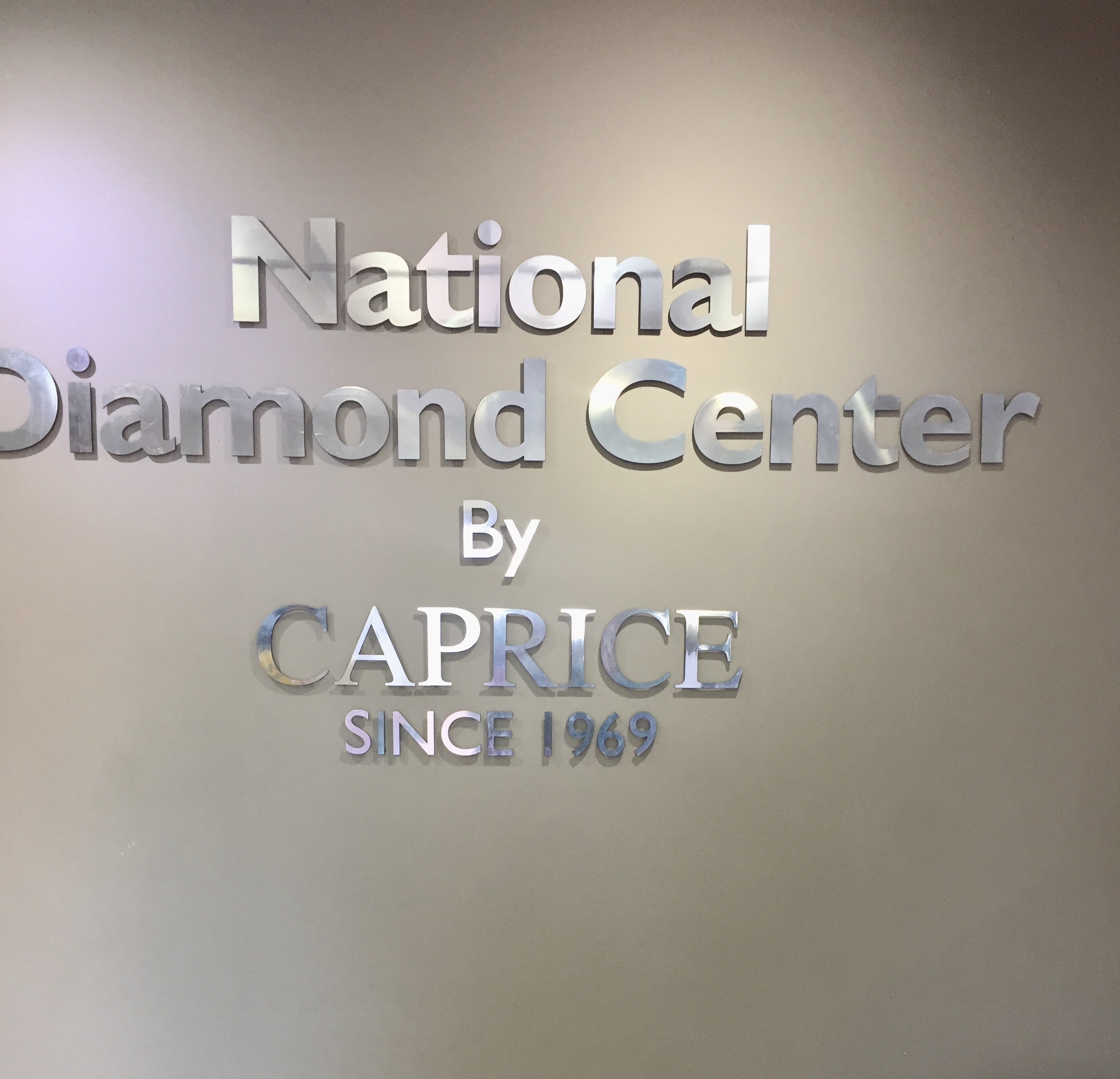
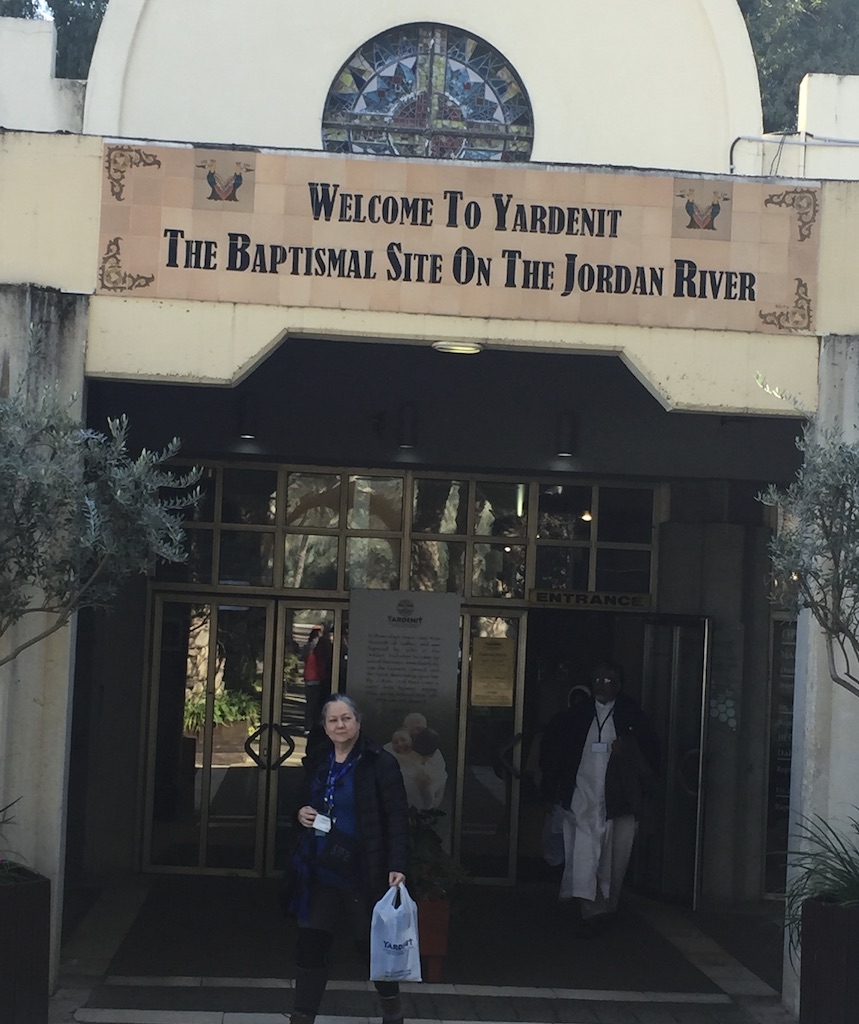
Early in the morning following day, we started for Jerusalem, leaving the Pristine Sea of Galilee behind. It was a whole day driving before we would get to Jerusalem. We stopped at a Diamond Center along the Jordan River. A good business for the Diamond Center and some girls in our group found their best friends right there.
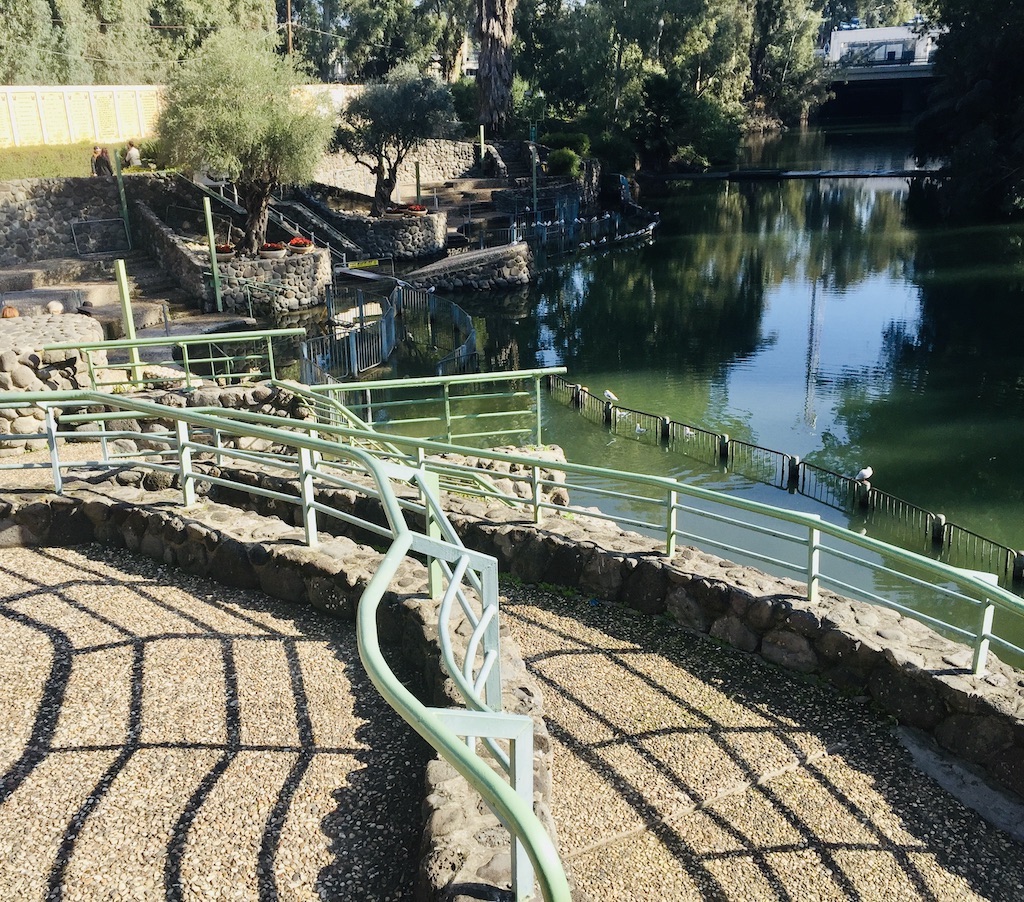
River Jordan
We enjoyed spending time around the beautiful river taking in the meditational view of the surrounding. Also, we had the good luck of watching a live Baptism which I was able to record.
Gorgeous River Jordan
Jaffer and John
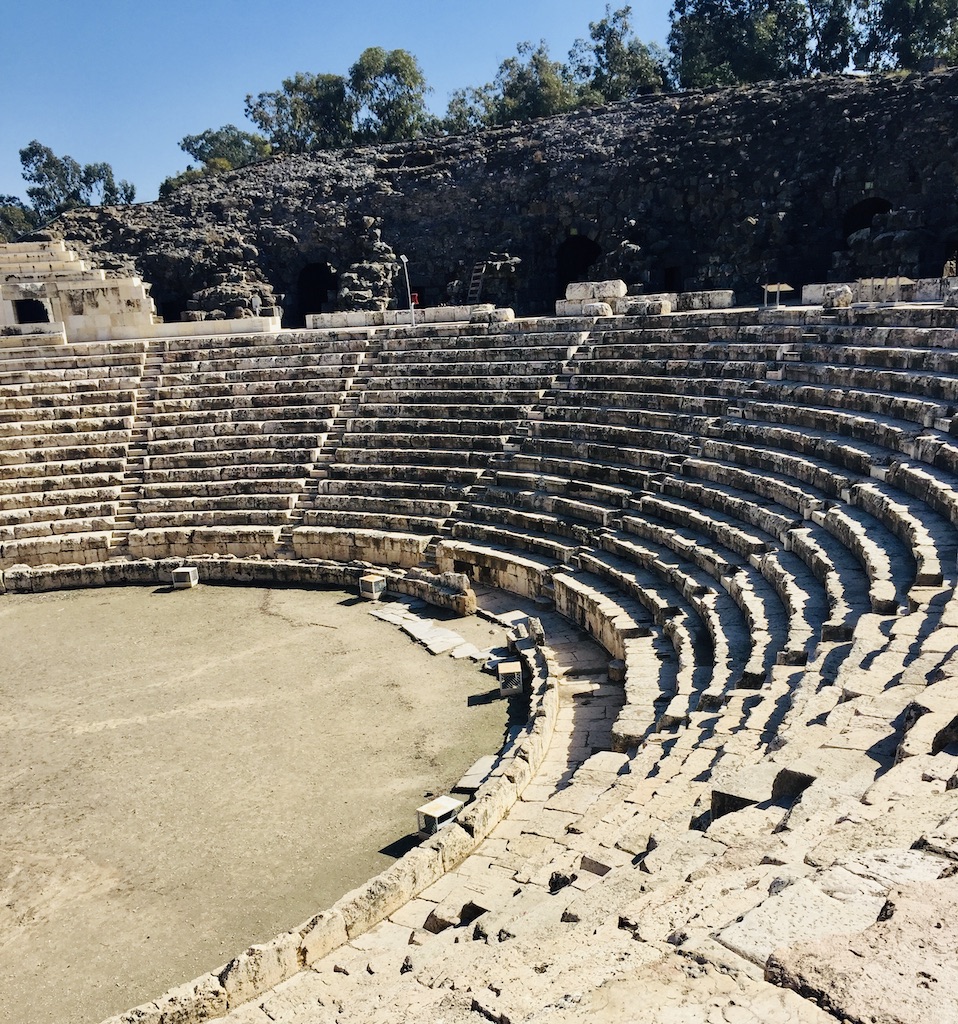
Then we were headed south to the impressive archaeological site of Beit Shean to see the remains of the ancient Roman city. After a long day of sightseeing, we continued to the hotel for dinner and overnight.
For our next jaunt, we visited a working kibbutz called Ami’ad. The kibbutz is a unique settlement in Israel. The first Kibbutz was established in 1910 by groups of young Jews who wanted to build a community for themselves. Their idea was to make a living through agriculture. The basic idea was diversified for the kibbutz to function in a capitalistic manner and move with the times. They established different enterprises and now are a large part of the economy.
Walking around Amiad Kibbutz
At Ami’ad we received all the details of how the kibbutz functions as we walked around the buildings in the compound. Giving us an insight into the communal living where everyone was given a job and adults lived, and worked in a communal system. Everyone ate in a common dining room. Kids lived separately and they were the responsibility of caregivers, and they only saw their parents for a short time every day. There is a huge artwork on one of the walls which is a large mosaic of leaves, and each leaf was done by one family depicting their own version of life in the kibbutz. It was a creation for the 60th anniversary of Amiad. The communal theme was obvious as the individual pieces were put together to create one large mosaic.
Communal Mosaic
Since a war in Israel is a constant threat, they have bomb shelters in the kibbutz areas. They say that having those gives people strength, and a sense of security to have a semblance of normality.
Bomb Shelter
We stopped at a winery where the wines were made from the excess fruits grown at the Kibbutz. There were several flavors, even a liquor with chocolate flavor was offered, and that turned out to be the most popular one with our group. Everyone got a taste of all the varieties they had in tiny wooden Shot Glasses. The host was a very pleasant and funny young man. He made the experience enjoyable for everyone. These Shot Glasses below were given to us as souvenirs.
After Capernaum, we proceeded to Mount Bental in Golan Heights. On the way to the top of the Mount Bental to see Syria, Lebanon border from Israeli-occupied territory.
View of Syria, Lebanon border from the Israeli side
On our way, we passed some interesting metal cutouts of Soldiers, which is a spot for Israeli kids to play. This area is a popular tourist attraction. While we were there, we saw many tourists, school groups, and families with kids.
We saw the Dmz area, which is now an area of ruins of the town of Quinetra captured by the Israeli military in the 1967 Six-Day War. I think It is the same area called the Valley of Tears because of the destruction caused during the war.
The site of a major battle in the 1973 Yom Kippur war, known as the Valley of Tears Battle.
We went up to see Mount
Hermon on the border of Syria and Lebanon. The southern slopes of Mount Hermon
extend to the Israeli-occupied portion of Golan heights.
Golan Heights, IsraelBorder of Syria and Lebanon
There is a café called Coffee Annan (a pun on both the UN leader and the Hebrew for Coffee of the Cloud.
Cafe Coffee Annan, Golan Heights, Israel
It was a historic location worth visiting. I know we will not do it again. Loved it!
We spent the night at Nof Ginosar Hotel in the Galilee region. We began our next day with Capernaum, a fishing village and currently an archeological site situated on the banks of the Sea of Galilee. The Pristine Sea of Galilee is the largest freshwater lake in Israel. After leaving Nazareth, Jesus moved to Capernaum, which became his home and a center of His ministry where he also performed miracles.
Capernaum, Israel
It is home to a celebrated Byzantine-era synagogue. The remains of the buildings and synagogue exist. It was a place Jesus healed a paralytic and St. Peter’s mother-in-law. And archeologists found that the St. Peter’s Church was built on top of St. Peter’s home. The site is a major tourist attraction.
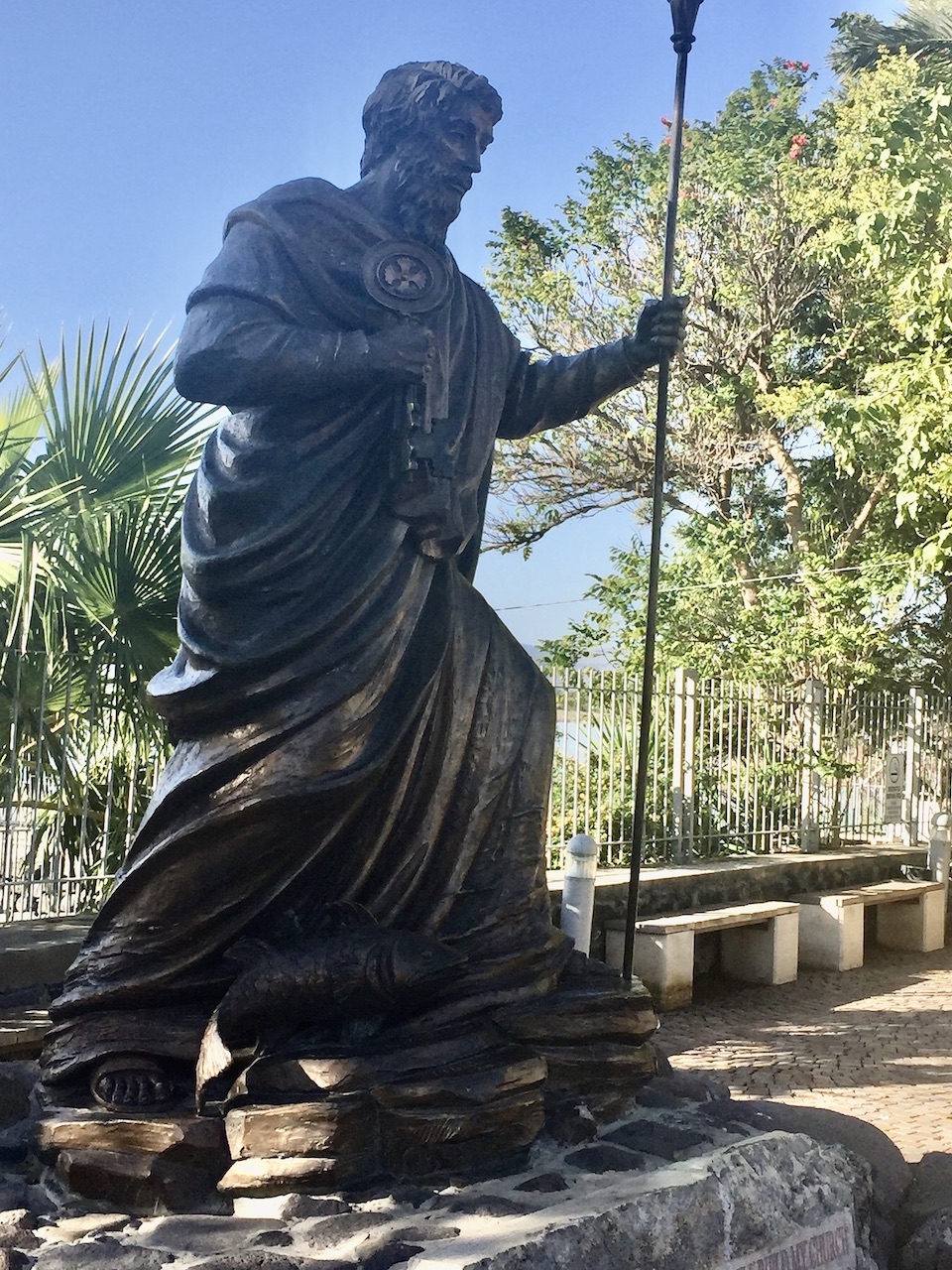
Capernaum was one of the most prominent towns of Jesus’ life. Looming 12 feet tall near the entrance to Capernaum, an imposing bronze statue of the Apostle Peter actually weighs a ton. You can see in the picture that he has a fish at his feet, a staff in his left hand, and a gigantic key in his right hand. The keys represent the divine authority that was vested in him by Jesus Christ.
Interior of St. Peters Church
Statue of St. Peters
After Capernaum, we stopped at a working Kibbutz called Ami’ad for a walking tour.
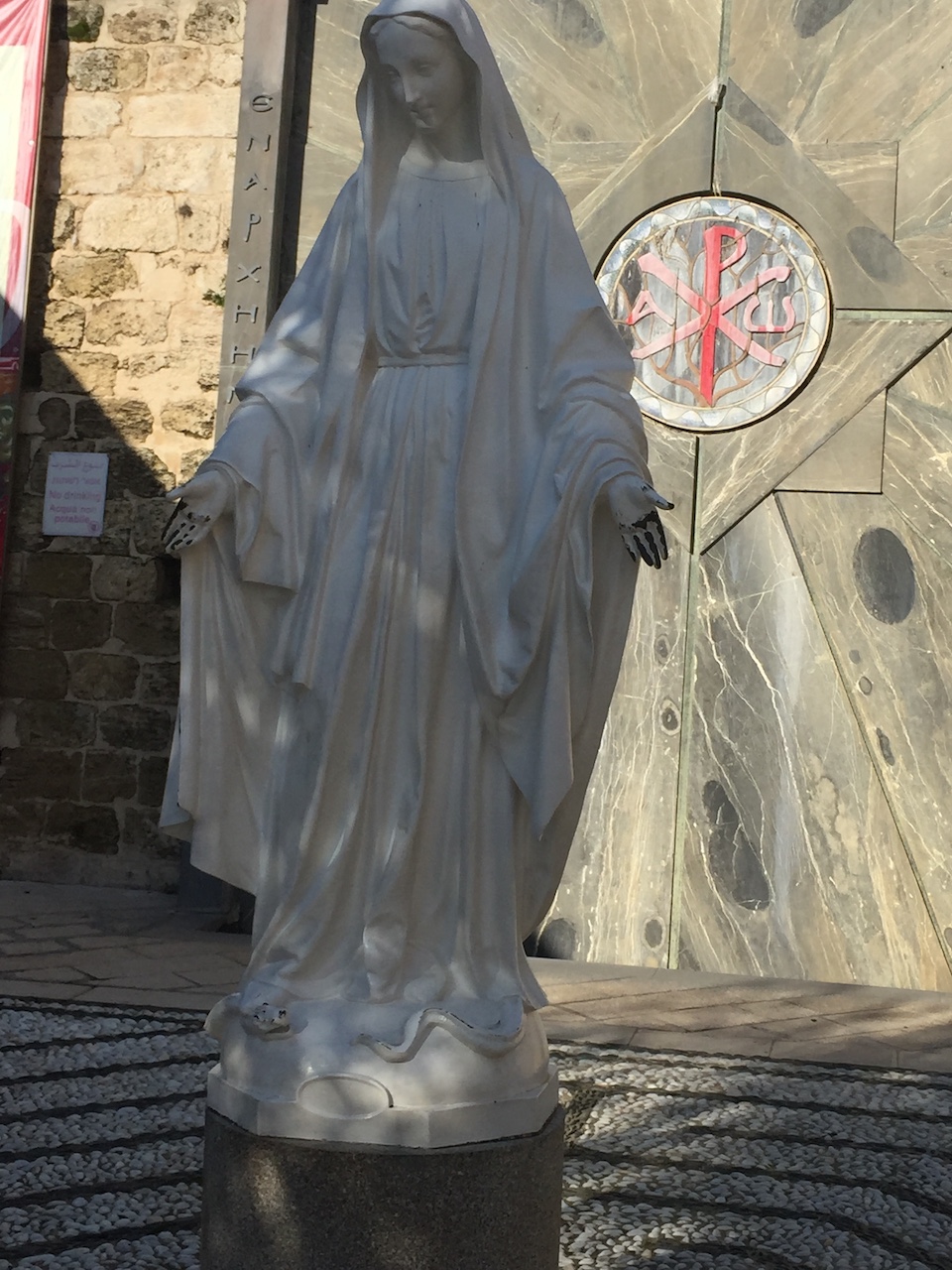
Nazareth is the largest city in the Northern District of Israel. Because a majority of the population is Arab, it is known as the Arab capital of Israel. But it is a sacred town where Jesus spent his childhood. A beautiful church of Annunciation is built over the cave (Grotto) which was the home of the Virgin Mary, and where, it is believed that Angel Gabriel appeared to her and announced that she would conceive and bear the Son of God.
Church of Annunciation (Front View)
Church of Annunciation
Church of Annunciation
The Church of Annunciation has two different floors: a grotto, and the top of which is the main church. Scene (above ) is part of the Grotto which was turned into a worship place in the 1st and 2nd centuries.
Worship area in the Grotto, Annunciation Church
Nativity Scene
Pomegranates, Nazareth
Pomegranate is a symbol of plenitude, abundance, and hope. Pomegranate has 613 seeds and corresponds to 613 commandments of the Torah. And according to the Jewish tradition, it is a symbol of righteousness.
Right outside the Church of Annunciation, they were selling freshly made Pomegranate juice, which most of us had, was delicious.
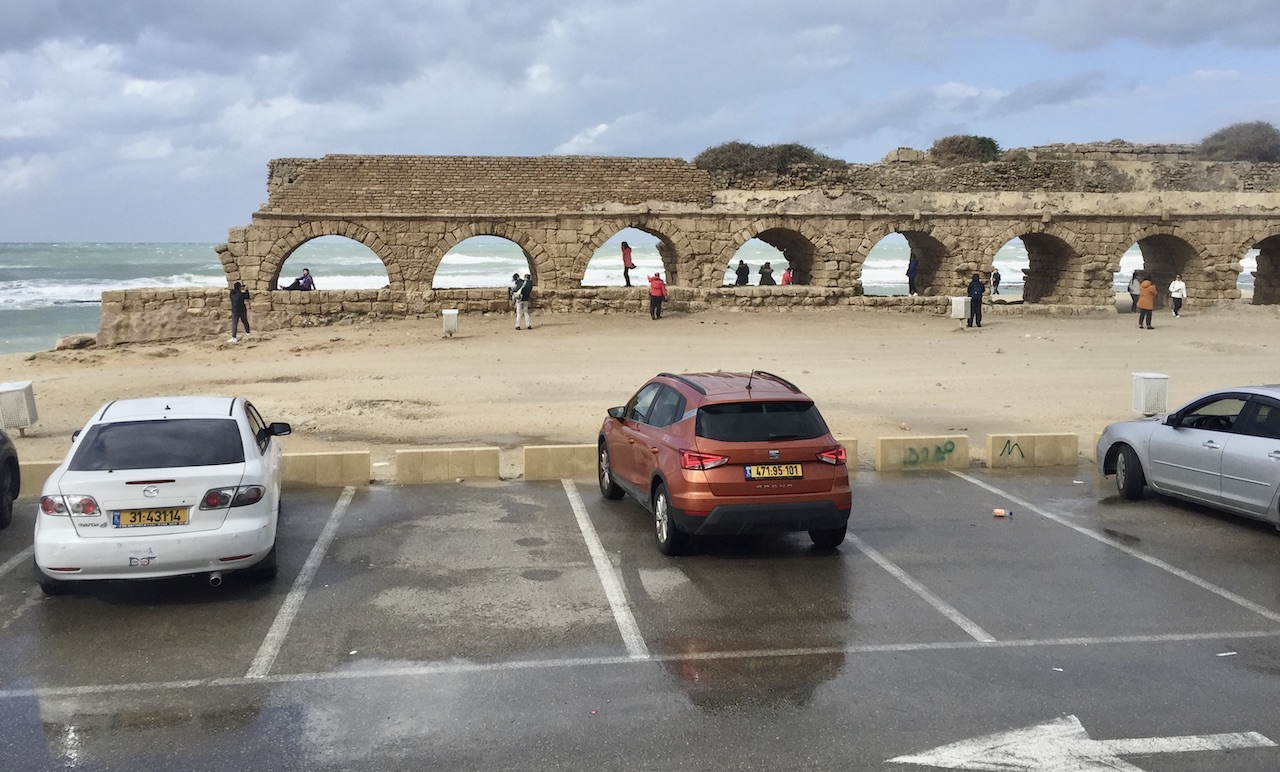
After spending two days in Tel Aviv, we left for the Sea of Galilee. On the way to the Sea of Galilee, we had a few stops. A thunderstorm and high winds greeted us, but it was warmer. The rain relented, giving way to strong gusts making it difficult even to balance yourself in Caesarea, a town on the Mediterranean coast midway between Haifa and Tel Aviv. It is a historic port with Roman Amphitheater and Hippodrome and an impressive aqueduct, all built when Herod the Great constructed the port of Caesarea in the First century BC.
Amphitheater, Caesarea
The picture below shows the large circular open-air amphitheater with the seats raised to protect the audience. Amphitheaters were used in Roman times for events such as gladiators and maybe execution. They are still in use for cultural events.
Oval Amphitheater, CaesareaHippodrome, Caesarea
The aqueduct in Caesarea, Israel’s most famous attraction, was built by Herod the Great to carry water to Caesarea from the springs near Shuni, 16 kilometers northeast of Caesarea, the distribution point.
Israel was never on our bucket list. But recently some of our friends visited Jerusalem and that made us interested in visiting Jerusalem, as well as Tel Aviv which we thought might be a fascinating vacation. Further changes meant the inclusion of Jordan in the package. So our trip to the Middle East with Gate 1 Travels was planned, which included Tel Aviv, and Jerusalem in Israel, and Jordan. On arrival at Tel Aviv airport, we were transferred to the Cinema Hotel which was a movie theatre (an interesting detail) before it was a hotel, hence the name.
They maintained the cinema theme by placing cameras of all shapes and sizes all over the building which made me feel as if we were under scrutiny. Right across from our hotel was another hotel called Center chic Hotel, which is part of the same chain. They offered happy hour to the guests of the Cinema Hotel between 5:30 and 7 Pm. It turned out to be very convenient for us to relax and grab a bite before an hour-long orientation for our upcoming, rigorous sightseeing schedule, to be delivered to us by our Tour Manager, Tal. He had a merciless approach to maintaining strict timing by exacting obedience from all passengers regardless. The early start was extremely important, he said because there was going to be a three to four hours bust ride followed by walking on uneven surfaces, steps, and significant slopes. Introductions were done, whispers distributed and instructions given which were fairly clear. This leg of the trip was going to be in Tel Aviv and Jerusalem. Our extended 5 more days was the visit to Jordan. We were also informed that those who are visiting Jordan would join a tour group designed for Jordan by a Jordanian tour manager.
Tel Aviv
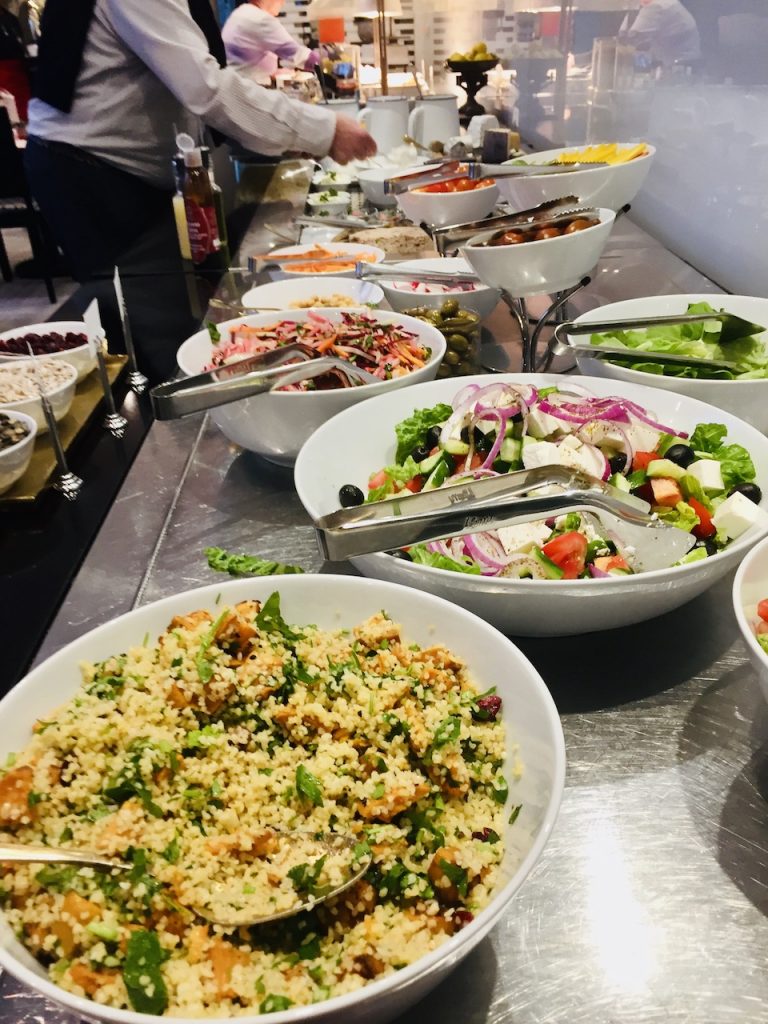
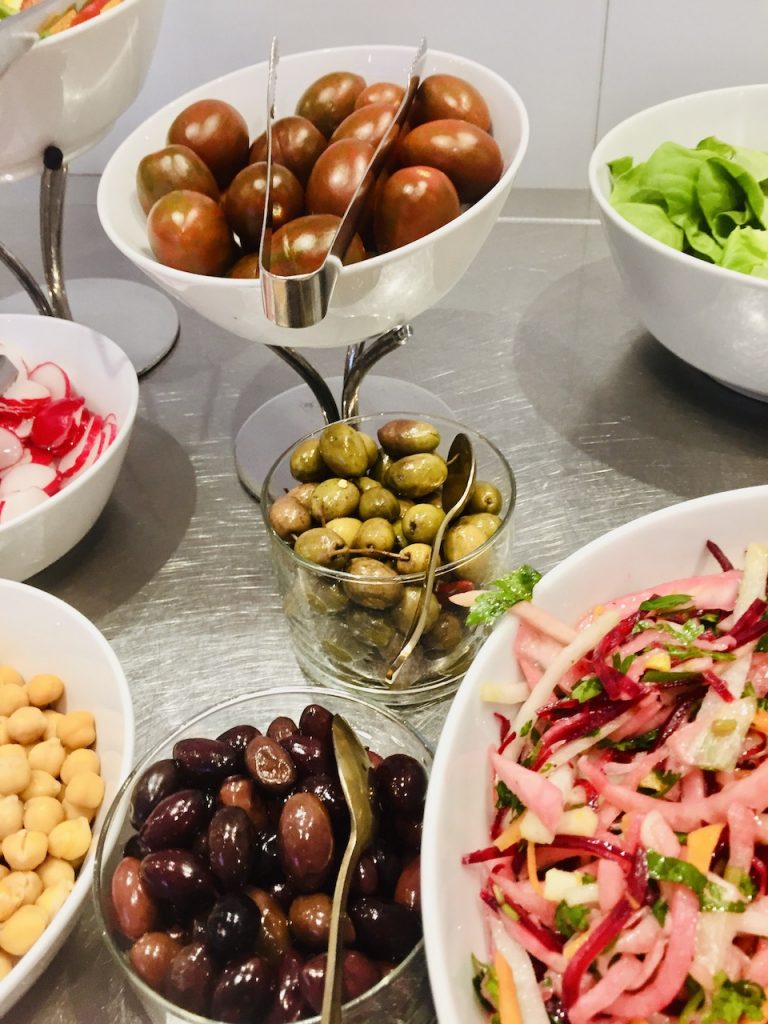
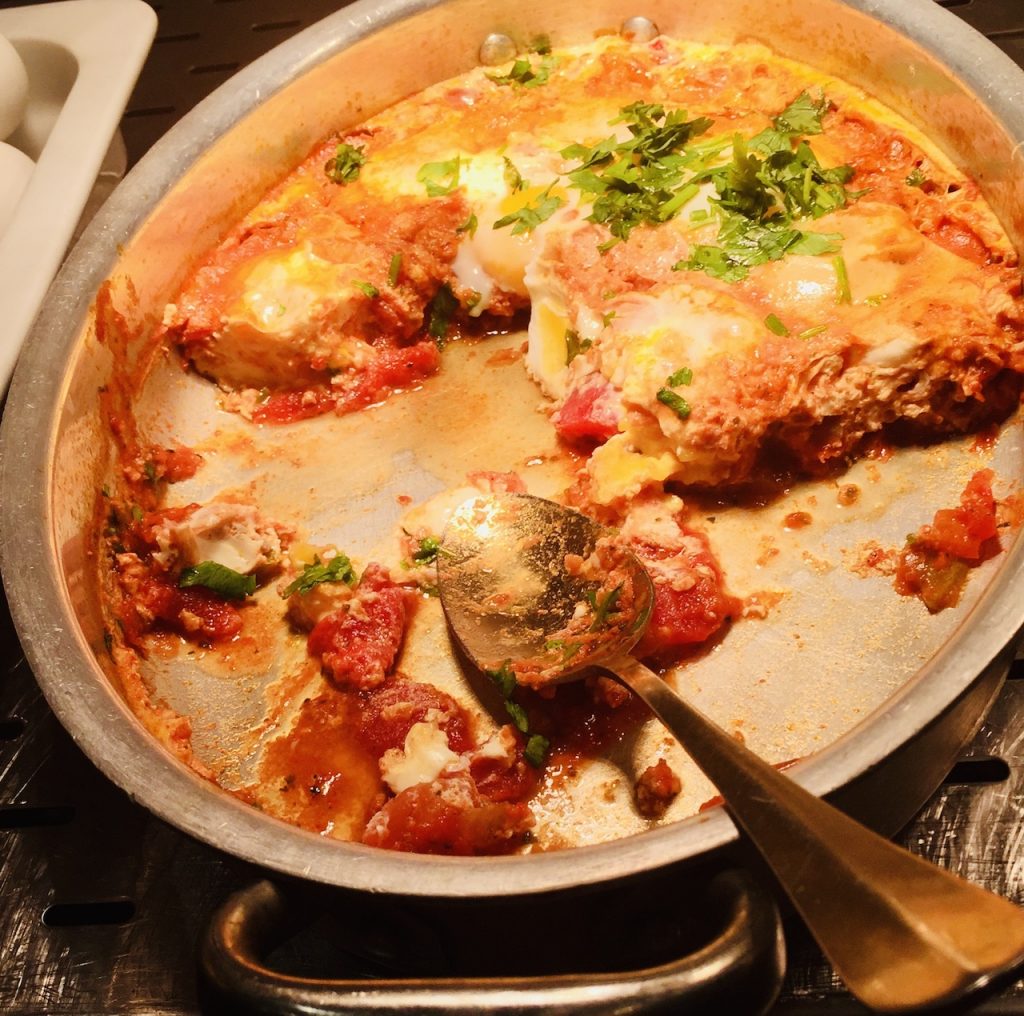
Our day started with a magnificent breakfast spread in the hotel restaurant. Pictures below give only a glimpse of what was a feast. I was glad to see that the most popular dish seemed to be shakshuka, eggs poached in tomato sauce. We have a very popular breakfast item which looks and taste very similar to shakshuka called khagina, with a difference that we poach eggs in an onion sauce which is eaten with Indian paratha). Breakfast was served as a Buffett where you helped yourself to whatever you wanted and repeated as many times as you want. Coffee was the only thing you could order and get served on the table.
Breakfast items
Breakfast items
Shakshuka,Breakfast item
Gate of Faith
After this sumptuous breakfast, we started visiting Jaffa Tel Aviv, the oldest part of Tel Aviv. It is a port city of historical importance on the Mediterranean Sea coast and has become a top-rated attraction for tourists with art galleries, restaurants, museums, and nightclubs. Our first stop was Gate of Faith. A doorway-shaped sculpture that symbolizes an entry to the Land of Israel and has three sculpted biblical stories of Abraham, Isaac, and Jacob on the pillars and top depicts the conquest of Jericho.
Gate of Faith, Jaffa Tel Aviv
From there we walked around in narrow alleyways of Artist’s Quarters and saw a suspended orange tree in a stone. Apparently, an artist’s creation pays homage to bygone Jaffa oranges, and also to symbolize mankind’s disconnect from nature. It was an experience in itself.
Orange Tree suspended in a stone, Artist’s Quarters in Jaffa Tel Aviv
Pictures below show some of the historical sites we saw on our walking tour.
Ottoman period wooden train display in Jaffa, Tel Aviv.
Ottoman Era wooden Train
Al- Bahr Mosque: The oldest mosque on the Mediterranean coast built in the 16th century is still existing. Muslims have not been allowed to enter the mosque since Palestine was occupied in 1948.
Al Bahr Mosque, Jaffa Tel Aviv
Great Mahmoudiya Mosque is the largest mosque in Jaffa and can be spotted from anywhere in Tel Aviv. Call to prayer cannot be sounded because of its busy location. Despite this, it is a busy mosque of the area. Locals as well as pilgrims from far afield come there to worship. However, non-muslims cannot go into the building itself.
Mahmoudiya Mosque, Jaffa Tel Avive
The Jaffa Clock Tower was built in 1901 in the center of Jaffa’s town Square. It was built to pay homage to the Ottoman ruler and his vast empire. This is one of seven towers that were built in Palestine during Ottoman Period. The one in Jerusalem was destroyed at some point.
Clock Tower, Jaffa Tel Aviv
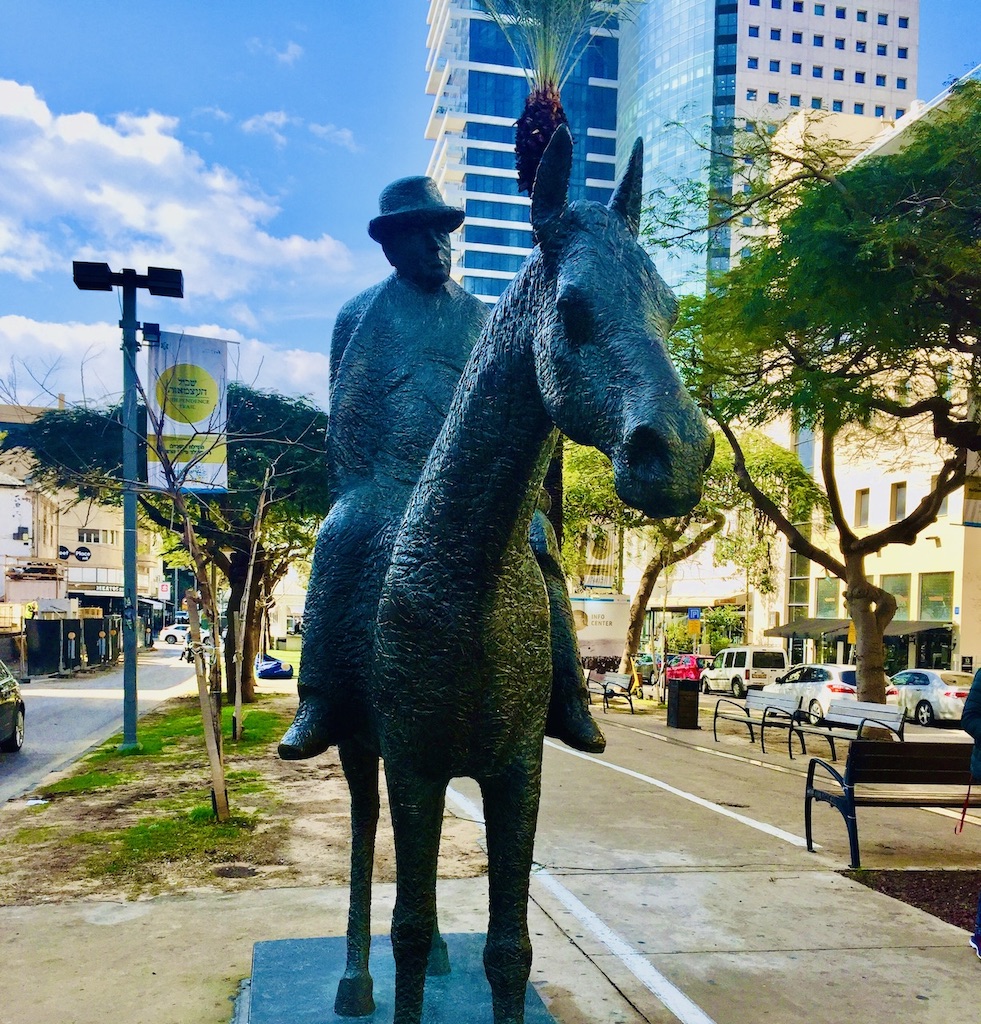
Meir Dizengoff was the mayor of Tel Aviv, and a pioneer of modern Zionism. He gave his house to the city which became Independence Hall. This statue below is located on Rothschild Boulevard, across from Independence hall is a tribute to the mayor .
Meir Dizengoff Statue, Rothschild Blvd. Jaffa Tel Aviv
This ended our walking tour, and we headed out to our hotel for lunch and rest. We were glad to take it easy before we hit the road the next morning.