Category: Travel Blog

Ciudad Mitad del Mundo

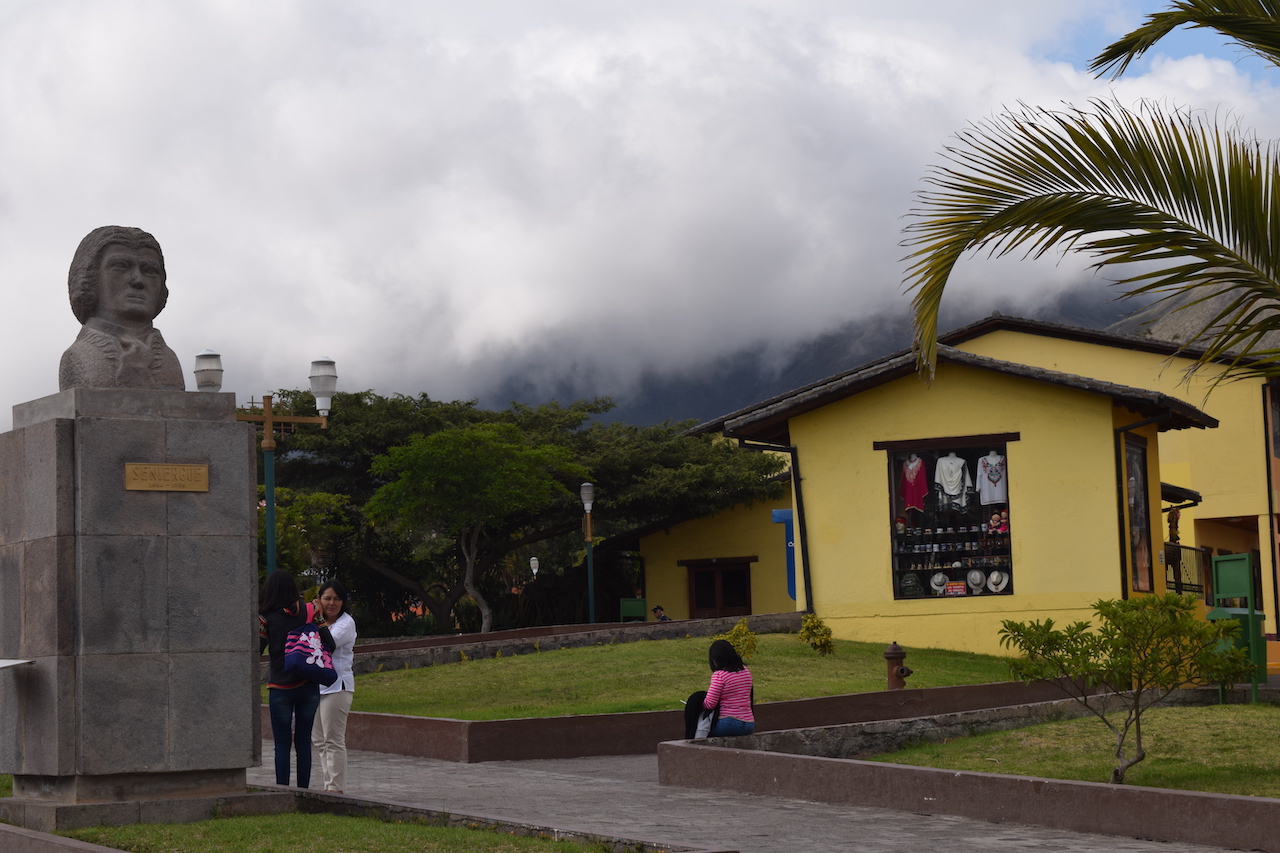
Monument to the Equator

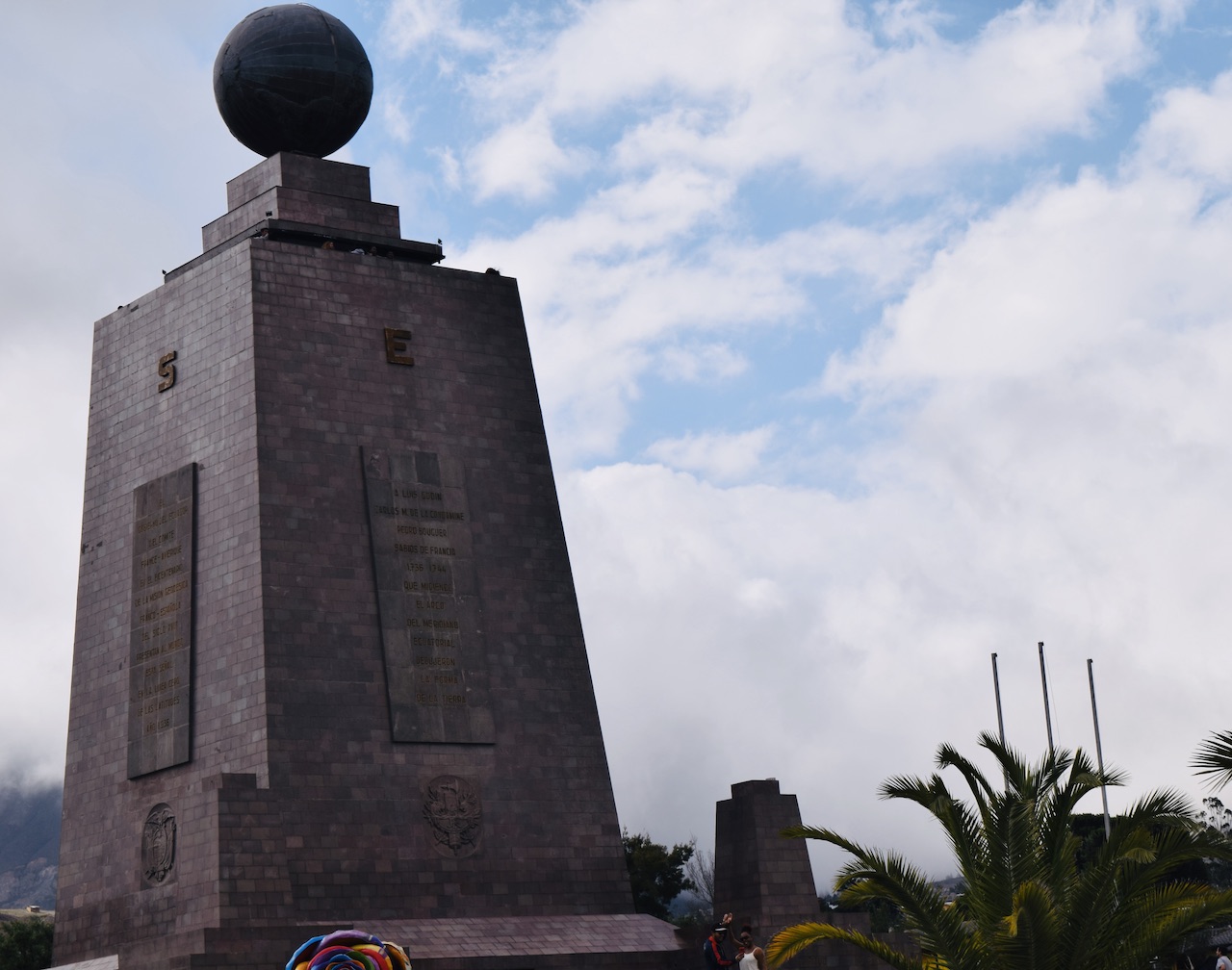
The Equatorial Monument is located in this small touristic city and it pays tribute to the First Geodesic Mission  This Mission established the location of the equinoctial line and confirmed the shape of the Earth in 1736. The name of Ecuador was given by this imaginary line that divides the earth in north and south hemisphere, this imaginary line measures 5 km wide and runs the entire globe with a longitude of 40.075 km.

Taken from a guide book

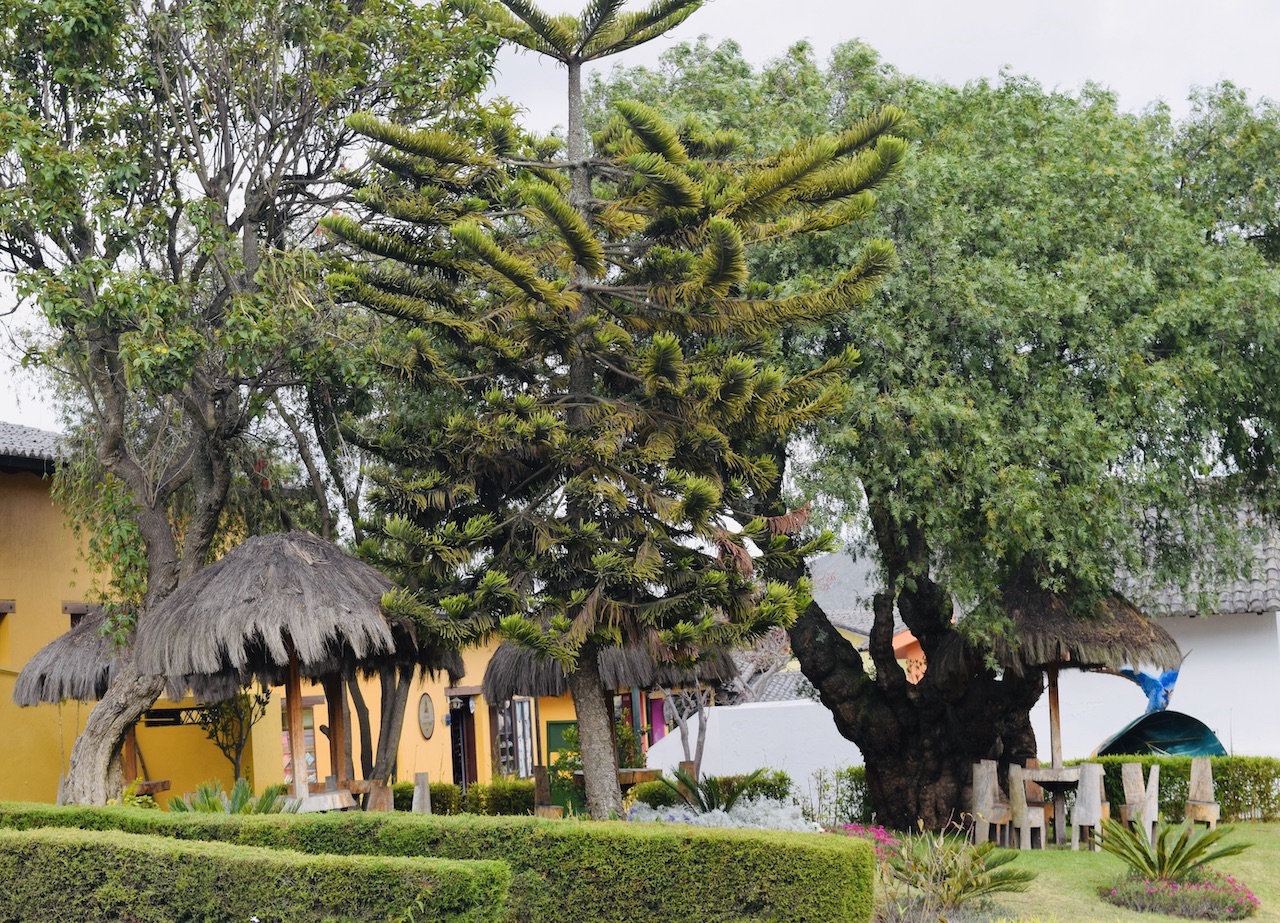
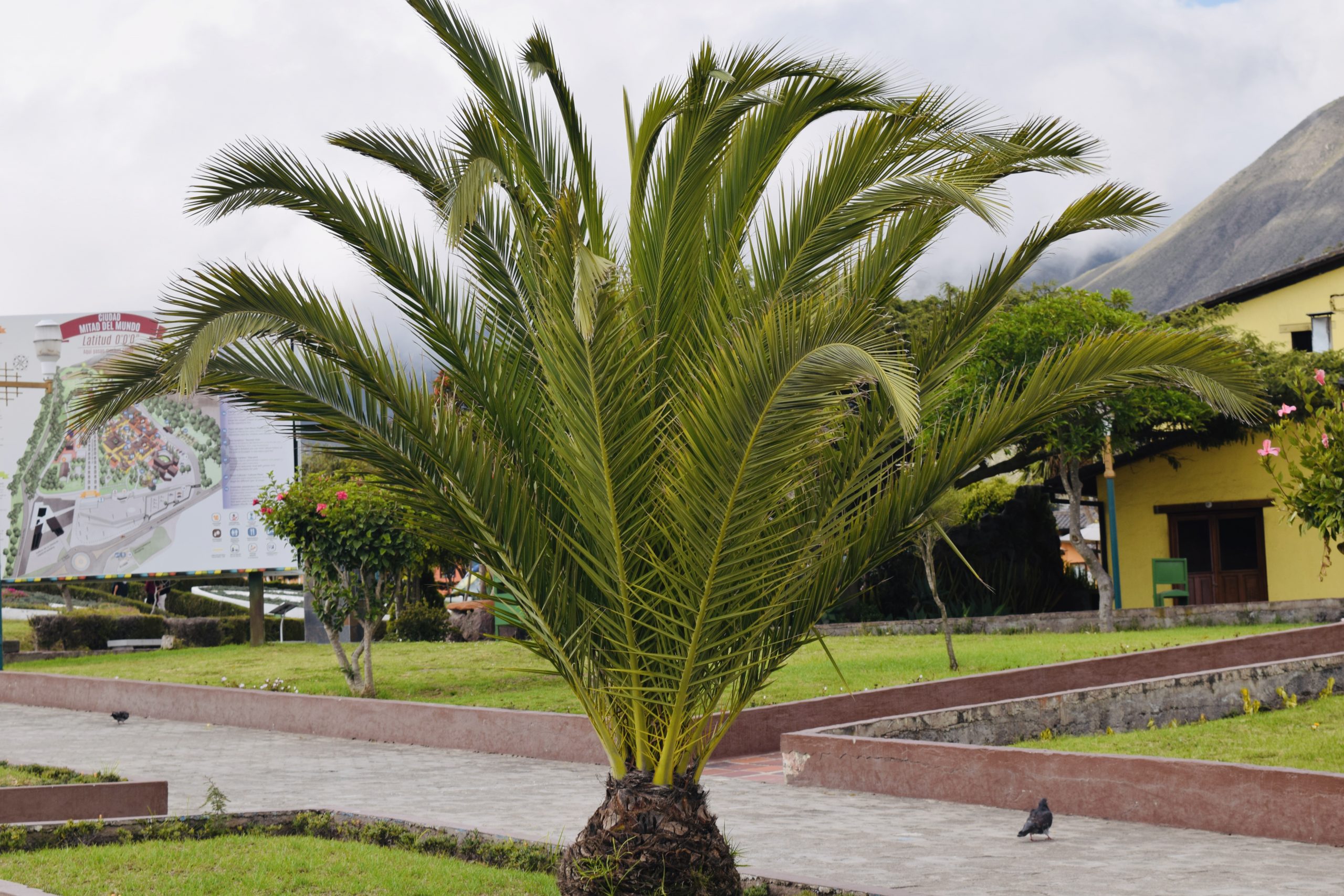
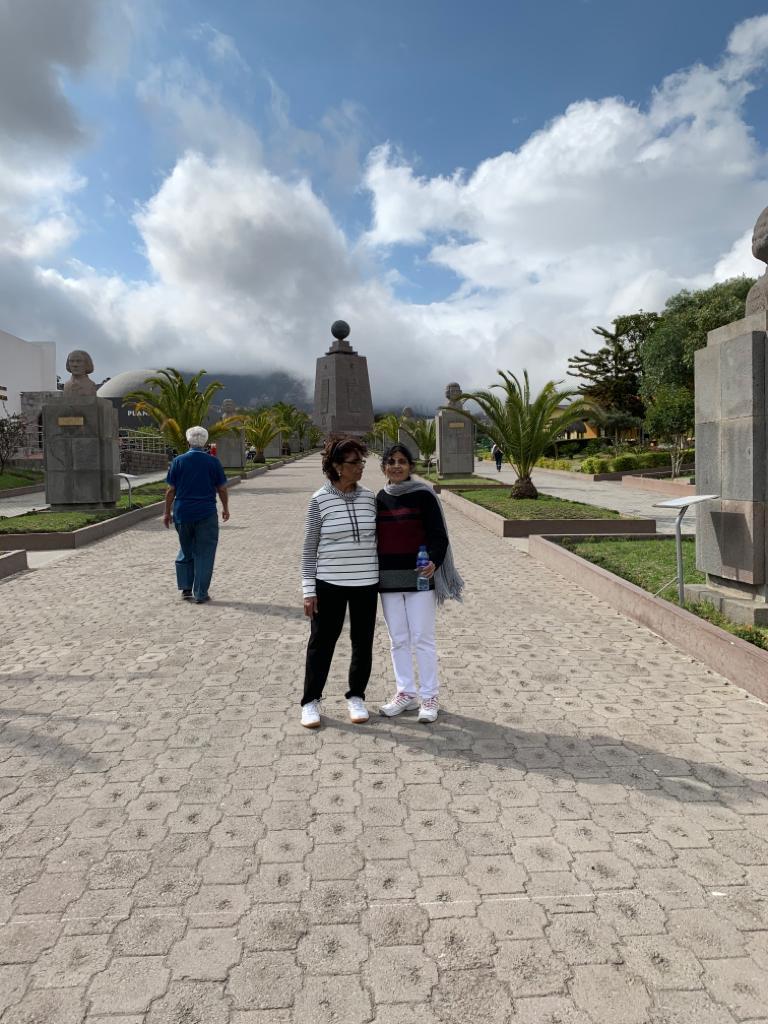
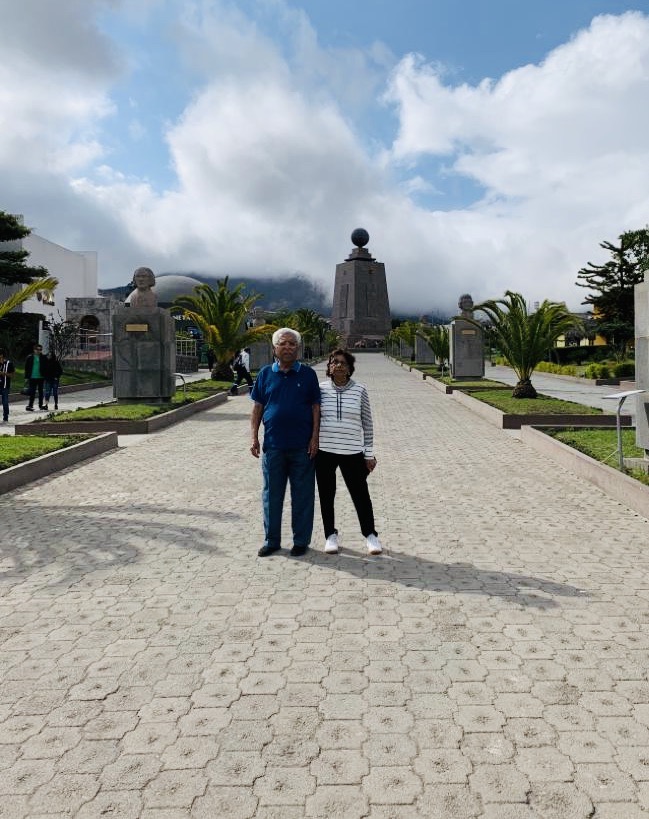
Mitad del Mundo means “The Equator”, and Quito has become famous for it.  It is pretty impressive with one dominant monument topped by a brass globe with smaller monuments leading up to it. The focal point is the dominant monument, which highlights the location of the equator fixed by the Franco-Spanish Geodesic mission. But this line did not represent the actual Equator, because French-Spanish team miscalculated it by 200 meters. Now (as I mentioned in my previous post) the Intiñan museum advertises itself to have the true equator line.

The dominant monument houses a viewing platform and a museum. We attempted to see it only to find out that it had 9 floors. Our wavering resolve was strengthened with the knowledge that there was an elevator we could use, though it only took 8 people at a time. Still we were brave enough to want to give it a shot and stayed in line, only to be defeated when we found out that the only option on the way back was to climb down all 9 floors. That was not acceptable because not only it was the end of the day, but was only our second day in Ecuador, with extreme possibility of altitude sickness hitting us. We decided to dump the idea.

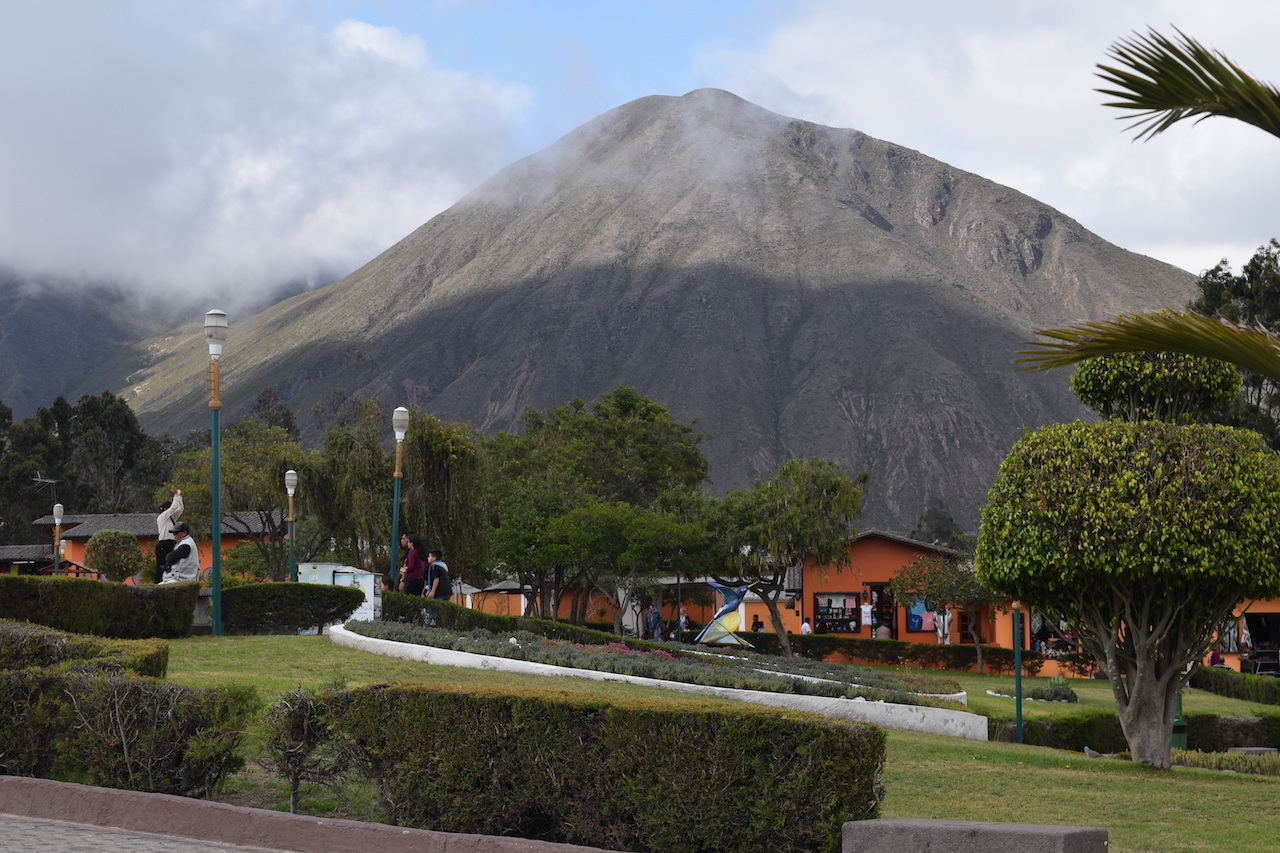
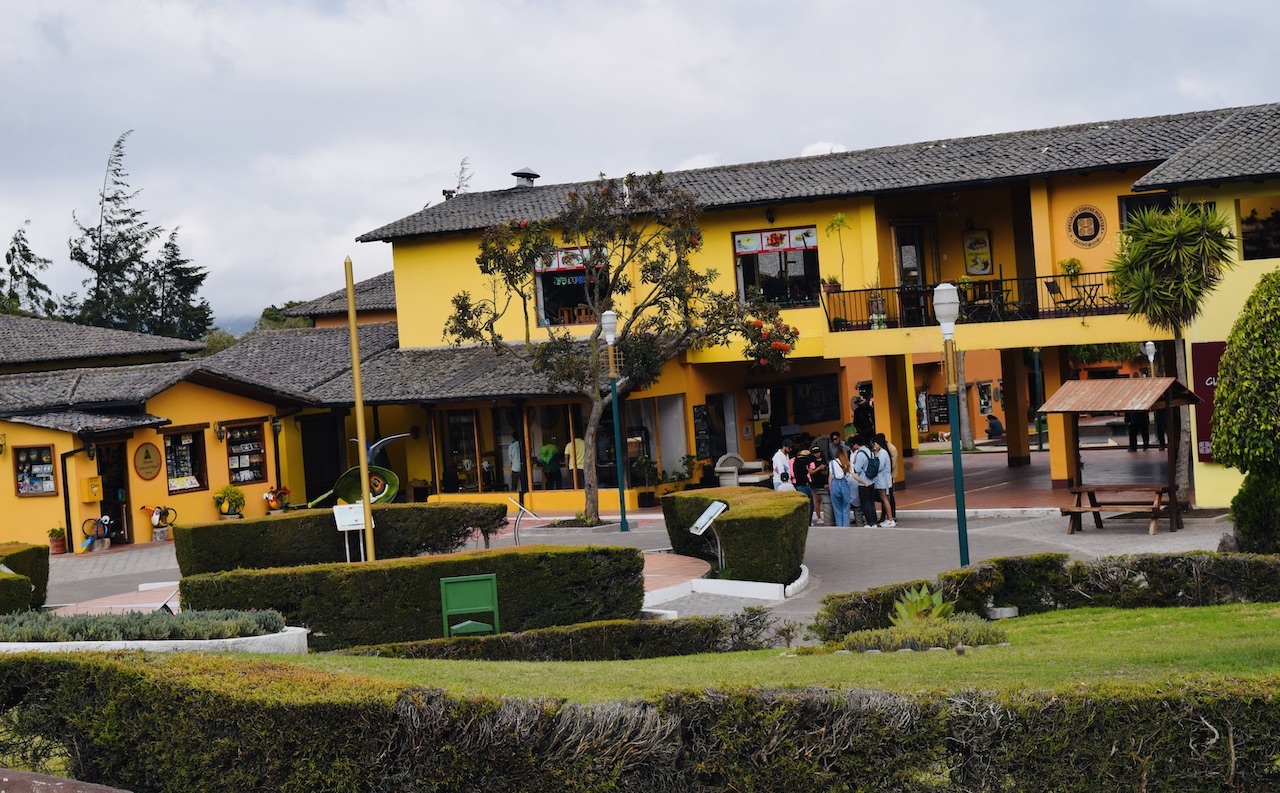
As we walked back, we decided to hang around a little to take in the nature at its best. Without exaggeration, it was a spectacular 360 degrees view of mountain peaks, clouds which ranged in appearance from wispy to dense and voluminous, with mind blowing shades of colors making the nature even more intoxicating. This panorama provided a daunting backdrop for the colorful business area where one can shop, eat, relax, reflect, contemplate, or better yet meditate.

It was getting late and we were tired, we decided to head back, have dinner, and get a good night sleep and be ready for our next adventure. The following day’s plan was to go with Jose, our taxi driver, to Cotopaxi, which was a whole day trip. I couldn’t wait to see what the next part of the journey held for us. My next post will be on Cotopaxi .

Intiñan Museum, Quito,

Intiñan Museum, Quito, Ecuador

After our visit to the Pululahua Crater, we proceeded to Intiñan Museum, which features a living history of the Ecuadorian life and has  developed into a major tourist attraction. Intiñan Museum is located just outside Quito, a short way from Mitad del Mundo. Apparently Mitad del Mundo’s equator line is off by about 200 meters. Whereas, intiñan museum advertises itself to have the true equator line.

Rizwana

There was minimal entrance fees, but with an added advantage of a guided tour through the exhibits. There were not a lot of exhibits and the guide took around 1-hour to take us around the premises. She was very pleasant with a sense of humor. At first she focused on the tribes’ daily life, starting with the replicas of the typical colony of the tribes. There was a display of primitive style kitchen with a large pot on a makeshift, what appeared to be, a wood burning stove. several pots and pans were stored around the area.

Next display was history of the indigenous people in the amazon and their practice of head shrinking rituals . More on it in a future post.

There was an authentic home built long time ago by the indigenous people giving visitors a chance to see living history of Ecuadorian life complete with a live guinea pig farm and free range llamas roaming around. By the way, guinea pig (Cuy) is considered a delicacy in South America. Cuy (guinea pig) is one of Peru’s most famous dishes that is fried or roasted .

authentic home
(Cuy) guinea pig farm
Llamas, Intiñan Museum

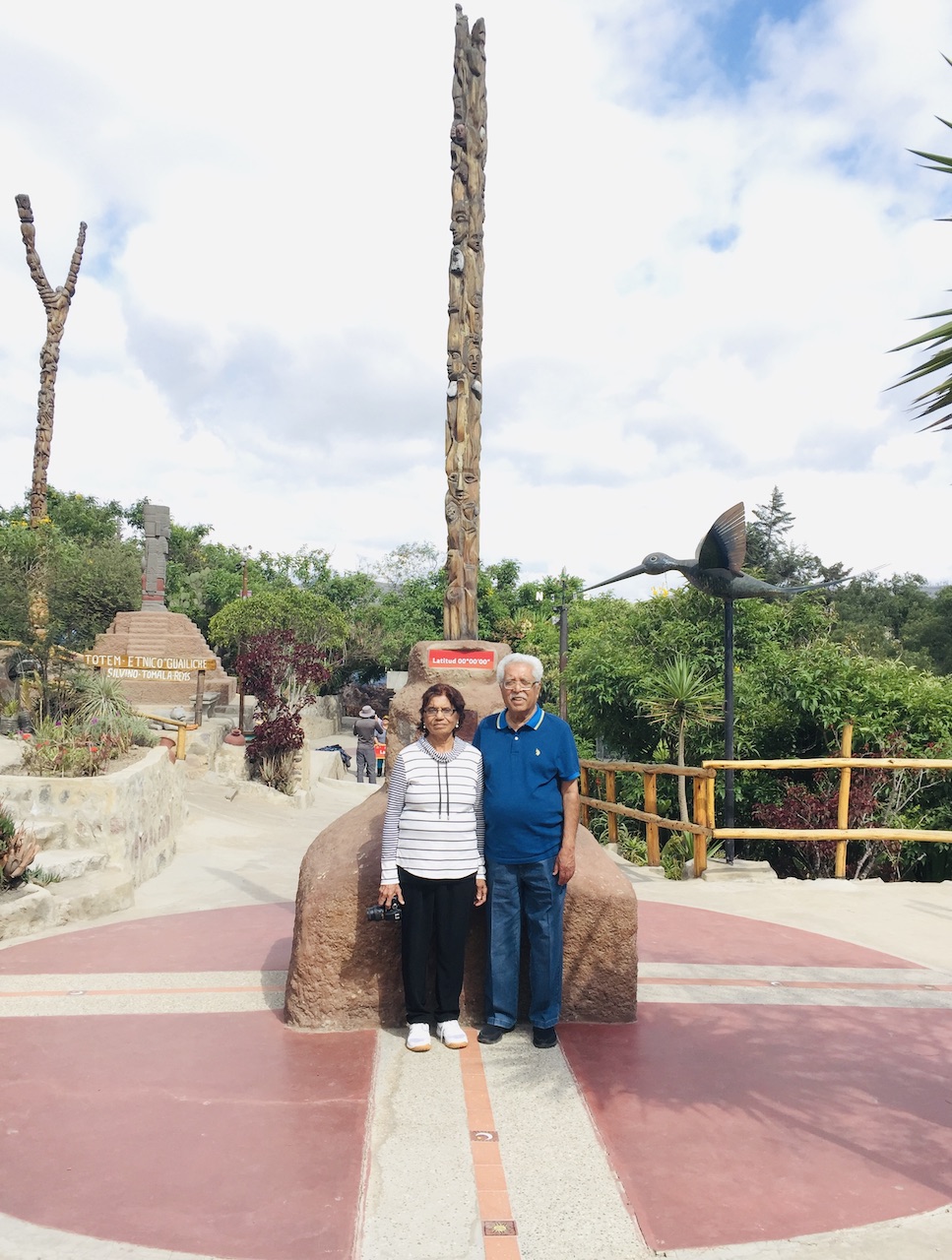
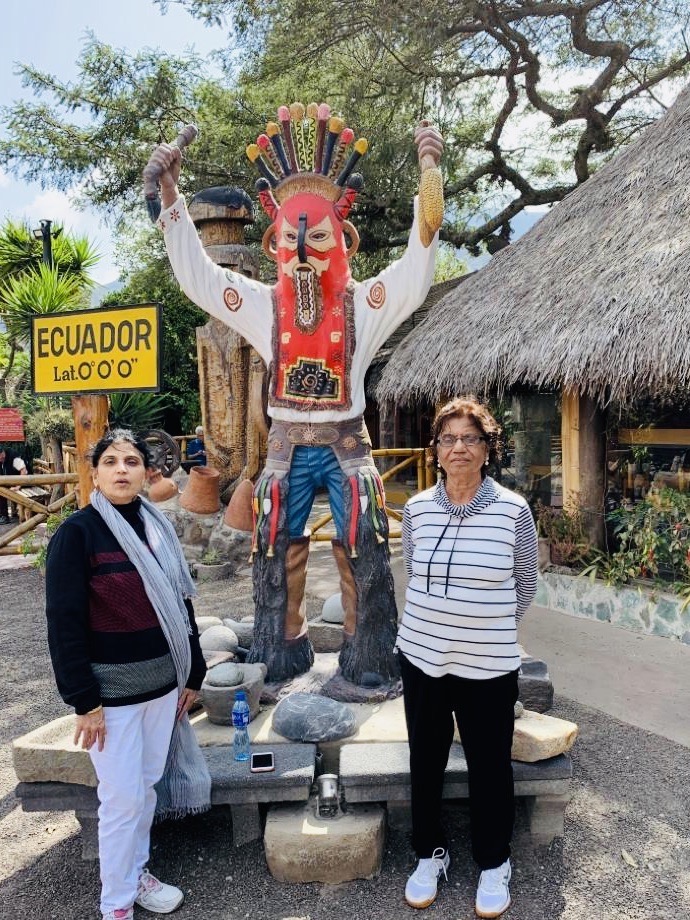
The central focus of museum was a totem pole surrounded by several stations for different interactive demonstrations for the tourists or visitors. The museum is bisected by red painted line indicating the real equator where they test the physical forces at work through various fun activities.

Totem pole as a central focus, Intiñan Museum

Activities included walking on the equator line to prove that conflicting pull from the North and South making it difficult to walk along the red equator line. Another activity involved balancing an egg on a nailhead to prove the theory that it can only be done on the equator. Those who succeeded were to get a certificate. The most interesting was the Coriolis force which they demonstrated by showing  the flow of water draining from a sink in counterclockwise or clockwise direction depending on which side of the equator line the sink was placed. When placed on Northern side flow was counterclockwise, and when moved to the Southern side the flow changed to clockwise, but the water dropped straight down on the equator line.

Coriolis effect

Traditional handicrafts, hunting and fishing equipment and traditional household equipment such as a variety of mortar and pestles, and hand operated stone mills for grinding corn or wheat  were displayed around the area.

Initñan Museum
Chakki (Hand operated stone mills)

This was of particular interest to me. When I was growing up in India, we used mortar and pestles for grinding spices, and Chakki (hand operated stone mill) for grinding wheat for making bread. We, as kids, used to help out with the chores with great excitement and enthusiasm. I still use granite, and brass mortars and pestles, timeless devices, in my kitchen on a regular basis. Guided tour through Initñan Museum was very interesting, and thought provoking. A great place for a day of fun for families with children who visit Quito, Ecuador.

Pululahua Crater, Quito, Ecuador

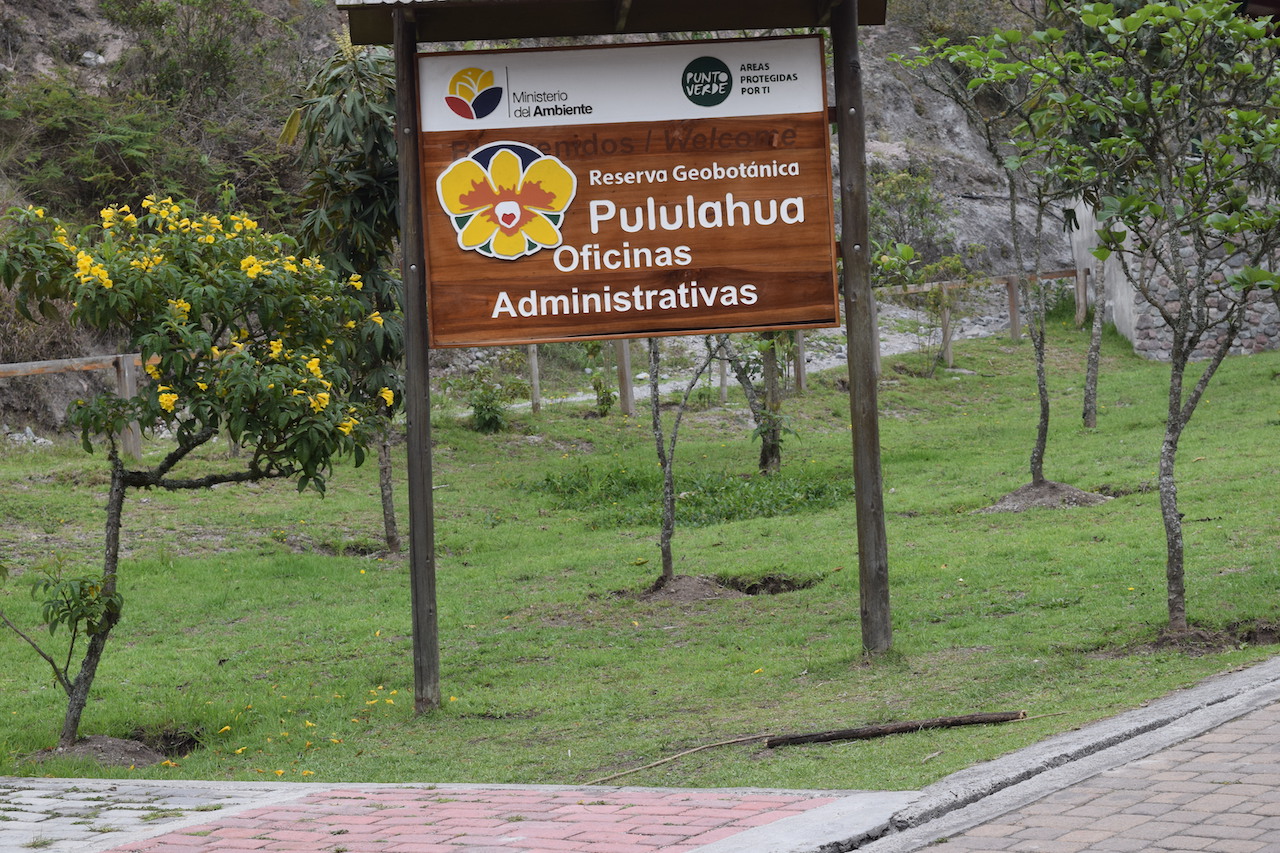
Way to registration office

Pululahua Crater, Quito, Ecuador

As I already mentioned in my last post that when we finished our Teleferico ride, we hired a taxi, and that the taxi driver, José Gaulan agreed to take us to some of the very important sites in the vicinity that we agreed upon before he would take us back to our apartment.  He suggested that we should begin with Pululahua Crate to be there while we still have day light, and clear weather. Pululahua Volcano is dormant for 2000 years. And all the land around Pululahua crater is a botanical reserve declared by the Ecuadorian government to protect all the species that live on the slopes of cloud forest. But the most notable and intriguing feature of Pululahua Crater is that it is inhabited. We have visited many volcano craters around the world, but a chance to actually witness this unique phenomenon of people living inside a crater blew my mind, and made it insanely appealing to me. I could hardly wait to see it.

Though it was relatively late and the day was waning fast when we got there, the weather was still clear, and hope of seeing the crater was still a reality. There was no entrance fees to the Pululahua Crater, but we had to register by giving personal identification information for each person in our group before we could proceed to the visitors’ center. Visitors’ center was so close to the crater’s rim that chances of great photos were in the realm of real possibility, except as we approached, clouds moved-in, blocking the light from the surface of the crater in a blink of an eye and covered the whole area reducing visibility down to almost zero. I was totally dismayed and did not even want to go down the trail, while Zaheer and Rizwana went down and took pictures, I now regret not going down. Instead, we decided to visit the artisan market and talked to the sales person and looked at her craft items. That Store was choked full of hand carved jewelry, crafts and clothing items inspired by the traditions of North American Indians. As we wandered around, we saw Zaheer, and Rizwana, my brother and sister-in-law, shopping and they decided to get me a beautiful snow white cloak which will be useful this winter. Thanks guys! 

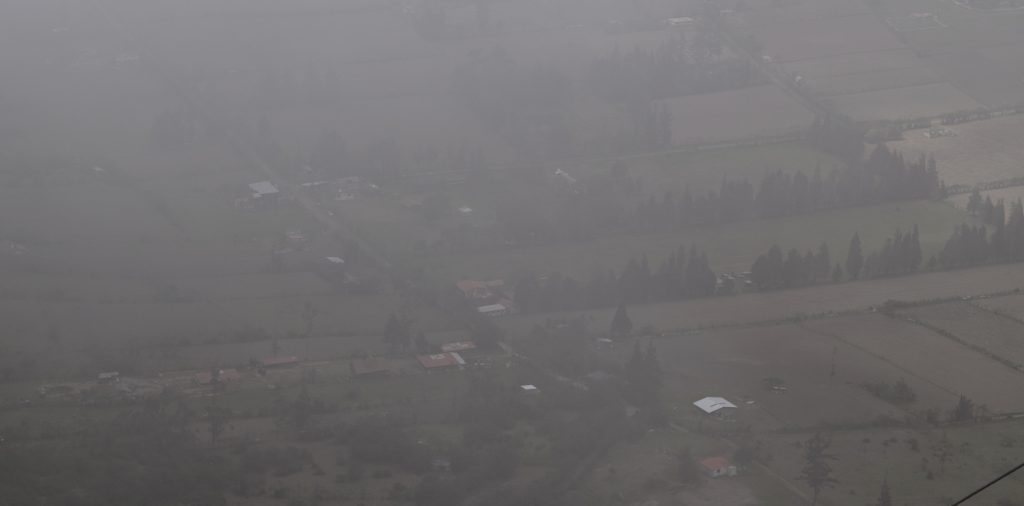
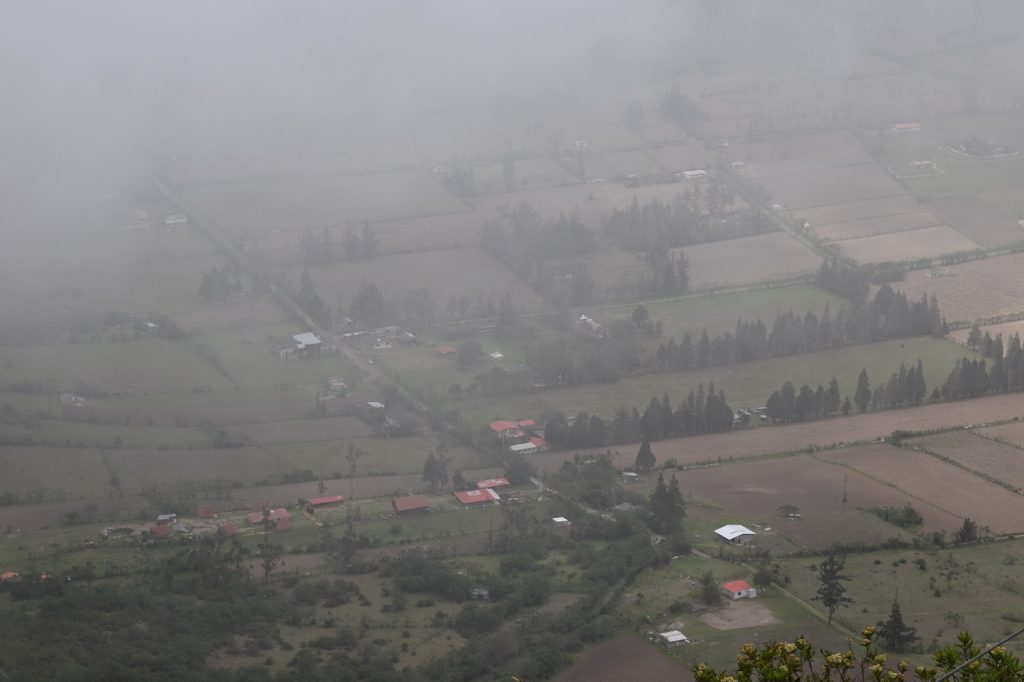
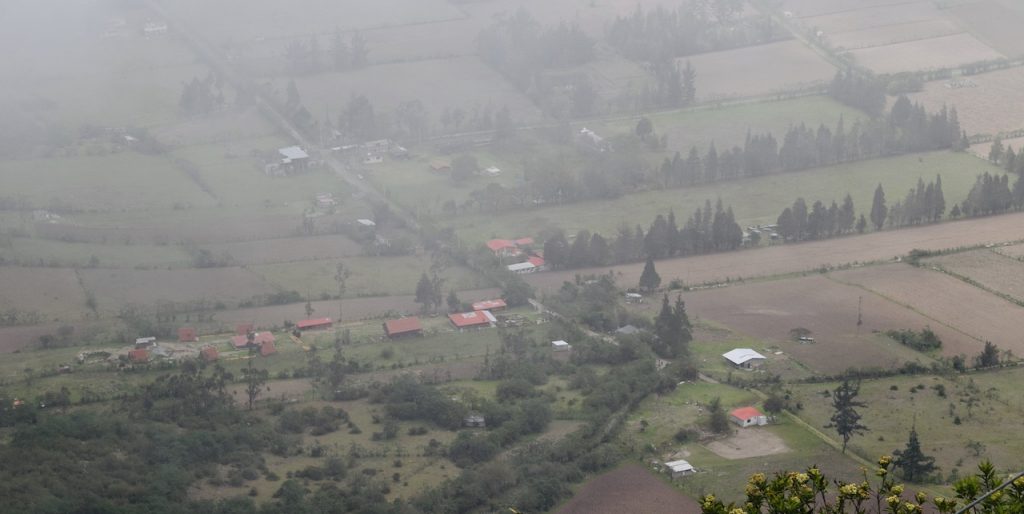
When I came out of the store, I could not resist going back to the crater just for a final look, because I knew that it would be final and we would never go back there ever again. Suddenly I was frozen in my tracks with total disbelief that the clouds were thinning out, may be not as fast as they had enveloped  the crater earlier; nevertheless, slowly giving way to clarity and making the crater visible to human eye and the camera eye as well. I took burst photos in the hope of capturing, at least one with some semblance of reality for posterity. I did get that clearer shot in which we could see houses and farms to confirm that people actually do live inside Pululahua Volcano Crater. Farms and houses are clearly visible where people live and farm. Apparently, inhabitants are farmers’ families who grow grains, corn, quinoa, and raise cattle for a living. While their agricultural produce sustain the population on the crater, it also brings them profits with the sales of surplus.

As I stood there, I saw a teasing cloud forest moving in again with amazing speed as it had done before. At this point, I thanked God for emergence of enough light for us to see living, breathing Pululahua Crater, and and capture it on the camera.

It was time for us to move on and head out to our next destination, Intiñan museum.

Teleferico, Quito, Ecuador

Teleferico, Quito, Ecuador

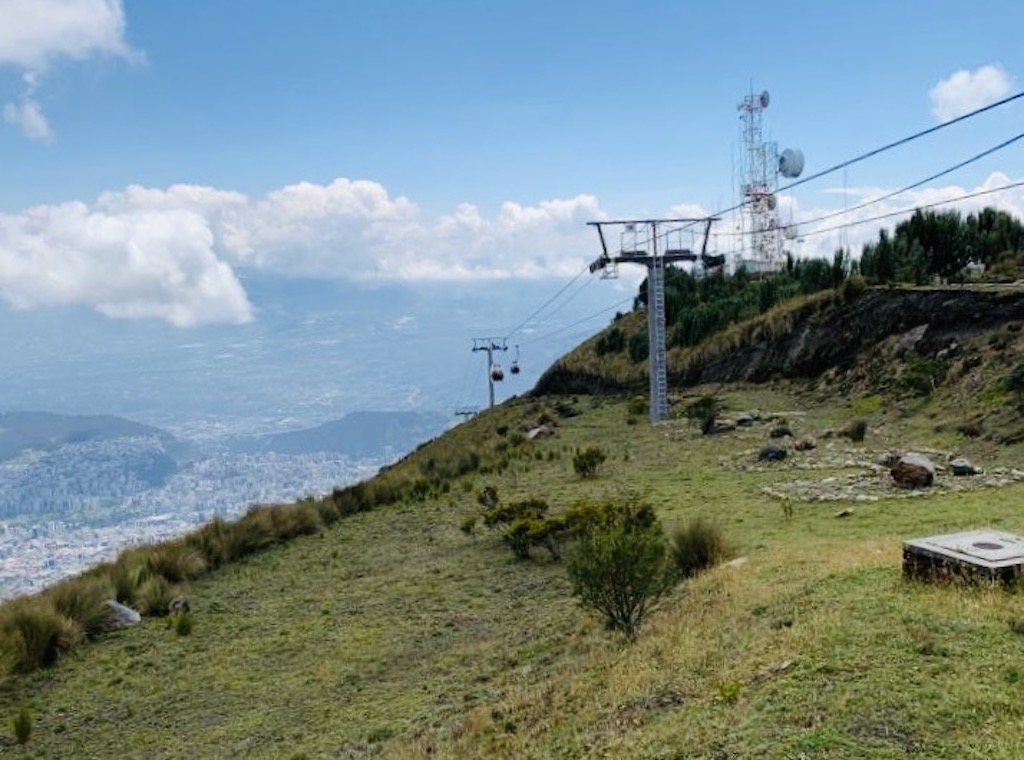
The morning of Monday, Nov. 4, 19, we got up looking forward to the plan of going to Teleferico, a highly recommended and popular attraction in Quito, Ecuador. After breakfast, we were  ready to set out for an adventure of Teleferico, cable car ride which would take us to the skies on rolling hills dressed in velvety shades of green mixed with gray and black.

Teleferico, Quito, Ecuador: Photo credit Zaheer Nizami

We were advised to be aware of what the heights will bring in terms of  bitter cold, winds, and altitude sickness to boot. We were mindful of that and prepared for what awaited us. As skeptical as we were, we had no choice at this stage of the game but to brace ourselves and have fun. Fully prepared we walked out and called the Uber. I don’t remember how long the ride took, but we arrived at the access point to the boarding station. When we got in line we noticed that we were in the wrong line, meaning we were already in line to board the cable car without the tickets. There was another line for buying the tickets. My husband took the job of holding the spot in line for us while we went to get the tickets. Anyway, this worked fine and the line was slow enough for us to join when we bought the tickets. Already in line, we saw a very neat stand, similar to the airline’s carry-on bag sizer providing comic relief and distraction.  On the back of it was a picture of a small dog and it said, “Mide a tu Perro”, (Measure your dog). Obviously, those who had a dog had to make sure that the dog fit into the sizer for it to ride with its owner. Bigger dogs were not allowed. It was an interesting topic of conversation and that kept us busy as we approached our turn to board the cable car. 

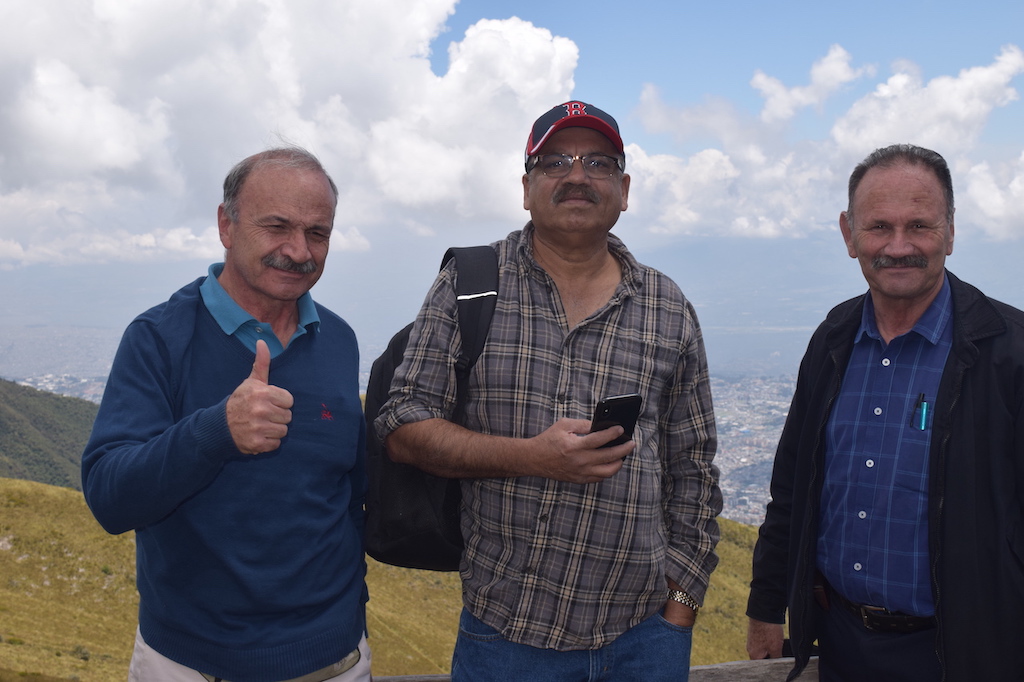
Each cable car was designed to accommodate 6 people and we were four in our group. They scouted the snaking  line of impatient crowd to find a group of two who would share the ride with us. Two Columbian gentlemen, twin brothers, came forward to join us.

We got settled in, and our cable car started its run up along the slopes of the dormant Pichincha Volcano. It took about 15 to 20 minutes, for it to rise from 10,226 feet to 12,943 feet to the top. While it swayed but not alarming so, we talked with our Columbian travel companions. They didn’t speak English and my family members did not speak Spanish, therefore; I translated the conversation back and forth for everyone to have fun and get to know each other. It was a real treat for us to have them with us. Very special treat for me because I love any chance of speaking Spanish.

Two Columbian gentlemen with Zaheer

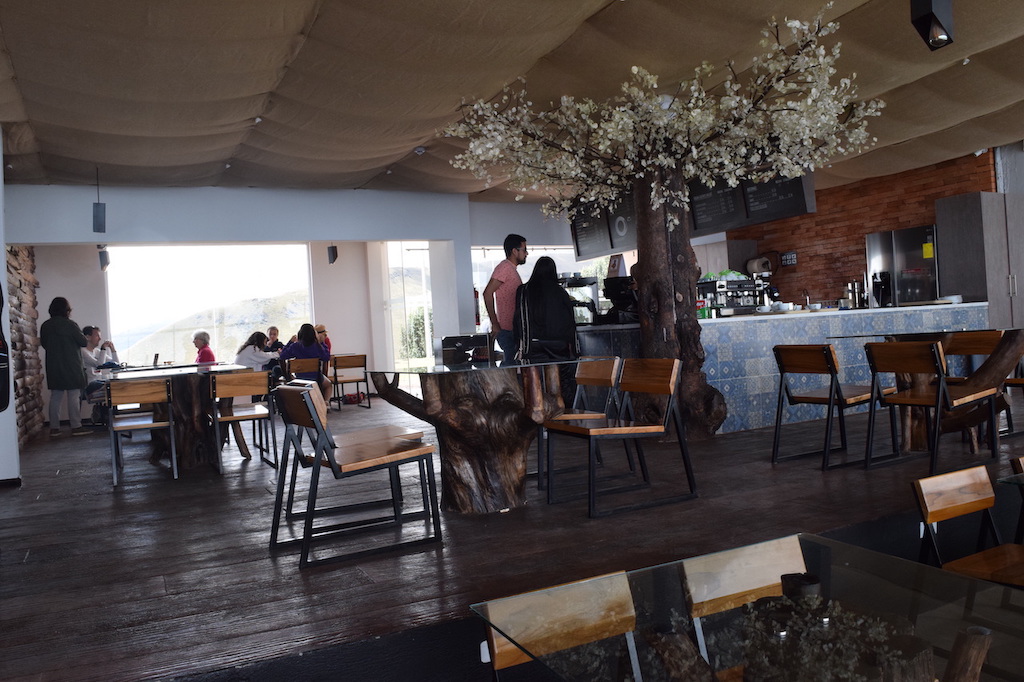
Once the cable car arrived at the top, we stepped out and walked over to the beautiful visitor center, with  very clean, and well maintained bathrooms and a bar where they also served delicious coffee, snacks, and desserts. We had awesome cappuccino and strawberry cheesecake while being deeply grateful for this heavenly treat with warmer than expected weather.

Visitor Center on the Top

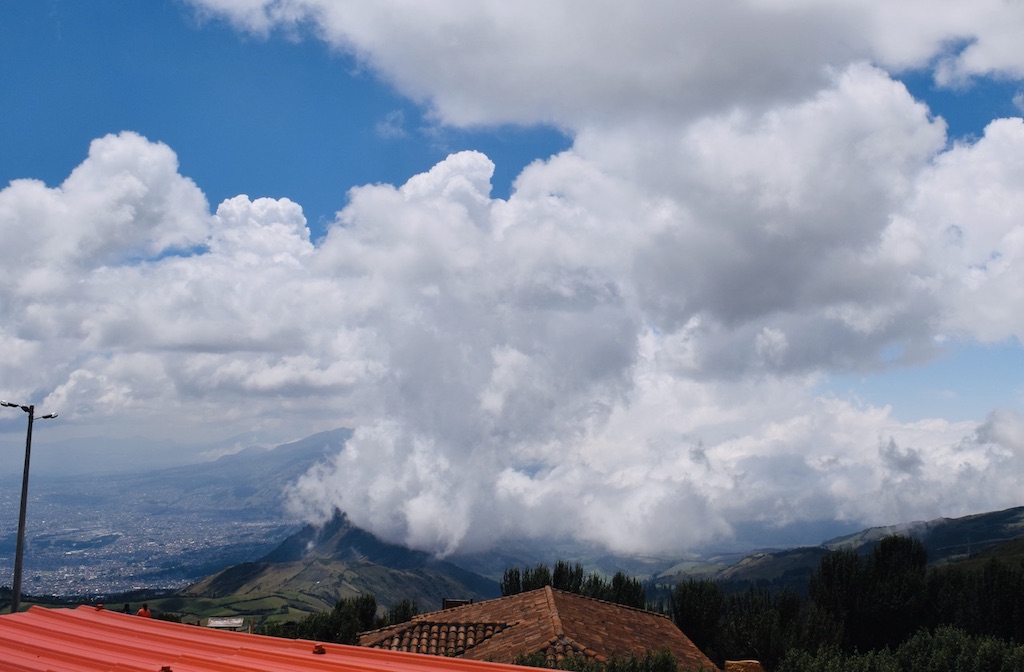
Moreover, I was mesmerized with the Jaw dropping, stunning scenery. Breathtaking views of Pichincha’s cloud shrouded peaks juxtaposed with sweeping views of Quito from giddying heights of almost 14000 feet, and none of us experienced even a trace of altitude sickness. After imbibing nature’s beauty and bounty, we left to  board the Cable car for our descent with one other person who joined us this time. 

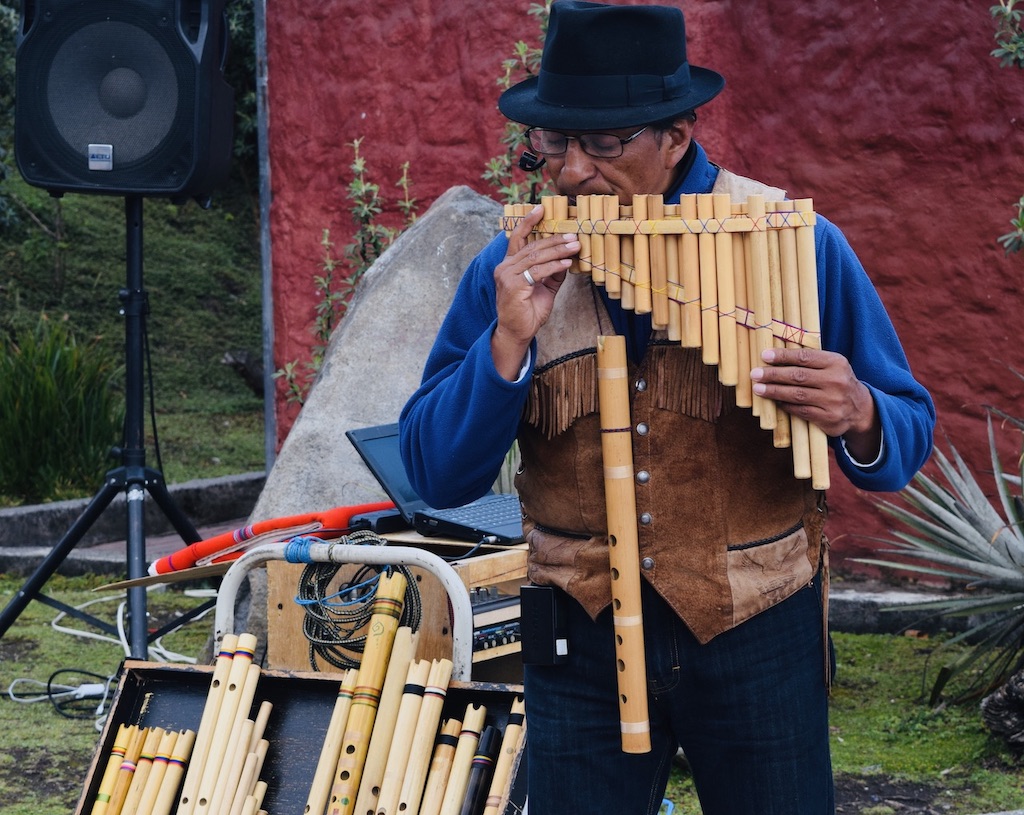
 At the exit there was a flutist playing, his instrument with number of flutes strung together ( at least that’s the way I saw it), a beautiful, soothing music. I recalled that we had been at a similar, simply delightful, but a group, performance at Lake Louise,Canada in 1993.  

Flutist outside Teleferico

 When we came out, it was still not too late and we wanted to do some more sightseeing in the vicinity. Talked to a taxi driver, José Gualan about the possibility of doing Intiñan museum, and Mitad del Mundo, He agreed to take us there with a suggestion that we should also go to Pululahua Crater first and then to the other two sites, before going back to the apartment. We had no objection and negotiated a price which was very reasonable. He seemed totally trust worthy, competent, courteous, professional, and friendly. We hired him for the day and also for our planned trips to Cotopaxi , and Quilotoa for the next two consecutive days.

more on it in future post.

Quito, Ecuador

Quito, Ecuador

We did it. Just came back ,after a wonderful week, from Quito, Ecuador. It had been a bucket list item for a while. Not too long ago we were almost there before it got canceled due to a family emergency. Our plans, although on the back burner, suddenly materialized. Planning the trip had a great excitement mixed with anxiety and fear because of the altitude issue. Information about altitude sickness was pretty scary, and enough to want to cancel the vacation forever. We felt fear and also resolve to go ahead with the plan and had a wonderful time, plus zero altitude sickness.  That doesn’t mean altitude at 9000 feet, or more above sea level, is a myth, It is real and we needed a hard look at our own situation and pay heed to it by not overdoing, at least for a day or two to acclimatize, drink a lot of water to stay hydrated, plus pray for a lot of luck. I did, and also comforted myself with President Roosevelt’s golden words:

“So, first of all, let me assert my firm belief that the only thing we have to fear is …fear itself – nameless, unreasoning, unjustified terror which paralyzes needed efforts to convert retreat into advance.”

President Roosevelt

I guess we converted retreat into advance, and arrived into Quito around 11:pm on Saturday, Nov. 2. Our Airbnb host arranged a taxi for us to be picked up making the ordeal of getting to the apartment a lot easier. The apartment was located across Parque La Carolina, and in the center of the Quito’s central business district. I always dread the antiquated check-in process, but on arrival we breezed through and the door had a state- of- the- art digital lock. All we had to do is punch in a given code and a recording  told us to enter. This two bedroom apartment was very nice with a great view. It was fully equipped with all the amenities. We were lucky that the weather was not too cold after the first night when we felt really cold. We really enjoyed the central location from where we could walk to a lot of places.

Next day, Sunday, Nov.3 brought us beautiful sunshine. We left to find a place for breakfast. We found Ambato Bakery a stone’s throw away from our apartment. It was a bakery which also served coffee or tea to customers who wished to  consume their freshly made delicious variety of baked goods on the premises. But their coffee did not measure up to the standard of their baked goods. 

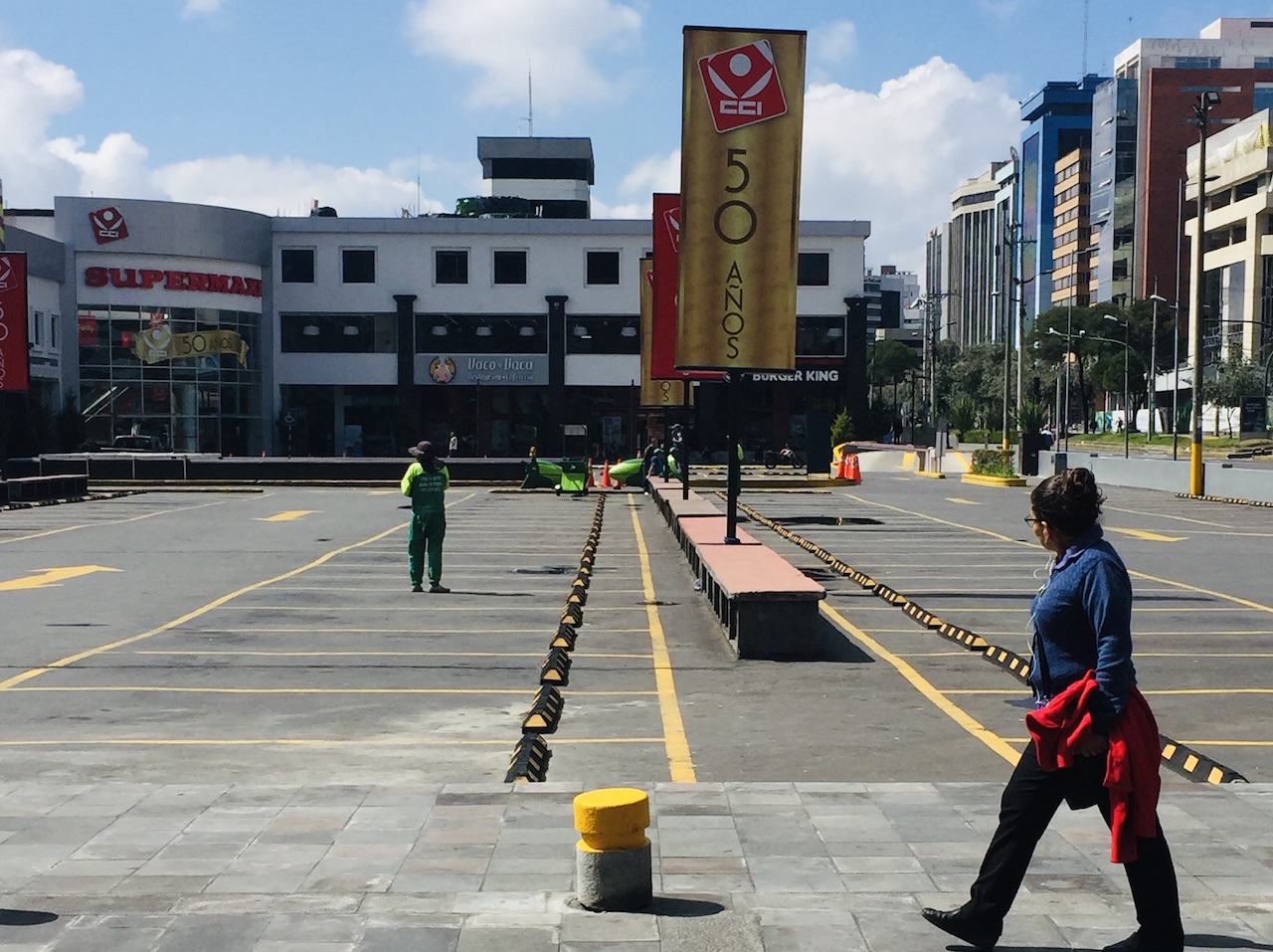
From there we walked over to the Quicentro shopping mall area  which was really a Spanish style plaza around which all kinds of stores, and restaurants were  located. As you can see McDonald’s and Burger King are looming large, are you surprised? Supermaxi grocery store was the point of interest for us, which we were told, was opening at 10:30 am. Since we were early, we  got a chance to enjoy the outdoors until we could do our grocery shopping. All set with the needed groceries, we returned to the apartment and set about getting lunch ready. Delicious lunch was followed by rest and relaxation. I guess we strictly observed the rules to acclimatize so we could start the sightseeing the following day.

Lot more to come on Quito, Ecuador. please subscribe to my blog “rasheedablogs.org” for email notifications.

Hobart to Sydney, Australia on Noordam

Hobart to Sydney, Australia on Noordam

Fiordland National Park offered spectacular scenery leading us to two sea days as we were headed to Australia. Of course, Hobart, Tasmania would be our first stop in Australia. Tasmanian sea guarded its reputation of being ferocious. Its wild  rough water continued to manifest in 5-meter-high swells most of the two days. I had written Hobart off as an unexciting, and unwelcoming little end of the world from where I wanted to get away as fast as possible. But when we got there I fell head over heels for Hobart. Now I tell all travel fiends that It should definitely be on their travel radar.

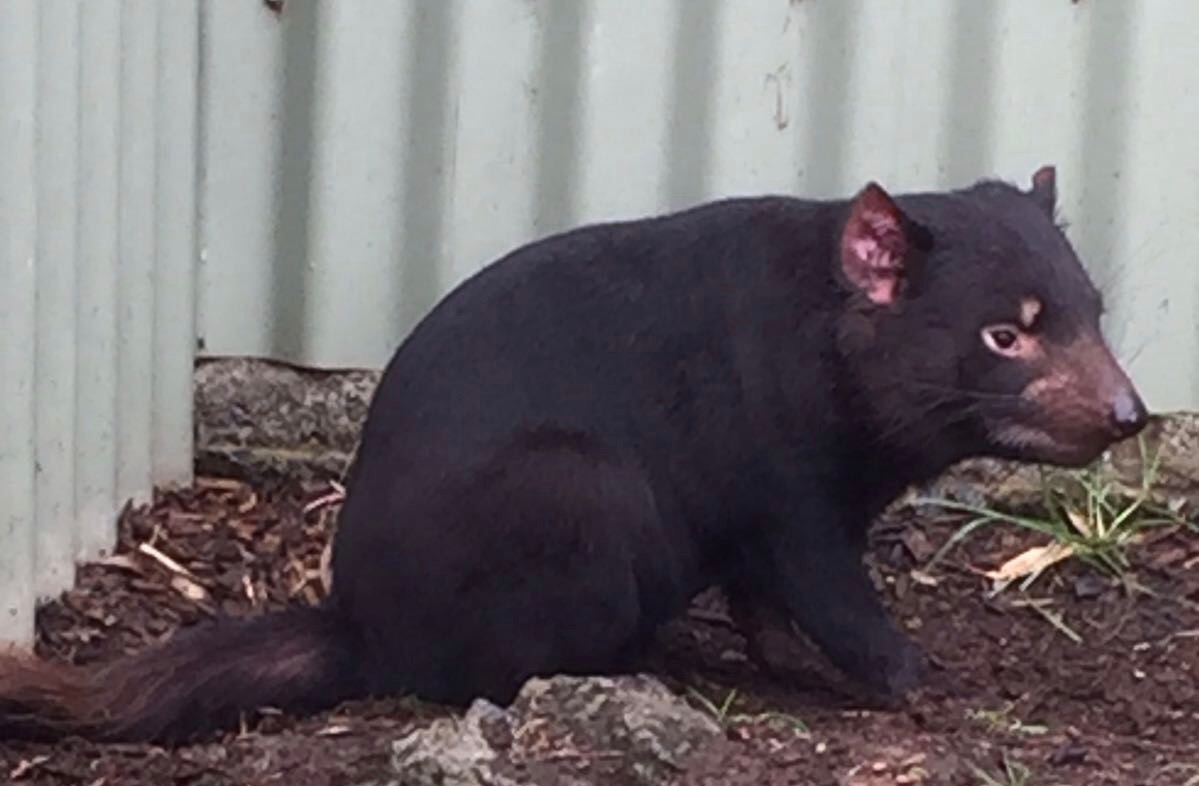
When we got to Hobart we took a tour which was to last for 8 hours, starting with the Bonorong wildlife sanctuary. We saw kangaroos, Koalas, hedgehogs, one of the hedgehogs had its one front leg amputated and was hobbling about happily, wombats, lizards, Tasmanian devils, and native birds. Tasmanian devils was once native to Australia, but now can only be found in the wild of Island state of Tasmania. Tasmanian devil are carnivorous. We were told by our guide that if  Tasmanian devil finds a dead body it wil eat the entire body including its clothes and all the belongings, such as bags and all its contents in a record time. Also they run very fast and hide. We got lucky and captured some really good photos. Koala who had decided to sleep all the time, suddenly decided to wake up for us and examine everything around him. Although wildlife sanctuary was a glorified outdoor zoo, but the animals were different, even unique like tasmnian devil.
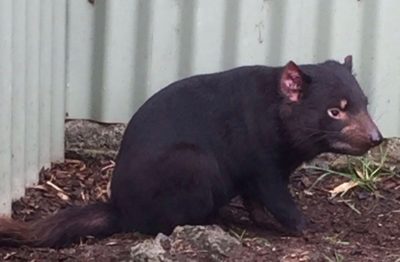
Tasmania Devil

After going through the Bonorong wildlife sanctuary, we were headed toward the Russell falls
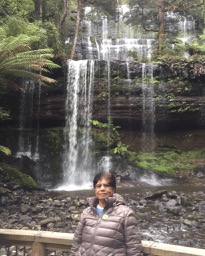
Russell Falls, Hobart, Tasmania

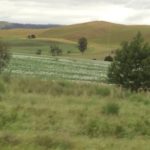
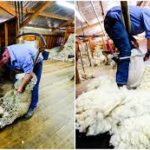
 and took some pictures before returning to the bus to go to Karringa Farm, in Hamilton which was quiet a drive. Karringa Farm has really been the highlight of the entire cruise. A family run farm which is run like a tight ship. When we arrived, we were guided to restroom area to freshen up, and then done to head towards a large hall where everything was set up for a barbecue meal. generous amounts of barbecued lamb was served right off the grill with very fresh salad, bread rolls, and butter. After the meal, they gave us a tour of the whole farm which was very educational. We had an opportunity to see sheep shearing  with a talk about what follows with the cut off woolen fleece of sheep,and how  different part of the wool is used for export for making variety of products out of it. After that there was an interesting display of sheep round up with the help of dogs. This activity is country’s oldest cultural tradition. It was an impressive performance by the dogs, and by the people who run the farm. 

The most impressive thing about the farm was the fact the farm is run by several generations of the same family. A young guy who was our guide for the farm had a big part in running the farm with his parents, had a  great attitude and a sense of responsibility which was exemplary. They also had farm accomadations which are run so well that they are winners of Tasmanian tourism awards. They got a place in Tasmanian TOURISM HALL OF FAME for 3 consecutive years. On the way se saw poppy fields. To most people poppy is a pretty garden flower, but in Tasmania it is a big opium business. They refine it and produce drugs such as morphines and codiene etc. It is an eye catching and lucarative crop. Apparently, some people steal them for their individual use. It has become a huge concern because it can be lethal and some people have died by drinking tea brewed from it.


We went back to the ship for another day at sea which ended in Melbourne, Australia. We had two family members with whome we had arranged to meet. Both young families with little kids. They lived, at least, one hour away from the port. They both knew to meet us at a designated place around 9:am. One of the family, Adil and Afreen, came at 11:am and the other, apparently,  tried and  couldn’t contact us due to phone connection problem. Unfortunately, both our phones were on the blink.  We had to get back to the ship no later than 5:pm. Therefore we decided to go with Adil and Afreen who were there for us.They were kind enough to do this with three little kids. We didn’t have much time but they were keen on taking us around in the available time. Since Jaffer’s phone was dead, we stopped at the first Apple store we saw. It was more than hour’s waiting to get someone to look at it. The girl was good and said that the phone needed some cleaning which will only work temporarily and for the phone to work well we had to leave the phone there and pay a charge of $145/-. We didn’t have enough time for it. Anyway, phone was working for the time being. We went around before stopping for lunch in an authentic Turkish restaurant for a delicious lunch. After lunch they  dropped us off to board the ship around 4:30 pm. we had to spend another day at sea before getting to our next stop, Eden, Australia. We spend another day on shore but took no tours. It was just a regular day with some shopping. We found sweatshirts with a very reasonable price tags  from a store which was owned by a Pakistani guy. After a fun time at Eden we headed back to board the ship which would sail in the evening to its last port, Sydney, for debarking the ship. Debarking the ship is not like checking out of a hotel. Ship is not just accomadation, it is also transportation so there is not just bills to settle, but also customs to clear after international travel. It is rather complicated procedure but the ship’s public address system and the ship’s most pertinent disembarkation information which is included in the daily newsletter is very helpful. 


We debarked in Sydney and took a taxi to our Airbnb. We have a niece, Badar and her family who live in Sydney,and knew about our arrival in Sydney. They came over the same evening and took us out for dinner. They were generous with their time and hospitality for our three days stay in spite of the fact that they both worked full time and have two adorable kids. They took us shopping, sightseeing, and to the best restauarnts where we had great meals, not to mention the meals she fixed when we were at home with them. After a great stay in Sydney we left for a direct flight to LA and bumped over the Pacific, I am sure, over the entire flight. LA to Boston was a breeze and I was happy to be back home.

I have to say that the whole trip was just amazing and my deep appreciation and thanks goes to all those people who took it on themselves to take on the task of entertaining us with devotion and love for which we are deeply grateful. Thank you guys. We owe you one and would love to see you in the US for a chance to return the huge favor by entertaining you all.  

Back to the Beginning:

Cruising from Napier to Fiordland National Park

Cruising from Napier to Fiordland National Park

Napier is a coastal city on New Zealand North Island. It is famous for Art Deco architecture. Most of the buildings were built after the devastating earthquake in 1931.  We only had few hours in Napier and  spend a lot of the time in the museum where most of the art was related to the Earthquake. We got back on board for 6; pm departure for Wellington.

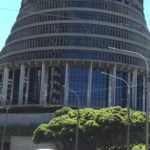
Wellington, the capital of New Zealand was our next port of call. Its reputation as a Windy Wellington didn’t seem justified the day we were there. Though it was cold, but not windy when we were out. Tried to go on cable car but for various reasons couldn’t do it. Walking around we saw the parliament building, and Beehive building which is a very impressive Federal government building. 

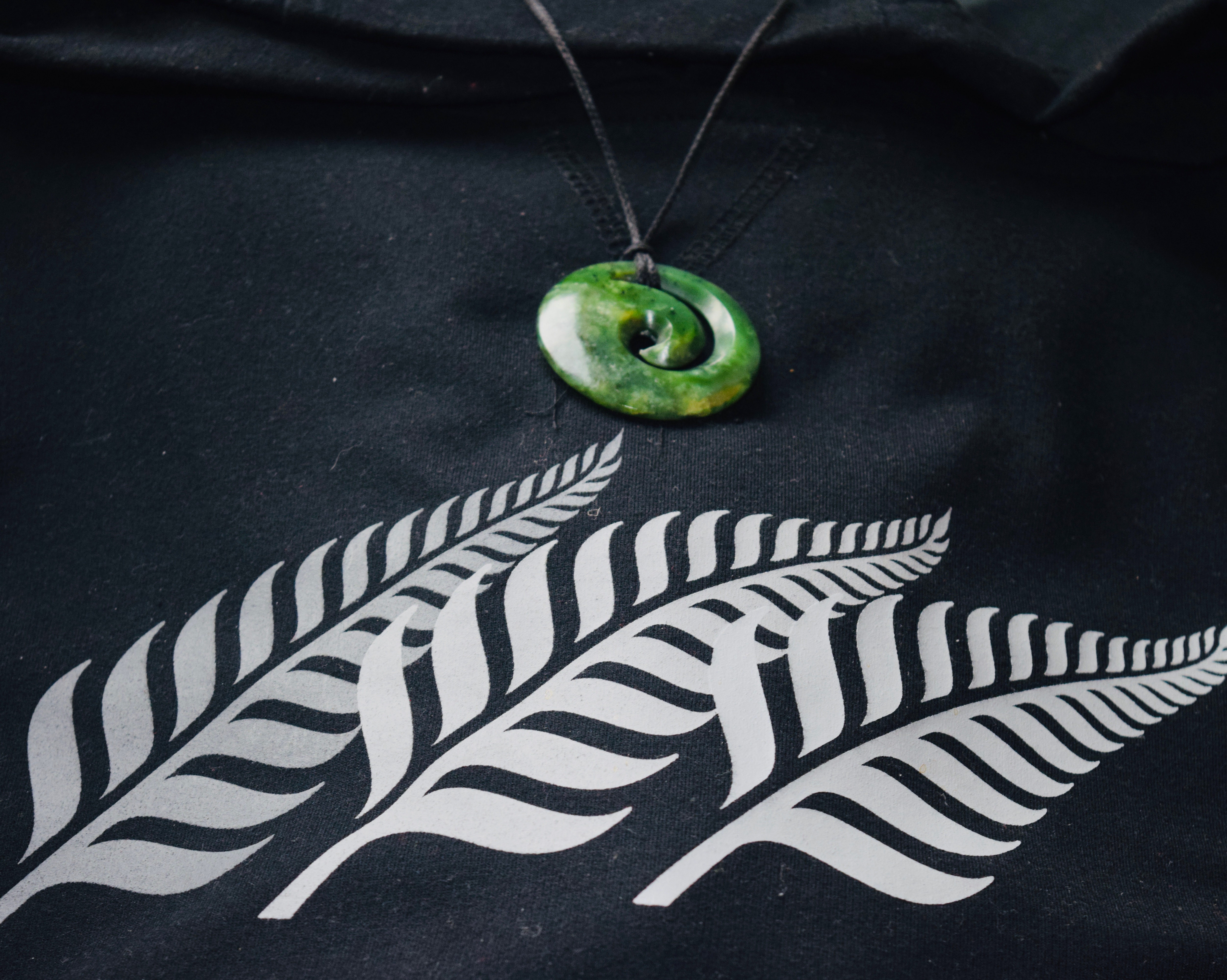
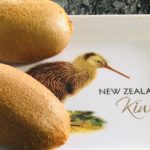
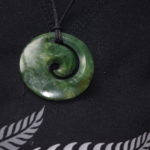
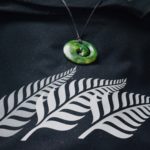
When we  got back on board, we saw the timber ready to be exported from the Wellington port, since forestry is a significant industry in New Zealand.  we  relaxed and had dinner etc. until it was time to depart at 11:pm arriving in Picton at 8: am. We had less time in Picton. After breakfast we disembarked arriving downtown Picton. Strolled around did some window shopping and outside one of the stores saw a black sweatshirt with New Zealand’s silver fern stamped on it. Went in to find out the price and also found all kinds of artifacts with New Zealand symbols. There were lots of koru pendants from which I ended up buying one along with the sweat shirt with silver fern. Kiwi bird, of course, was another symbol I had to look for and found some snack plates with Kiwi birds. Now have all three New Zealand symbols in my possession.
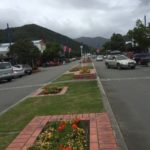
 Our next stop was Akaroa which was a tender port. When we disembarked, we had to go on  tenders to get to this small town. It  had beautiful victorian villas and plenty of cafes and restaurants to savor. Because the original port Lyttleton was destroyed in the 2011 earthquake, Akaroa became the port and is the base point of excursions to Christchurch. Our stay there was very pleasant. We walked around the town until it was time to go back to the ship. First available tender brought us back to the ship. The next day was scheduled for cruising the Fiordland National Park. We were informed that the best way to see and enjoy the Fiordland National Park from the cruise ship was find a comfortable spot in the observation area. On Noordam the observation area is a chic and elegant lounge in the front of the ship. It has a cocktail bar which meant the drinks and snacks were flowing through out the day when you luxuriate on  designer furniture with huge windows all around  to view the spectacular scenery of Fiord National Park. Only problem with the place was that when a special time like cruising the Fiords, it was not only mobbed but also full of fair number of bullies who grabbed the best seats in the house and made sure they, and their friends had those seats for the day. Anyway, We just did the best we could under the circumstances. From there we were to have two sea days as we were headed to Australia. Of course, Hobart, Tasmania would be our first stop in Australia. We were warned that the Tasmanian sea is notorious for very rough water. And boy! Was it ever rough. It was so rough that we had 5-meter-high swells most of the two days. It was scary and noisy and made most people nauseous, and  we were grateful, relieved and happy at the prospect of getting some sleep when we arrived at the port of Hobart very early morning bringing us to the first port in Australia.

Click here for Hobart, Tasmania

Tauranga (Rotorua) New Zealand

Tauranga (Rotorua), New Zealand

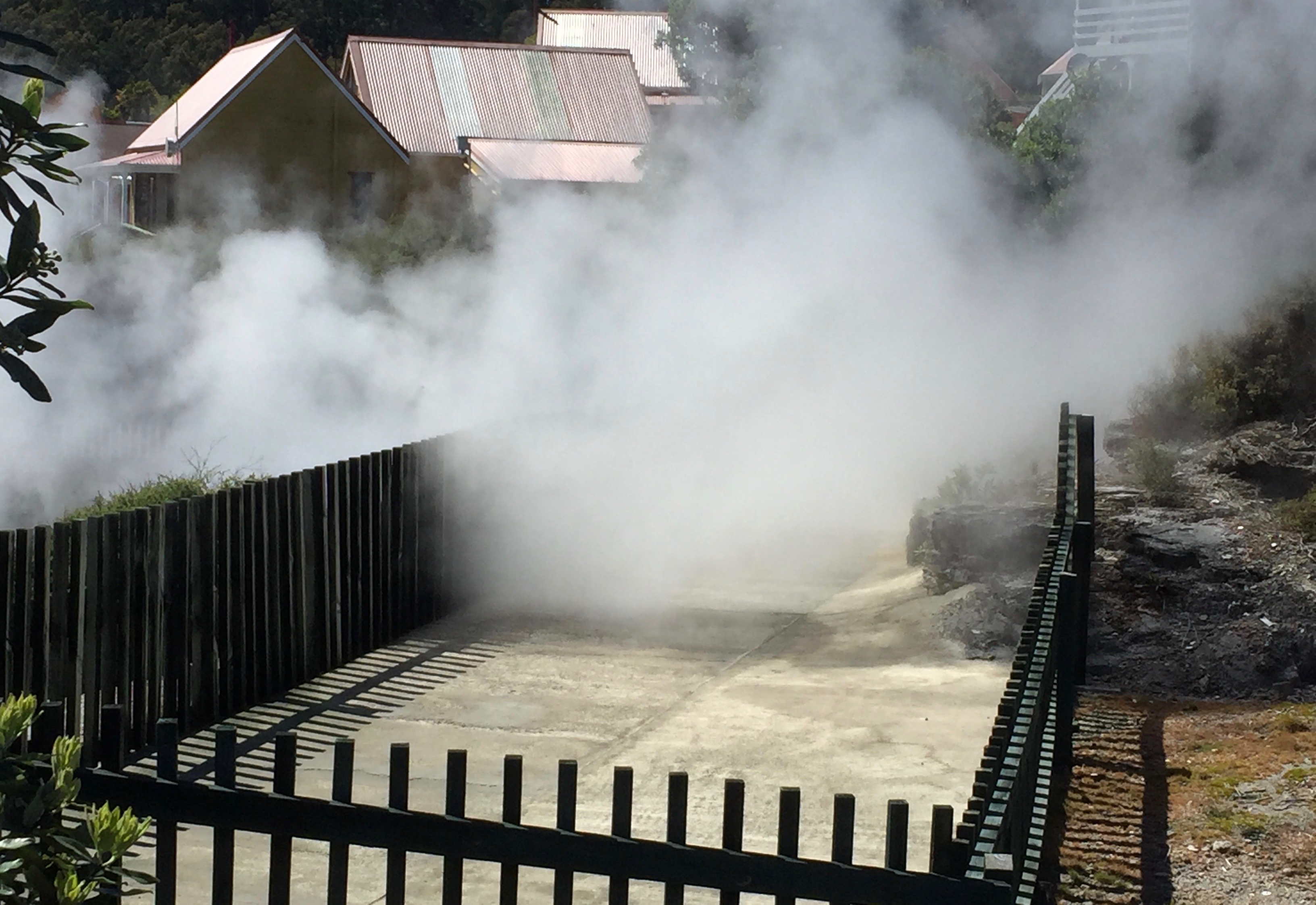
 When we got up in the morning, we had already arrived at Tauranga, our first port of call. The name Tauranga in Maori means “Sheltered Anchorage”. We got ready and went for breakfast to Lido (a huge self-service dining area with variety of food stalls from all over the world) on deck 9. It was mobbed and we had difficulty finding a place to sit. There was so much choice that it seemed like a very difficult choice. Still we manged a good breakfast.  After breakfast we went out to meet Gayleen, and Lou, who offered to pick us up and take us around in the time allowed. We had met them in Barbados while on vacation. We told them about our then upcoming cruise to New Zealand and they kindly offered to meet and take us around. When we disembarked, they were already waiting for us. They are an amazing couple. They dedicated their precious time taking us around to places that we never ever would have been able to visit, see, or even know about. They showed and educated us about Maori culture. We couldn’t have found better people to educate us about Maori culture, as they did because of their Maoris roots. They took us to important places like Rotorua, which is known for its Maori culture. Among its fascinating attractions are its shooting geysers, bubbling mud pools, and natural hot springs. While driving we noticed that there was a faint scent of sulphur a reminder that Rotorua is part of a volcanic zone.

It was interesting to see the thermal pools and even more so to see them used for cooking by the people living there. Our next stop was in Whakarewarewa, the area which is inhabited by native Maori, for an authentic experience, which no tour could have provided. We saw that they wrapped the food in foil which was cooked in a Hangi. Hangi is a Maori oven which is simply a pit dug in the ground. Traditionally food was wrapped in leaves, but they wrapped it in foil before placing in wire baskets. These wire baskets are placed over hot stones at the bottom of hangi. Then they were covered with wet sackcloth before putting mounds of earth on top to trap the heat for the food to cook for 3 or 4 hours in one of those thermal cookers made of earth and stones. It was an interesting reminder that underground stoves are also widely used in Middle eastern countries where a whole lamb is roasted in underground pit while it is wrapped first in leaves and then in a tight bundle with a sackcloth which is then placed in a pit stove for several hours, before it is removed to cut and serve. It is called Mandi. Mandi meat falls off the bones and is utterly delicious.

Hangi is not the only way Maoris cook the food. Where we were standing the hot geysers were all aound us. They had make shift rods extending into the heat and steam coming out of the bubbling mud baths and geysers. On these rods there were attached hooks. When they wanted to cook something, it was wrapped tightly in a cheesecloth bundle leaving an extension long enough to hang it down from a hook on the rod to cook the food with thermal energy. To show us how the process worked they wrapped some corn in a cheesecloth and hung it on one of those hooks to cook in the thermal heat. Cooked corn then was transferred to a plastic bag and tossed with salt and butter for us to enjoy the supernal taste. In the very spot some people were cooking vegetables, and some others were preparing food wrapped in  cheesecloth bundles by hanging it on to the available hooks in a bubbling hot bath. 

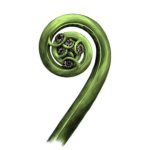
Gayleen and Lou also took us to see silver fern which is endemic to New Zealand. The unique feature of these ferns is that the leaves were green on top with a silver underside.  Its sprouting new fronds curled into a spiral called koru.  For Maoris, it is a symbol of new life and appears in all their art, carvings and tattoos. In Maori art, greenstone koru is a symbol of creation. Because of its circular shape it conveys the idea of perpetual movement.  In one of the stores, they had pendants in koru’s spiral shape representing unfurling fern frond symbolizing new life, growth, strength and peace. The sprouting frond made me think of a curled fetus in mother’s womb. Just like a baby, beautiful curled sprouting frond unwinds as it  grows and matures.  


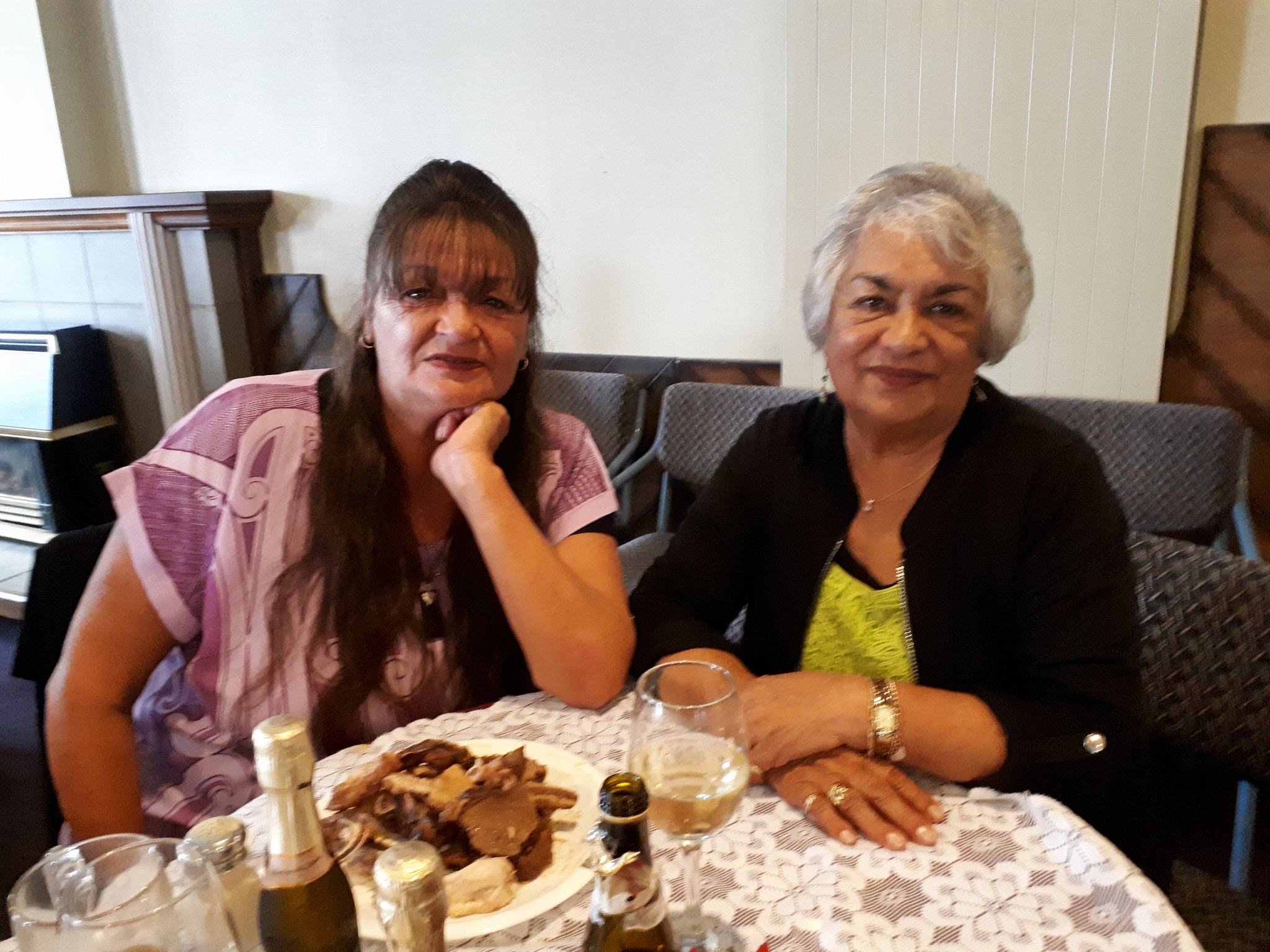
The final treat for us with Lou and Gayleen before we went back to the ship was a visit to Lou’s mother, Zohra, who lives in a beautiful cottage on Lake Rotorua, in the region of Bay of Plenty. She invited us for lunch she made with her niece. The interesting part was that it was an Indian meal. A delicious chicken, and potato curry, roti, and rice. And for dessert we had golden Kiwifruit with ice cream. But these kiwis were pink inside instead of green as we know it, a big surprise! They said that the pink kiwi only grows in New Zealand. (Great lady, thank you Zohra).

Gayleen ad Zohra

(Apparently kiwi fruits were originally called gooseberries, an edible berry native to China. They made their way into New Zealand where they were grown commercially for export. The name kiwi was given because of fruit’s fuzzy appearance and skin color  that is  similar to the feathers of kiwi bird, New Zealand’s national symbol. But that is just one story, there are various other explanations is to how and why the name came about).

We really enjoyed our lunch while sitting on the porch where the table was set at a stone’s throw from the Lake Rotorua. The luxurious view, of the shimmering lake where anglers were walking around in the shallow part of the lake to catch fish, was incredible. Ultimate ambience, ultimate meal, and company provided to us by friends who made us feel like one of their own. I felt really grateful that we met them and were able to experience this phenomenal journey of sights and insights made possible by this special couple. After some relaxation and getting to know each other, our hosts, Lou and Gayleen, took us back to the ship.We sailed away from Tauranga and arrived at our next port of call, Napier, NZ.

Click here for more: