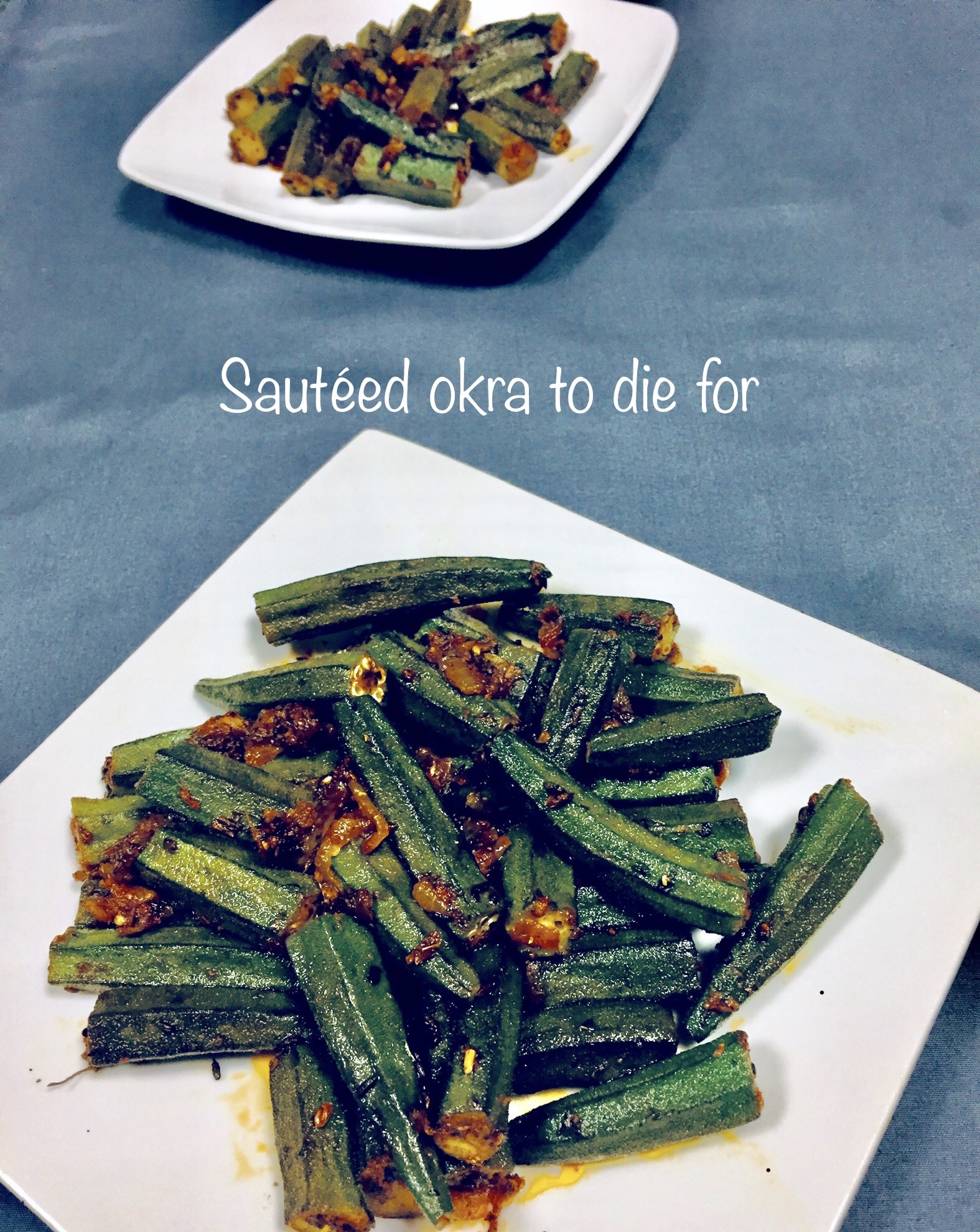
Deliciously simple, a quick vegetarian treat as a side to any Indian meal. Adding okra to your diet will ensure a healthy digestive system.Its high fiber content helps add needed bulk to keep the system clean.
1teaspoon each freshly minced garlic cloves and ginger root
1 teaspoon coriander seeds, lightly roasted and crushed
½teaspoon turmeric powder
1teaspoon black pepper
½teaspoon salt
5green chiliesfinely chopped
½teaspoonMango powder(amchur)
1teaspoondried fenugreek leaves, crushed to a powder
⅛teaspoon clove powder
1/4cup water
Equipment
Sauté pan
Method
Bring 2 cups of salted water to a boil. Add prepared okra to it and let it boil for about 6 seconds. Remove from heat and strain though a metal sieve and set it aside.
Heat oil in a non-stick frying pan, add cumin seeds and let them brown.
Add chopped onion and sauté until onion turns glossy and translucent.
Add tomato puree, ginger, garlic, crushed coriander, turmeric, Black pepper and salt, and continue to stir fry on medium low heat until oil starts to separate on the side.
Lower heat further and add prepared okra, chopped green chilies, mango powder, crushed fenugreek, and clove powder. Sprinkle 2 tablespoons water and stir to mix while still cooking. make sure that okra is cooked. If still needs more cooking, add some more water and cook until okra is fully cooked.
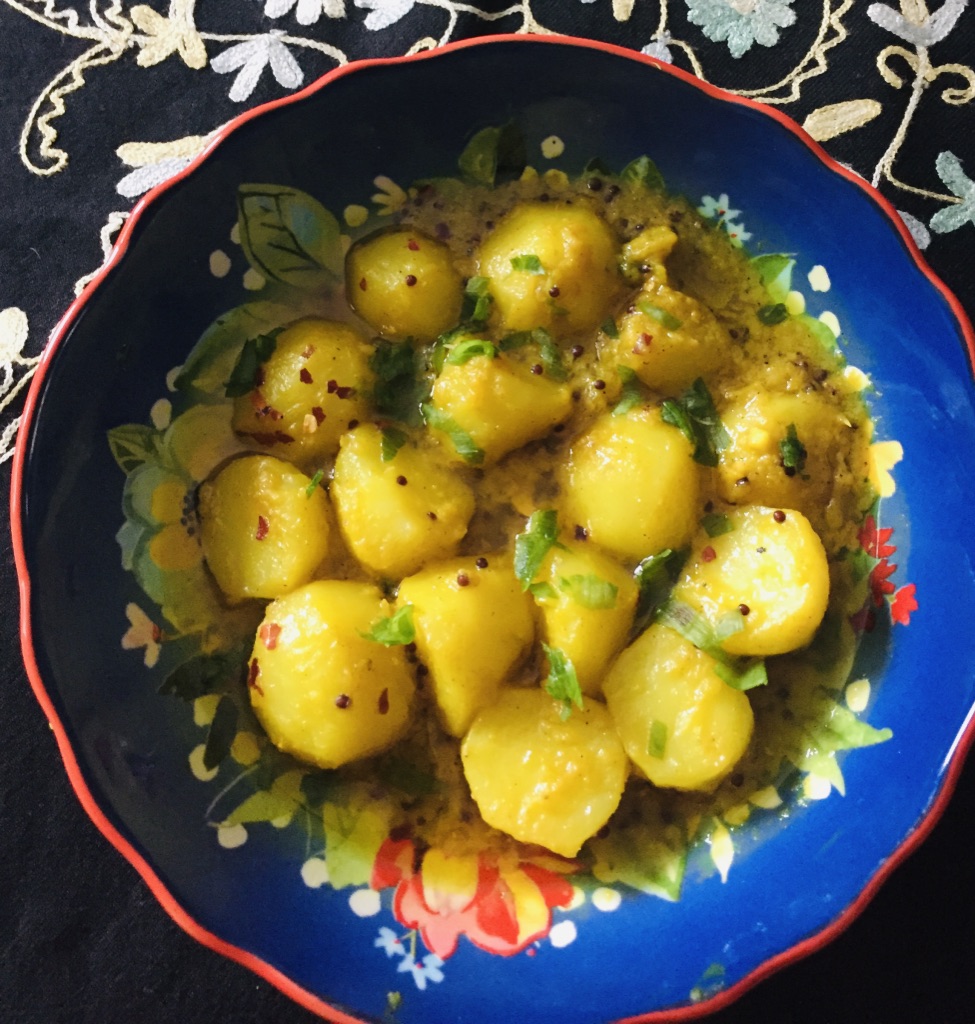
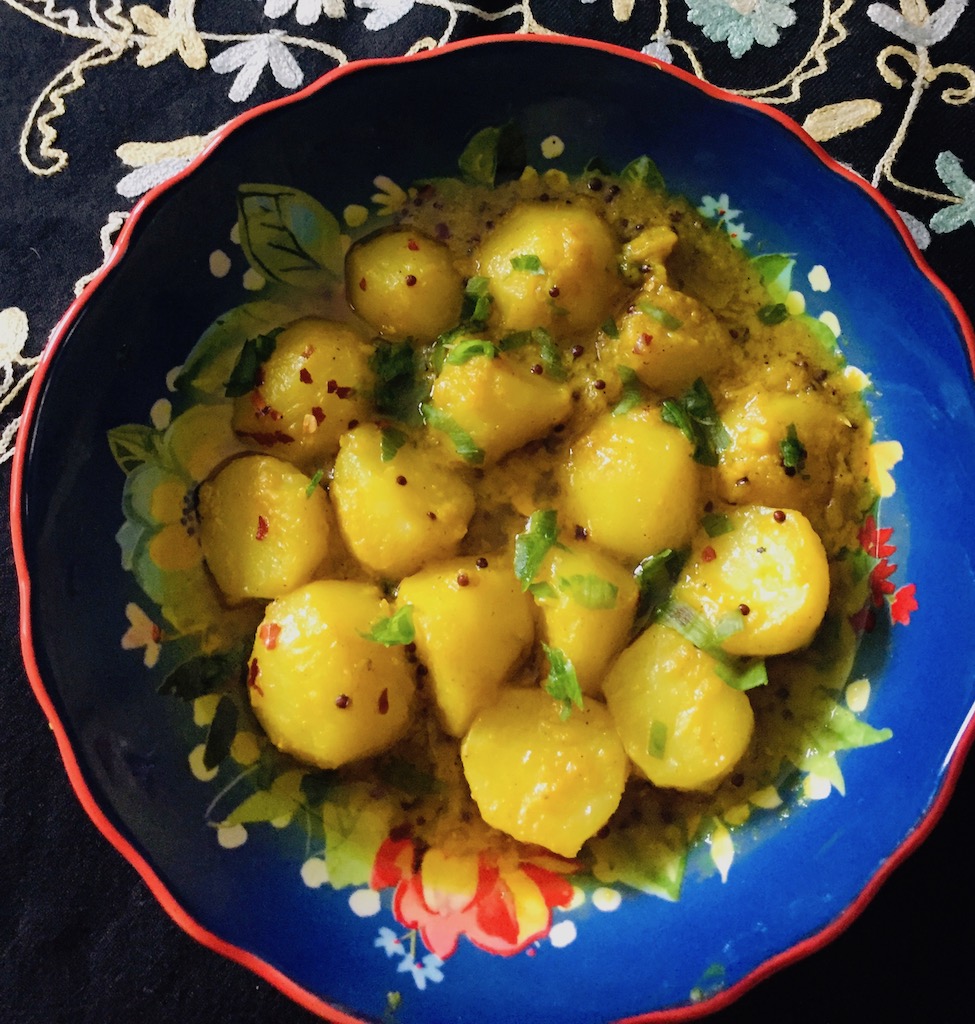
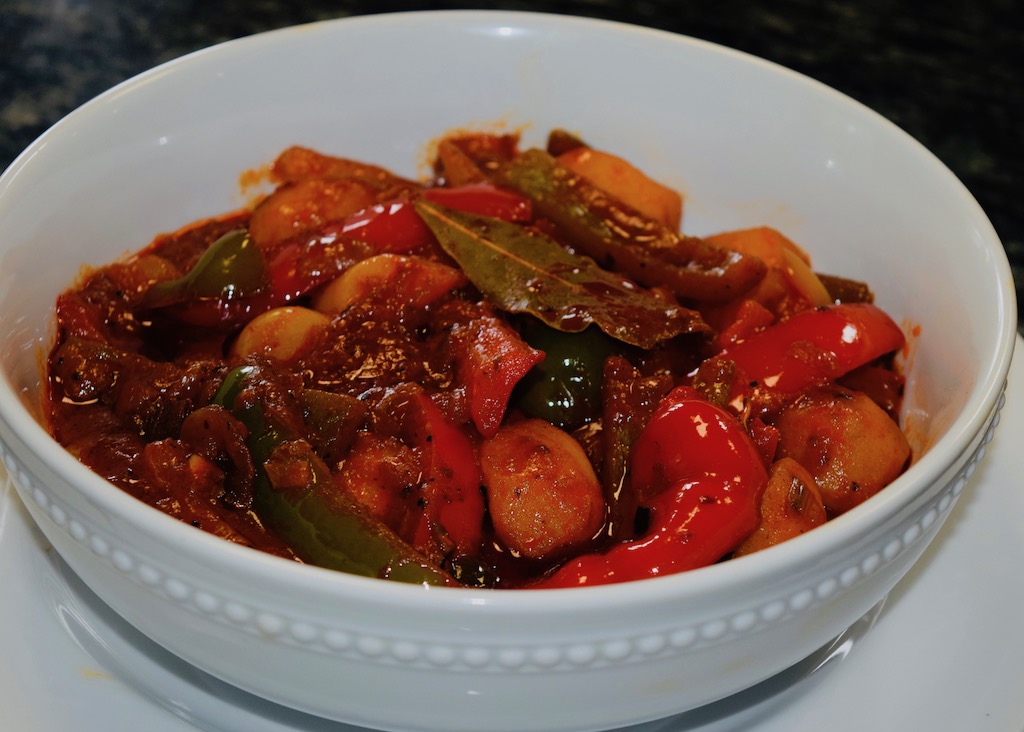
Simplicity of this potato recipe comes from the flavor base(handi) concept of cooking. You can make many different vegetarian dishes with the same base, which is an Indian version of French mirepoix, which turns out simple, elegant, and delicious dishes every time. Once mastered, a novice to Indian cooking would have conquered the process of curry making. This classic technique is the mother of all techniques. If this base is ready, you can make any vegetable, meat and vegetable, lentils and vegetable dishes by adding what ever your heart desires. Spicy food lovers should start with this idea and move on to become experts on cooking Indian food at home for the family.
4clovesgarlic, finely minced, or ½ to 1 teaspoon garlic powder
1Inch root ginger, finely grated, or ½ to 1 teaspoon ground ginger works really well
1teaspoonchili powder
½teaspoon turmeric powder
1 teaspoon salt
1½cupswater
4smallgreen chilies
1tablespoonfresh cilantro, finely chopped
Equipment
12-inch Cast iron skillet, or a saucepan
Method
Peel, cut, wash, and drain potatoes and set aside.
Heat oil in a cast iron skillet or a saucepan, add diced onion, ginger and garlic, chili powder, turmeric, salt, black pepper and ¼ cup water. Bring the contents to a boil.
Stir to mix and lower heat to the lowest mark on your stove, cover and cook until onions are very soft.
Remove cover, increase heat to medium high and stir fry contents until oil starts to separate from the onions. Add potatoes stir to combine, then add 1 cup water cleaning the sides of the saucepan. Cover and cook on medium high heat until the potatoes are tender.
Increase heat slightly and cook the contents to thicken the sauce.
Sprinkle remaining ¼ cup water, chopped cilantro and green chilies, and let it simmer covered for fifteen minutes and turn the heat off. Serve with rice or bread.
Indian food, and especially vegetarian recipes are at the height of popularity. Although meat is considered and desired as a quintessential ingredient amongst non-vegetarians, It is renounced and rejected by the vegetarian population globally, and especially by vegetarians in India who follow a strict vegetarian diet for centuries. Now there is a branch which calls itself vegans. Though the difference between the vegetarians and vegans seem a little murky, vegetarians don’t eat animal meat, but they eat animal products such as milk, dairy, and eggs. Whereas vegans stringently stay away from both animals and animal products, because of their health concerns, and moral concerns of harming animals.
At one time vegetarian dishes in India were for everyone, whereas meat, poultry, fish, milk, cream and butter was enjoyed by non-vegetarians. But with the shrinking of the globe through international travel and advances in communications, foodies have developed an appetite for a variety in food, and vegetarian dishes claimed a large share of that. There is a delicious, and amazing array of vegetarian dishes that have gained popularity world over.
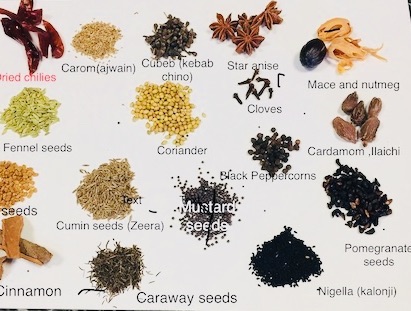
Lot of vegetarian dishes are flavored with herbs and spices. Herbs are used for their green parts, leaves and stalks, and are used freshly chopped either as one of the ingredients, or as fresh garnish which is inviting and appetizing with their vibrant colors and texture. Some of the commonly used herbs in Indian cooking are cilantro (both cilantro and coriander seeds come from the same plant. Cilantro is the name for leaves and stems, and coriander is the name for dried seeds), mint, and dill to name a few. Most commonly used spices are coriander, cumin, mustard, nigella seeds, sesame seeds, poppy seeds and many more.
As you see, there is a whole spectrum of spices to choose from to make immense variety of dishes from all different regions of India. Indian cuisine also has a flavor base like the French mirepoix, Spanish sofrito, and Cajun trinity. mirepoix is a French flavor base made with onion, celery, and carrots diced and cooked in oil and butter until it turns to mush which imparts deliciousness to the planned dish. When it is ready, vegetables for the final dish are added and cooked with needed seasoning and garnishing. The same principle is applied to Cajun, and Spanish flavor bases only with some differences in combinations of aromatic vegetables.
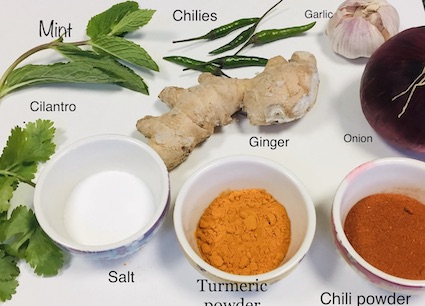
Indian flavor base works on the same principle but I am not sure if there is a name for it but all my life I have heard it referred to it as a handi. which meant that diced onions, ginger and garlic paste, red chili powder, turmeric powder, salt, and oil or ghee are slow cooked in a covered pot until very soft. This base is then used to make a variety of vegetarian dishes such as curried potatoes, beans, eggplant, okra and many other desired side dishes. You can also add tomatoes to the base ingredients to make it more saucy and tangy. As in any kitchen, in my kitchen, I use a lot of twists by adding and removing ingredients to develop recipes and turning cooking from a chore to a passion. This way my food is more appealing, interesting, and exciting for me, and I get more ahhh’s than meh’s for my effort.
A wise chef once surmised that only a few handful of recipes exist in the world-all else is simply a derivative of a “mother” recipe.
Many use this same base to create recipes with meat and vegetable combinations, mixture of different vegetables, lentils and vegetables, and the possibilities are endless. My next post curried potato recipe which is created with this mother of all recipes, a simple, balanced flavor base and is hugely popular with young and old alike.
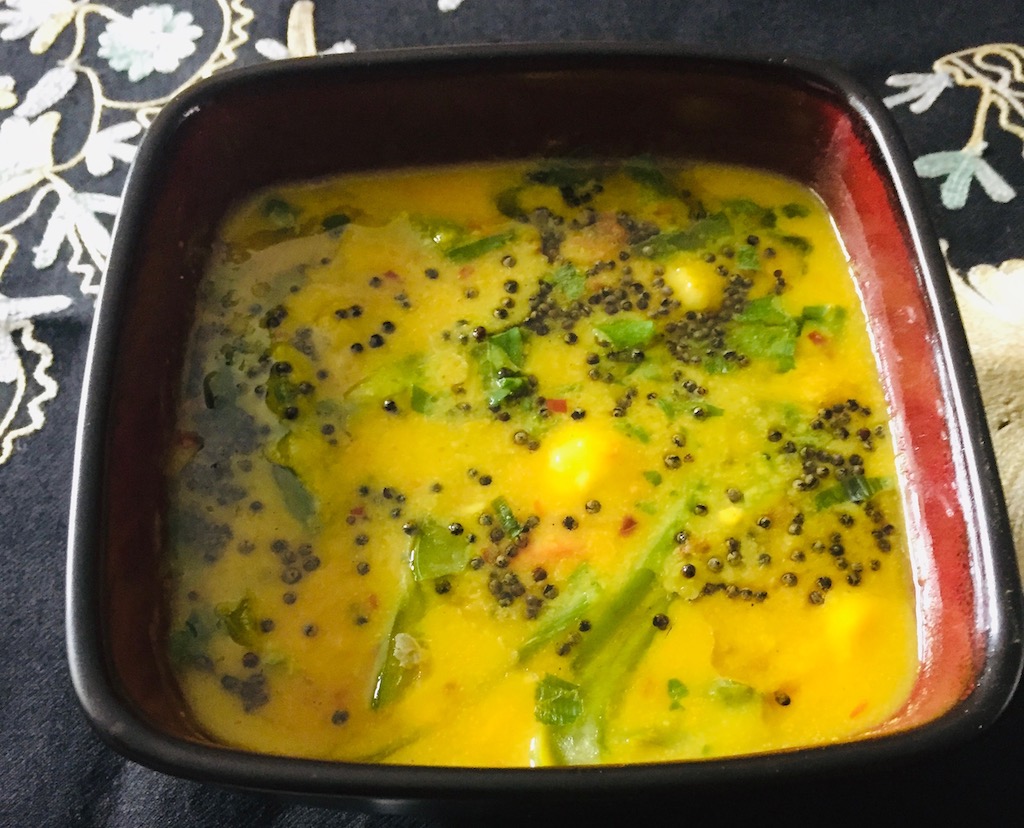
I had never tasted Bengali style vegetable daal until we were in England in 1965. I became friends with a Bengali doctor, Bella Das, who worked at the same hospital as my husband. She and her husband both were doctors. and lived in our neighborhood. We became family friends. And I learned a lot of Bengali dishes "sweet and savory", from her. Bengali style daal with vegetables became my favorite. This recipe was not in our repetroire in Hyderabad. It is delicious, filling and easy to make. It is like a staple which we eat with rice which is another staple food in India.Her dishes kept me connected to Bengali food. When we move to the States, we ended up in western New York. I went to Alfred University, where I met a lot of young Bengali students. They were young and were very happy to have us as their family. They spend weekends with us and shared the cooking with me. They cooked Bengali food for us giving me time off from some of the weekend cooking. Here is the recipe for Bengali daal with vegetables.
1teaspoonginger/garlic paste(you can use powdered ginger and garlic ½ teaspoon each, because it is strong)available in Indian stores
½teaspoon cumin powder
½teaspoon sugar
1teaspoon salt
3cups water
¼cup green peas
¼cup carrots cut into discs
¼cup green beans
1Romatomato, finely chopped
2small green chilies
1 tablespooncilantro, finely chopped
Thadka, or Tempering
3tablespoon oil
½teaspoonmustard seeds
2driedred chilies
Method
Wash and drain daal well. Add some fresh water to cover daal.
Add crushed pepper, turmeric, ginger/garlic (you are using), cumin powder, sugar and salt. Stir and cook until daal is very soft. Add 3 cups water and stir to mix.
Remove from heat and blend by using a potato masher or a blender. This daal is textured rather than very smooth; therefore stop blending when it is slightly coarse.
Return to heat and add peas, carrots, beans, and tomatoes. Return to heat and bring the mixture to a boil, reduce heat and cook for 25 to 30 minutes on low heat or until all vegetables are cooked but not mushy.
Add green chilies and cilantro and cook for another 5 minutes.
Meanwhile, heat oil in a small saucepan, add mustard seeds and let them splurtter. Add dried red chilies and brown lightly shaking the saucepan for even browning.
Transfer prepared daal to a serving bowl and pour the Thadka ( spiced oil on top).
1tablespoonginger/garlic pasteavailable in Indian stores
1 cup water
1 teaspoon saltseason to taste
3 tablespoons unsalted butter
For Tempering:
2tablespoonsvegetable oil, or any oil on hand
1teaspooncumin seeds
½teaspoon asafetida
1teaspoon coriander seedswell crushed
4 dried red chiliescut in halves
1roma tomato or any small tomatochopped finely
Equipment
pressure cookeer, any heavy saucepan,
Method
Wash and soak mixture of all the lentils in boiling water for (at least) 15 minutes.
Wash again and add fresh cold water, chili powder, turmeric powder, and ginger/garlic paste. Cover and cook until very soft. If using pressure cooker, use the direction for its use. If using a regular saucepan, cook until very soft. It takes 30 to 35 minutes or until it gets really soft. Since it is a mixture of different types of lentils, thet require different cooking time; therefore, it is important to check the doneness of all the lentils.
Remove from heat and use a potato masher to mash it well, dont blend because it should have a coarse texture, but very slightly coarse, for an authentic finish. Add one cup water, or enough water for a desired consistency (this dish requires a thicker consistency).
Return to medium heat and add salt, and unsalted butter and bring it back to a boil and to let the butter melt.
Season to taste. Simmer for about 10 minutes.
Meanwhile in a small saucepan, heat oil and add cumin seeds and brown them. Add asafetida, crushed coriander seeds, and red chilies and cook until red chilies are dark in color.
Add crushed tomatoes and cook on low heat until tomatoes are cooked down and oil starts to separate on the sides.
Transfer prepared daal to a nice serving bowl. Pour the prepared spicy oil over the daal and stir gently.
Serve with white rice, naan, or Indian breads (roties).
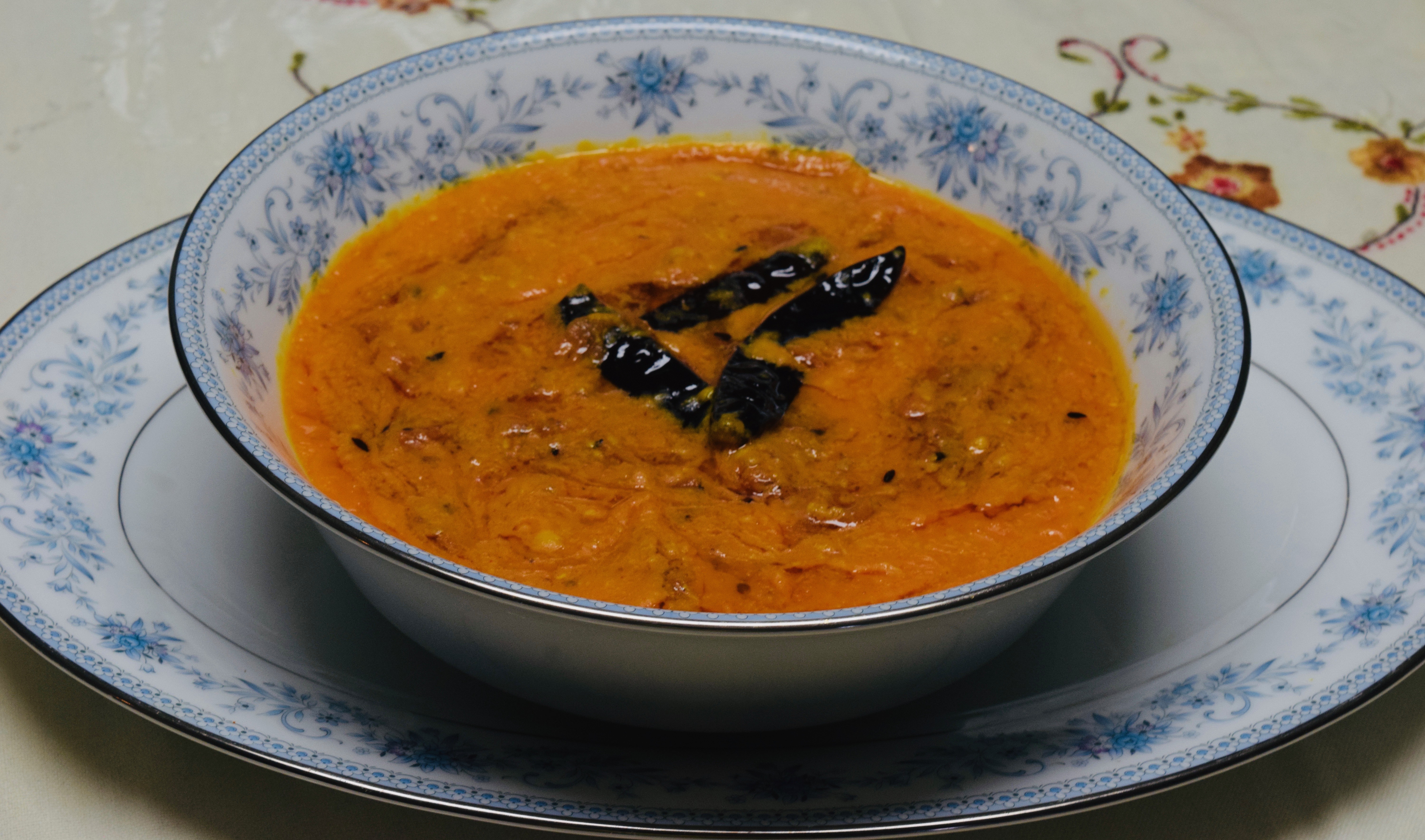
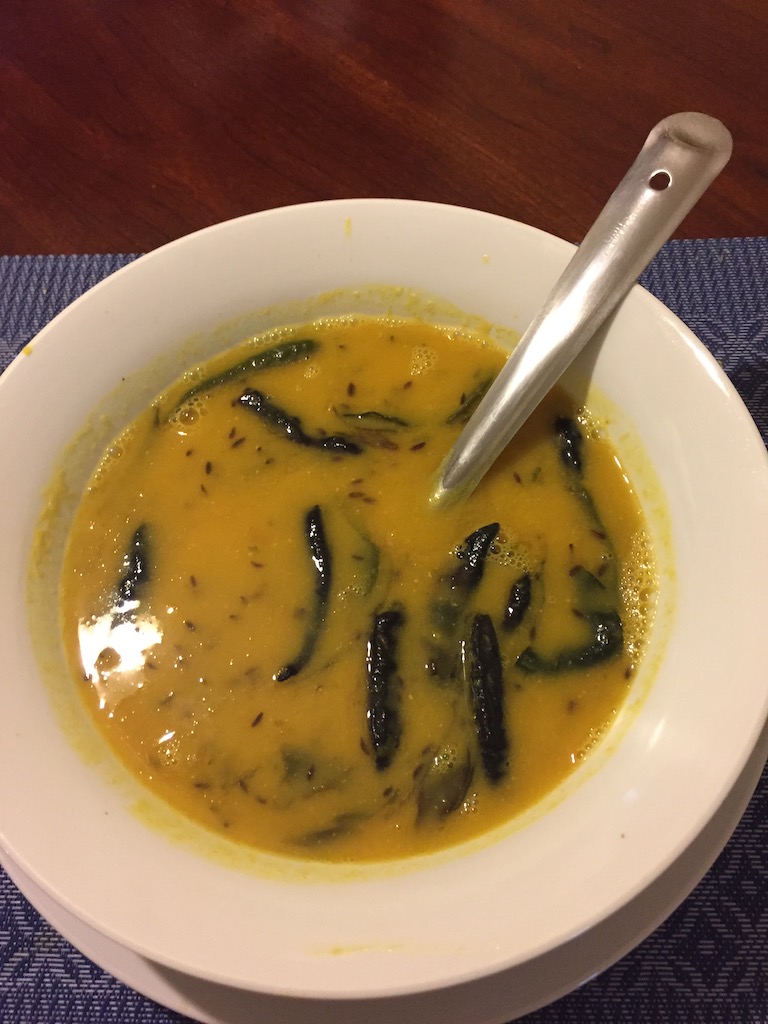
Hyderabadi Khatti daal is the most popular daal made with masoor daal. It owes its popularity to a tangy, and slightly salty taste. When served hot (what we call 'garam, garam') with white rice and ghee( clarified butter), as a side, it is an exotic treat. For many millions in India this daal is a staple. It is eaten in quantities with rice or roti (Indian bread) and it constitutes a popular options for any meal. Also for many a households, rich or poor alike, it is a menu item almost everyday of the week. For us it is a regular lunch item. This iconic daal, while it is a cinch to make, it is extremely affordable. Here is a recipe for khatti daal which can also be made in several different varieties by adding vegetables of your choice to it. I will dedicate some of my future posts to share various recipes with or without vegetables from different parts of India.
Wash and drain dal and put in a pressure cooker, or a regular heavy saucepan.
Add enough water to cover daal, and add chili powder, turmertic ginger/garlic paste,and salt.
Cover and cook until very soft. If using pressure cooker, use the direction for its use. if using a regular saucepan, cook until very soft. It takes 15 to 20 minutes or until it gets really soft, especially masoor daal is very quick to cook.
Cooked daal is very soft, use blender or immersion blender to blend to a smooth gravy by adding 1½ cup water. sometime you will need more or less water. Use your judgment and personal preference as to how thin or thick you want daal to be( there should be a line between thin and thick, this daal when served has gravy somewhere between very thin and very thick) . A few tries, and tasting will make you an expert on that (remember, practice makes perfect!).
Add curry leaves, green chilies, and a few cilantro leaves, and continue to simmer for 5 minutes.
Add lemon juice. Add lemon juice in installments to prevent it from getting too sour. If not sour enough for your taste, you can always add a little more. Everyone's palate is different, and is developed for slight nuances in food. The key is to check frequently for your own taste, when you are adding seasoning. Lemon is a must addition in this dish.(My mother always told me to add a hint of lemon juice to almost every dish, sweet or savory. She said that it changes the whole flavor profile.) Let daal simmer for 10 to 15 minutes.
Meanwhile, heat oil in a small saucepan.. Add cumin seeds to the hot oil and let them brown slightly, followed by dried red chili. Shake or stir the pan to get them evenly browned. There is a very thin line between browning and burning. So baby-sit the process.
Once the oil is ready, Transfer the simmering daal into an appropriate sized serving bowl, and pour the spiced oil over the daal. Gently mix and serve with white rice or any combination of vegetarian or non-vegetarian meal. Enjoy!
Red Lentils curried(meethi, sweet, Dal) with Caramelized Onions
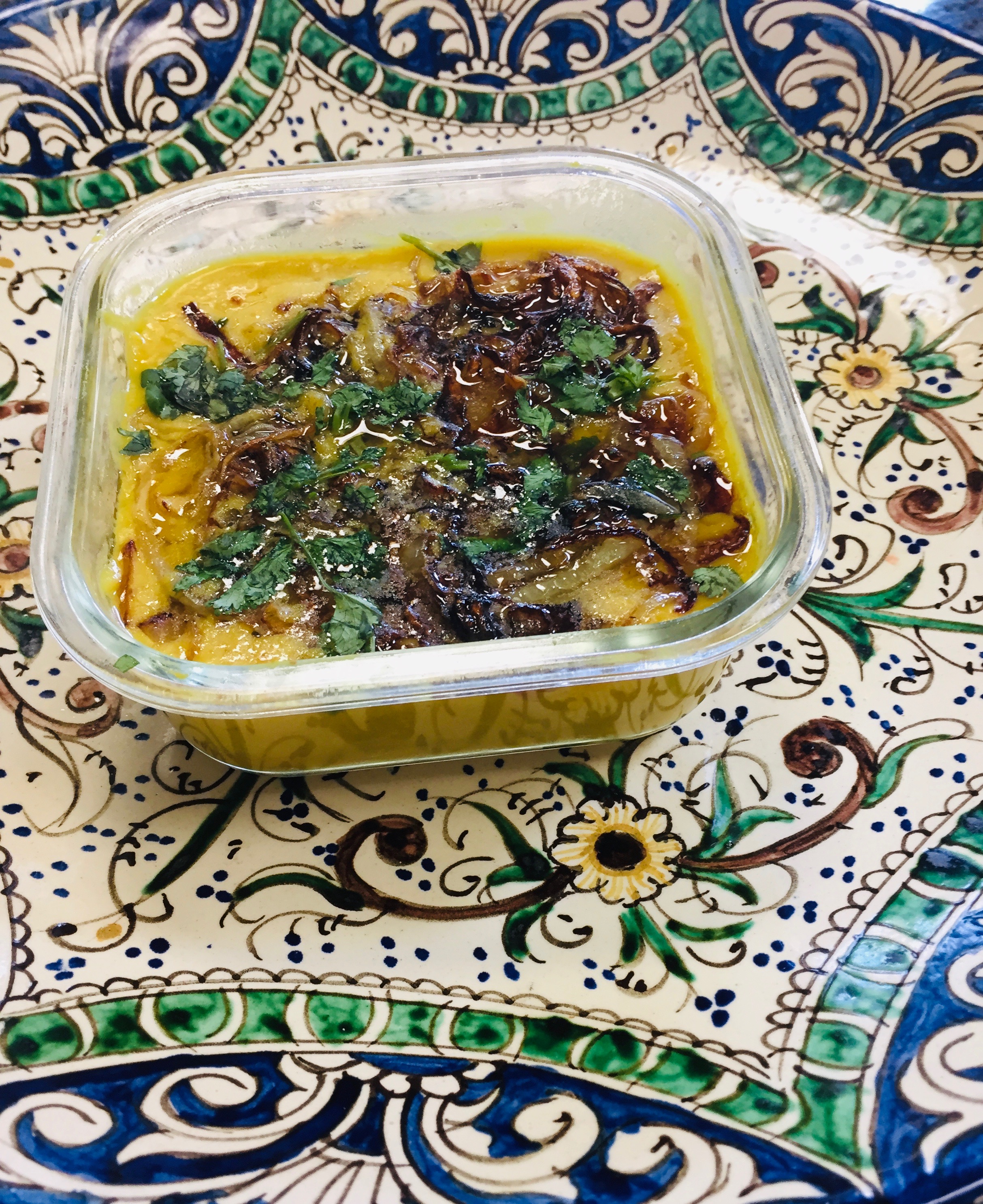
This lentil dish with very few ingredients is a delicacy. Although part of the name translates to sweet but no sugar is added. Since there is no sour ingredient, such as tomato, lemon, or tamarind hence the name. It should be light, fluffy, creamy, rich and decadent topped with caramelized onion which largely contributes to its sweetness. It is extremely popular because of its finger licking good taste and its versatility. It can be served with any Indian meal combos, and also enjoyed when served on its own with rice or roties (Indian bread).
1cup red lentil, washed well and soaked in enough water for 20 minutes.
1cupor enough water to barely cover the lentil.
½teaspoon turmeric powder
½teaspoon ginger/garlic pasteall Indian stores have the product. you can also mince fresh ginger and garlic in equal amount
1 teaspoonlevel spoon salt
Garnish
1 smallonion, very finely sliced
4tablespoonsolive oi
3 to 4smallgreen chilies, coarsely cut
1tablespoonfresh cilnatro, finely chopped
Method
Main recipe:
In a bowl, wash well and soak lentils for 20 to 30 minutes.
When ready to cook, add washed and drained lentils into a saucpan, add water to barely cover lentils.
Add turmeric powder, and ginger/garlic paste and stir to mix.
Cook on medium heat until lentils are tender. Red lentil cooks very fast.
Remove from heat when soft, season to taste with salt, and transfer to a blender, or use an immersion blender to puree it. If too thick, add some water to loosen it without making it watery. Should not be watery.
If using a blender, return to the suacepan and bring it back to a quick boil. Lower heat and simmer until it is rich and creamy. Stir a few times making sure to get the desired consistency. Transfer to serving bowl.
Garnish:
Meanwhile, in a small skillet, Heat oil, add sliced onion and fry stirring until it is caramelized. You shoud stay with it lest it burns. There is a fine line between it being brown and being burnt.
Top the prepared dal mixture evenly with coarsely cut green chilies, and chopped cilantro.
Pour the caramelized onion with all its oil on top of herb garnish.
Serve as a side dish with any meal. It is extremely versatile.