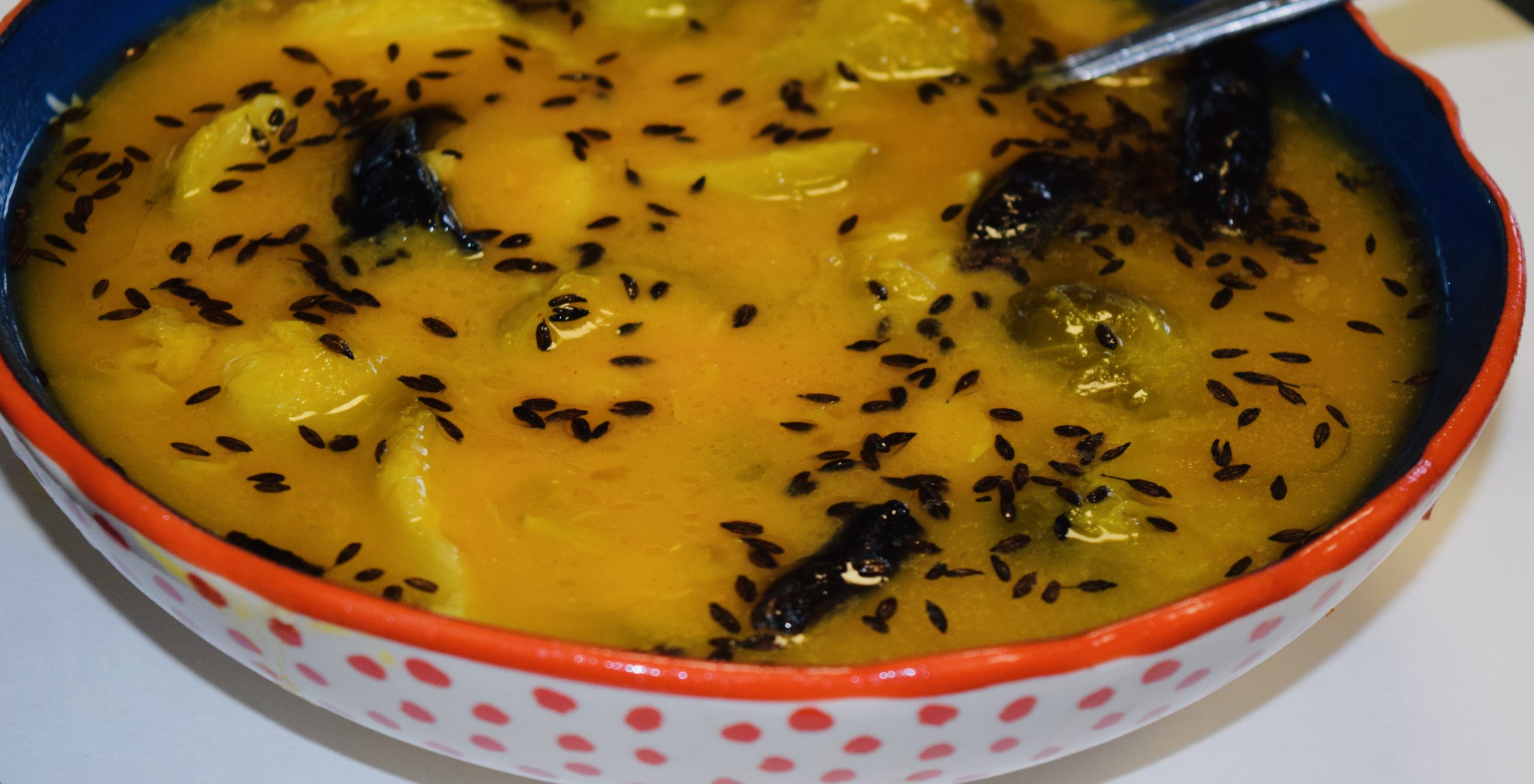

This is just a regular Hyderabadi khatti dal, but with added sprouts. It gives it an extra texture and taste that we find very satisfying. Added vegetables have a way of filling the gap if there is no side vegetable dish.
Wash dal in a saucepan, at least, 20 minutes before cooking. Meanwhile, cut a slice of stem from each sprout to give a clean base but don't cut it completely. Remove tough leaves if any. Cut in half, lengthwise and wash well in a colander. Set them aside.
Drain, and add enough fresh water to cover dal.
Add ginger/garlic paste, chili powder, and turmeric powder, and bring it to rolling boil. Cover and simmer until lentils are mushy and soft.
Use an immersion blender, or blender you have, to blend to a very smooth consistency. Add 1½ cup water. Dal should not be thick or pasty, but should have a pouring consistency.
Return to the saucepan, add prepared sprouts, curry leaves, green chilies, and bring it back to a boil. Reduce heat and simmer until sprouts are fork tender.
Add salt, and lemon juice and stir to mix. let it simmer for a few more minutes.
Transfer to a serving bowl, and sprinkle chopped cilantro over it.
Tadka (Baghar)
In a small saucepan, heat oil and add cumin seeds to it.
When cumin seeds turn brown, add sliced garlic and dried red chilies and let them get dark brown.
Pour hot oil, with all its spices over the prepared dal to serve.
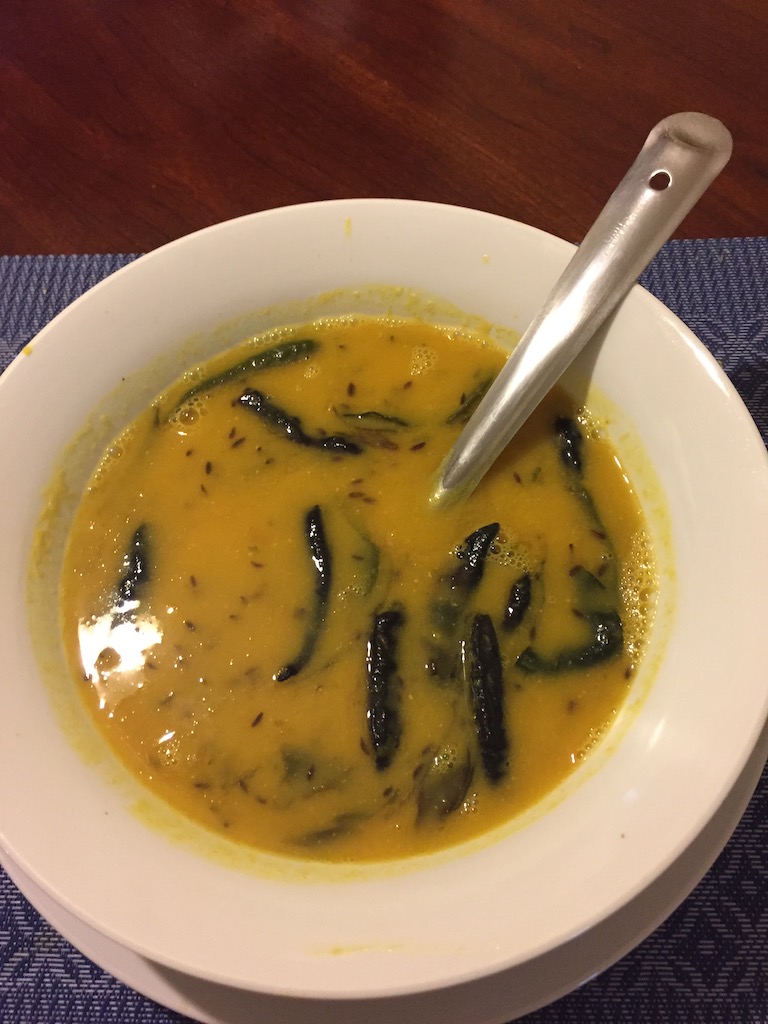
Hyderabadi Khatti daal is the most popular daal made with masoor daal. It owes its popularity to a tangy, and slightly salty taste. When served hot (what we call 'garam, garam') with white rice and ghee( clarified butter), as a side, it is an exotic treat. For many millions in India this daal is a staple. It is eaten in quantities with rice or roti (Indian bread) and it constitutes a popular options for any meal. Also for many a households, rich or poor alike, it is a menu item almost everyday of the week. For us it is a regular lunch item. This iconic daal, while it is a cinch to make, it is extremely affordable. Here is a recipe for khatti daal which can also be made in several different varieties by adding vegetables of your choice to it. I will dedicate some of my future posts to share various recipes with or without vegetables from different parts of India.
Wash and drain dal and put in a pressure cooker, or a regular heavy saucepan.
Add enough water to cover daal, and add chili powder, turmertic ginger/garlic paste,and salt.
Cover and cook until very soft. If using pressure cooker, use the direction for its use. if using a regular saucepan, cook until very soft. It takes 15 to 20 minutes or until it gets really soft, especially masoor daal is very quick to cook.
Cooked daal is very soft, use blender or immersion blender to blend to a smooth gravy by adding 1½ cup water. sometime you will need more or less water. Use your judgment and personal preference as to how thin or thick you want daal to be( there should be a line between thin and thick, this daal when served has gravy somewhere between very thin and very thick) . A few tries, and tasting will make you an expert on that (remember, practice makes perfect!).
Add curry leaves, green chilies, and a few cilantro leaves, and continue to simmer for 5 minutes.
Add lemon juice. Add lemon juice in installments to prevent it from getting too sour. If not sour enough for your taste, you can always add a little more. Everyone's palate is different, and is developed for slight nuances in food. The key is to check frequently for your own taste, when you are adding seasoning. Lemon is a must addition in this dish.(My mother always told me to add a hint of lemon juice to almost every dish, sweet or savory. She said that it changes the whole flavor profile.) Let daal simmer for 10 to 15 minutes.
Meanwhile, heat oil in a small saucepan.. Add cumin seeds to the hot oil and let them brown slightly, followed by dried red chili. Shake or stir the pan to get them evenly browned. There is a very thin line between browning and burning. So baby-sit the process.
Once the oil is ready, Transfer the simmering daal into an appropriate sized serving bowl, and pour the spiced oil over the daal. Gently mix and serve with white rice or any combination of vegetarian or non-vegetarian meal. Enjoy!
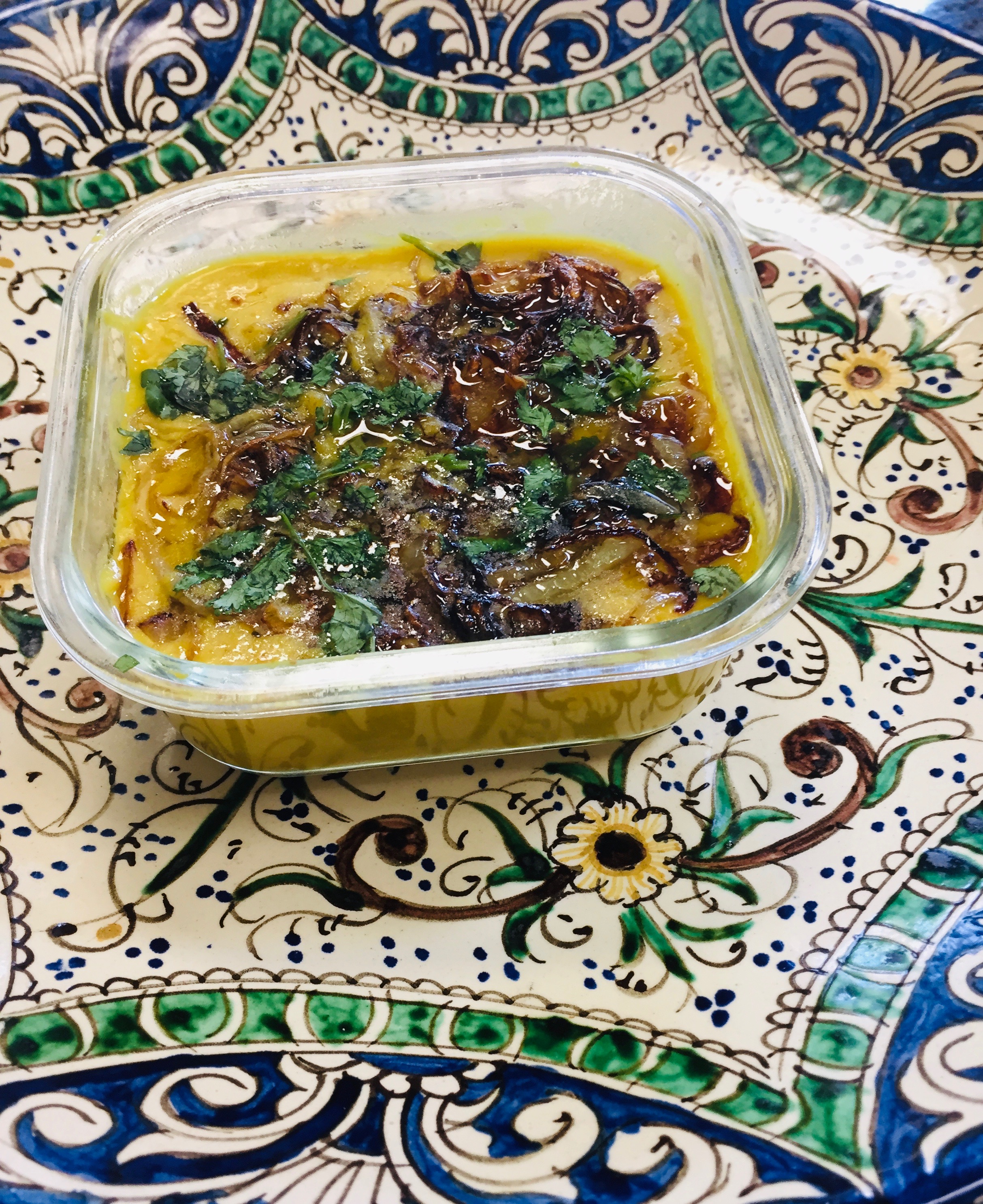
Red Lentils curried(meethi, sweet, Dal) with Caramelized Onions
This lentil dish with very few ingredients is a delicacy. Although part of the name translates to sweet but no sugar is added. Since there is no sour ingredient, such as tomato, lemon, or tamarind hence the name. It should be light, fluffy, creamy, rich and decadent topped with caramelized onion which largely contributes to its sweetness. It is extremely popular because of its finger licking good taste and its versatility. It can be served with any Indian meal combos, and also enjoyed when served on its own with rice or roties (Indian bread).
1cup red lentil, washed well and soaked in enough water for 20 minutes.
1cupor enough water to barely cover the lentil.
½teaspoon turmeric powder
½teaspoon ginger/garlic pasteall Indian stores have the product. you can also mince fresh ginger and garlic in equal amount
1 teaspoonlevel spoon salt
Garnish
1 smallonion, very finely sliced
4tablespoonsolive oi
3 to 4smallgreen chilies, coarsely cut
1tablespoonfresh cilnatro, finely chopped
Method
Main recipe:
In a bowl, wash well and soak lentils for 20 to 30 minutes.
When ready to cook, add washed and drained lentils into a saucpan, add water to barely cover lentils.
Add turmeric powder, and ginger/garlic paste and stir to mix.
Cook on medium heat until lentils are tender. Red lentil cooks very fast.
Remove from heat when soft, season to taste with salt, and transfer to a blender, or use an immersion blender to puree it. If too thick, add some water to loosen it without making it watery. Should not be watery.
If using a blender, return to the suacepan and bring it back to a quick boil. Lower heat and simmer until it is rich and creamy. Stir a few times making sure to get the desired consistency. Transfer to serving bowl.
Garnish:
Meanwhile, in a small skillet, Heat oil, add sliced onion and fry stirring until it is caramelized. You shoud stay with it lest it burns. There is a fine line between it being brown and being burnt.
Top the prepared dal mixture evenly with coarsely cut green chilies, and chopped cilantro.
Pour the caramelized onion with all its oil on top of herb garnish.
Serve as a side dish with any meal. It is extremely versatile.
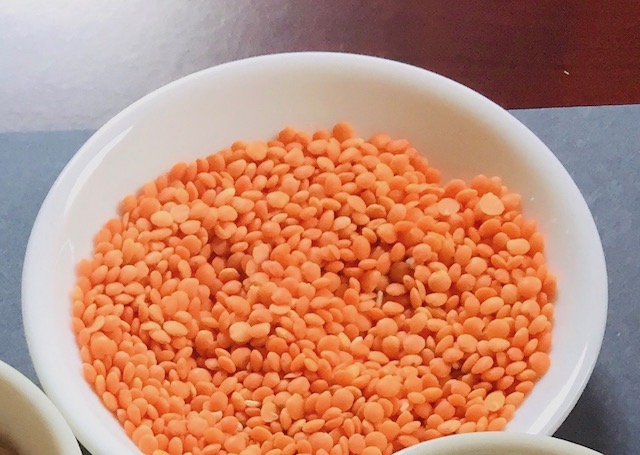
A large number of Indians are vegetarians, and legumes are a very important and staple part of their diet. But even the non-vegetarian, who are also in a large numbers, if not larger than vegetarians, include legumes of all kinds in their diet, and prepare them in an unfathomable variety of delicious recipes. Lentils are also known as pulses, and are part of the legume family. Under the umbrella of legume are the plants which produce edible seeds such as lentils, beans, chick peas, soy beans, peanuts, and more. All dried legumes also grow in pods, and are referred to, by a lot of Indians, as daals, or pulses, and they are mostly the split and skinned versions of lentils. The image above indicates the type of daal which are most popular. Red lentil is one of the most popular because it cooks very fast, and it changes to yellow as it cooks and falls apart very quickly making it easy to prepare. Most other lentils (daals ) are not super hard to cook either. If you have time constraints, pressure cooker is a handy tool in any kitchen.
The popularity of lentils in vegetarian diet stems from the fact that they replace the meat portion by successfully providing the required proteins, which are essential for a balanced diet. Apart from being a source of proteins, they are excellent source of folate, manganese, B1, B6, potassium, and fibre, making them very desirable for a balanced diet and good health.
There are some special recipes for lentils (daals, pulses) in which whole seeds are used for a unique taste and color. Dal Makhani, and Kali daal are made with whole Urad which is white in its split version (urad) but has black skin and is called black gram. Skin contributes to the luxurious appearance and texture of these dishes. Lentils have always been very popular but have gained popularity because of the emerging trends on the vegan and vegetarian front around the world. So much so that it has become a predominantly visible ingredient in many cuisines across the globe, most notably throughout the Middle east, and also in Mediterranean cuisine. They are so versatile that possibility of their use in all courses on daily menus are endless.
Red lentils are an go-to ingredient in general, may be for the ease of cooking to save time, but may also be for its preferred taste in some of the daal preparation such as, kahatti daal, and dry pasty daal called Mitthi (sweet) dal. But for recipes such as Samber, toor (archer) daal is used traditionally and is recommended. But traditionally dalcha has always been made with chana daal, bone-in lamb, eggplant or gourd to serve with vegetable palau (pilaf). Therefore, there are traditional norms for using certain varieties of daals for certain preparation and most people follow it. In my future posts I will include my favorite legumes (lentils, beans, etc.) and how they are used in daily diets by scores of people.
Follow:
Welcome
Welcome to my blog. Feel free to check it out and leave me a comment, if you find something interesting.