
Category: Travel Blog

From Puno to Colca Canyon

Floating Islands
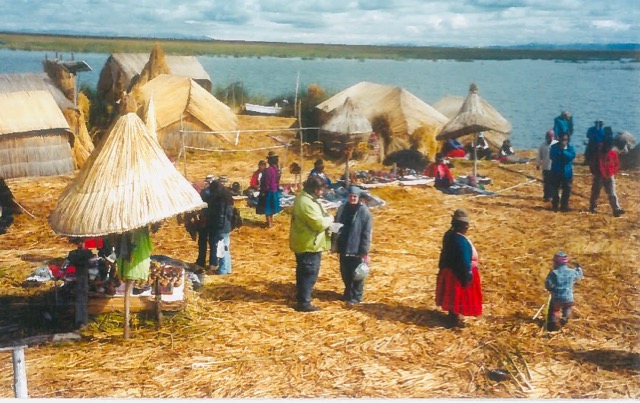
Floating Island scene

Our next destination from Puno was  Uros floating Islands on Lake Titicaca. The span of the lake is over 3000 sq. miles and straddles the borders of Bolivia ad Peru with access from either side. In the morning, our tour bus took us to board the ferry to go to the Islands. There are over 100 islands on Lake Titicaca and they are increasing in number. We came to one of the Islands. When we stepped on to the first floating Island, I had the sense of having slipped into a painting,  or fantasizing seeing  people living on man made reed Islands. It made me think of the skills birds use to build their nest except this was a work of art by humans to create a whole island nest with all the requisites to qualify as a home. Little reed  huts like homes, (each Island has room for 5 – 6 homes) lined along one side of the Island, and community of Islanders were traditionally dressed, with all their crafts, for which they are known, displayed  in front of each abode to be sold by its owners. The Island president explained that the  families that reside on the island form small Committees and work to maintain everything on the islands so that they can remain afloat. The islands have homes, boats, furniture, a church, and school which need maintainance. They also have electric power due to the installation of solar Panels. One of the chores of maintaining involves adding fresh layers of reed every few weeks on the surface to consolidate the surface and compensate for the rotting reeds at the bottom which is in the water constantly. Each Island is anchored down with a tight big block of reed so it does not float away.
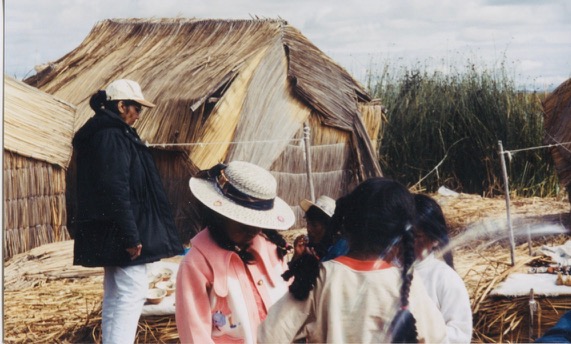
Another view of floating Island
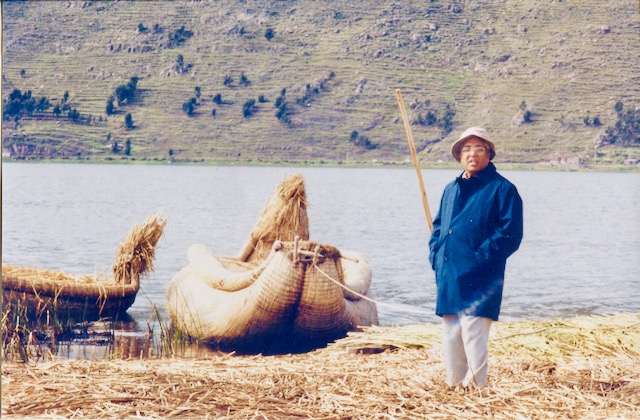
Floating Island, Reed boat.

There was pressure to buy souvenirs because that is their source of  living. But with our mode of travel and time we had did not allow for Schlepping extra items around. Though I marveled at  their skill of how they created everything  with reeds including their amazing canoes for transportation and fishing. They used tightly bundled reeds to build sturdy and really beautiful canoes.

After this lesson in Uros culture and their skillful use of Totora reed, we had more treats to come.  We boarded another boat and headed out to unique Taquile Island. On our way to Taquile Island  we could see people in their reed boat busy with their chores of picking up more reeds for maintenance and fishing. Taquile is not a floating island but real tiny spot of land in the middle of the lake Titicaca on Peruvian side. The inhabitants are famous for their textiles.

As we approached the island, our well-informed guide, Jorge, told us that  getting to  the town on the island would be hard work because it would take at least  40 minutes walking to get there. We were also given the option that there were two ways to go up. One was by climbing the steps and the other was by uphill trail which would be  worth the hike. But altitude was a problem and he suggested  using the trail for going up and using the steps to come back down  would be the best choice.
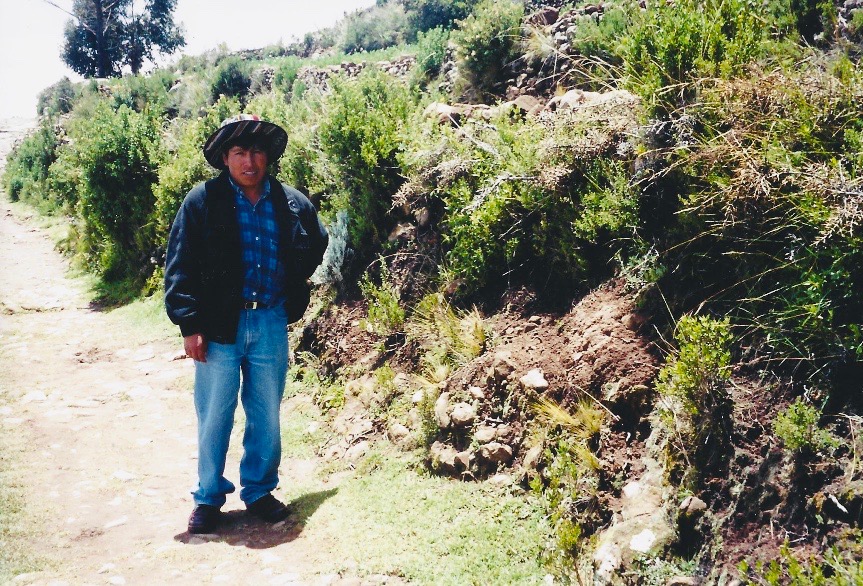
Jorge, the guide in Tequile island

Therefore, we opted to take the trail while entering the island. He insisted that we walk real slow, and offered some mint leaves for us to chew to minimize altitude sickness and nausea. There was mint growing all along the trail.  Jorge, charming and kind, stayed with us all the time.

He also informed us that there is a tradition of knitting men on the Island. They walk around the Island knitting. They make tightly woven caps which cover their ears and are floppy on the top. The best knitters are, apparently, men. Men’s knitting has a role in relationships and marital status. The most curiously noticeable aspect was the brilliant colors of the caps. The bright red single colored caps, apparently, meant that the person wearing it was married and not available. Men who  were in a relationship but not yet married carried a colorful bag with pom-poms, whereas single men wore red patterned cap with floppy white top indicating that he is available. Women tend the flock of sheep,  weave and spin the yarn.
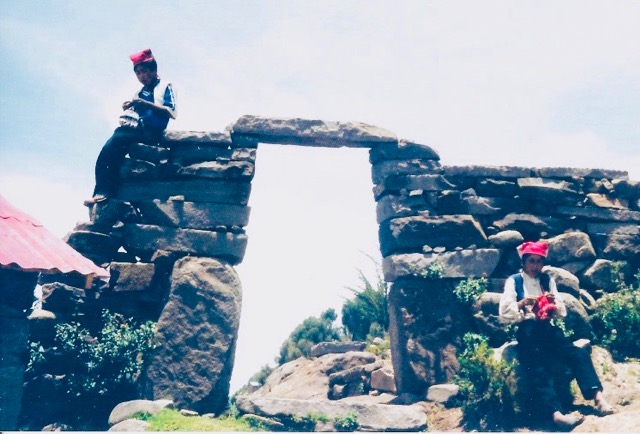
Men knitting caps, Taquile Island
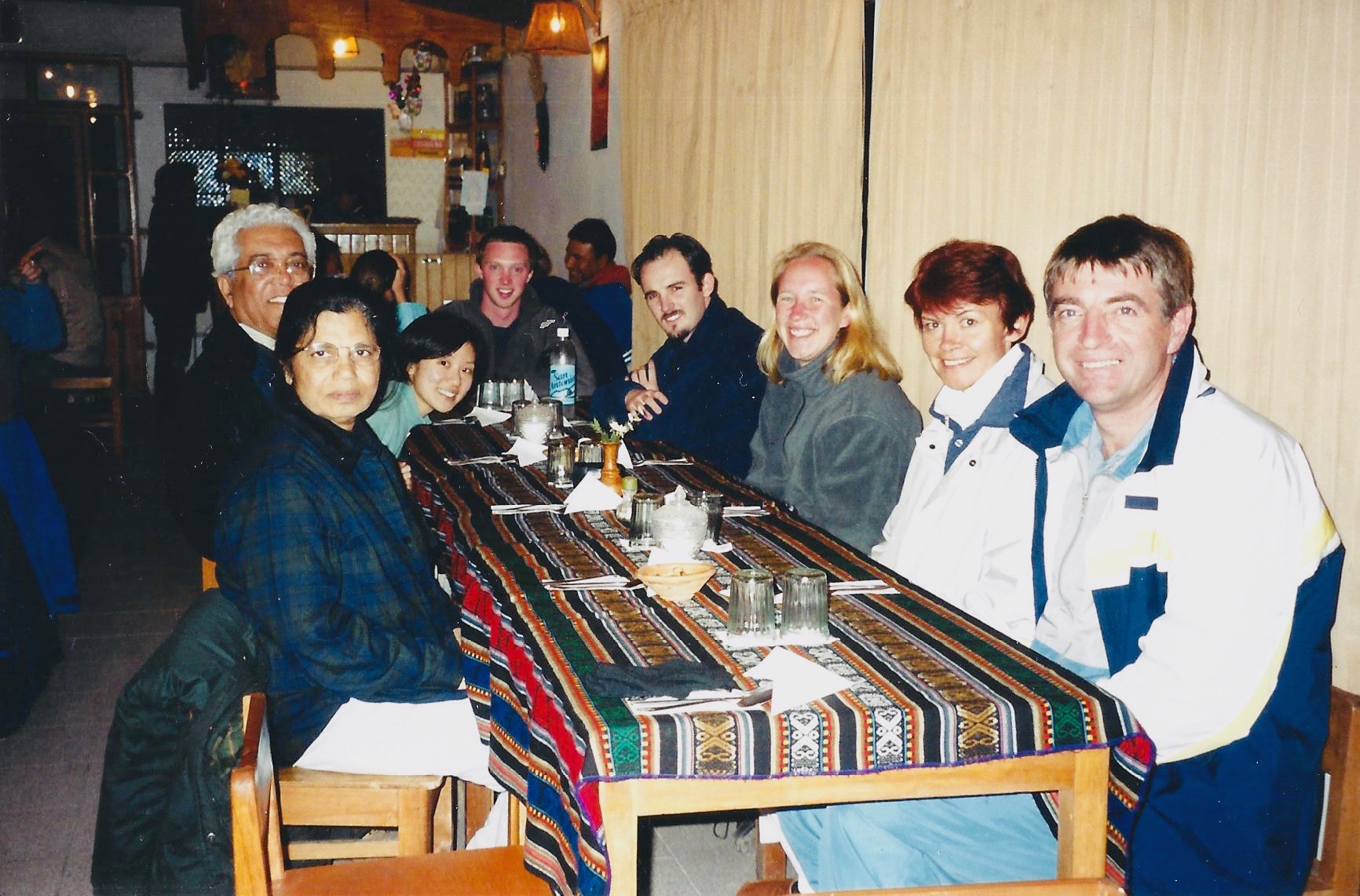
Restaurant in Taquile Island

When we got to the top we had a nice lunch in a restaurant with our group, and headed out to explore the area.in the time allowed. Then we  were ready to move on to our next destinations which  were  Colca Canyon and then Arequipa which turned out to be excellent add-ons to Puno and the the floating Islands.We took a bus to Colca canyon, located northwest of Arequipa. where we stayed in a nice hotel. We went shopping because we did not bring bathing gear with us. It was quite an experience. We could not find anything in our size because they were all sold out. Anyway, we didn’t give up and continued to  look and succeeded in finding something and were able to visit hot springs with our group.

Next morning in Colca Canyon, our tour bus picked us up to go to Condor Cross.  It was great scenic trip to a gem of unparalleled beauty with photo ops.etc. When we arrived at  Candor cross, only people there were from our tour.  We were definitely in Peru with women and Children with llamas. And some women were carrying eagles in their hands as if they were performing for the tourist.
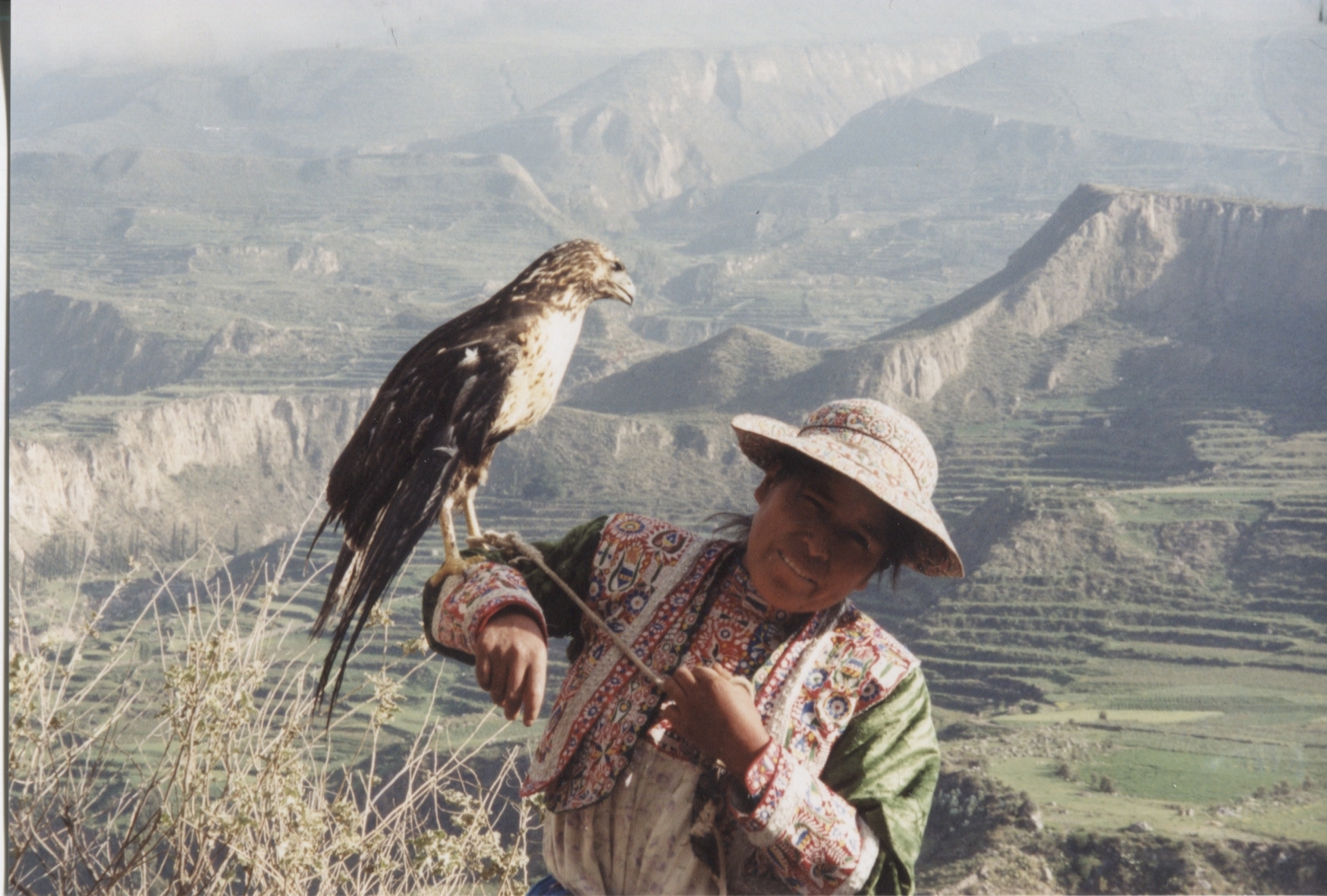
Peuvian woman with an eagle on her arm, Colca Canyon

While we were standing and enjoying the spectacular scenery, we saw the candor swooping in our direction and I was able to capture it with my camera, but the image does not do justice to the magnificent view we had of the  condor in flight. Nevertheless, It was a thrilling moment for me.
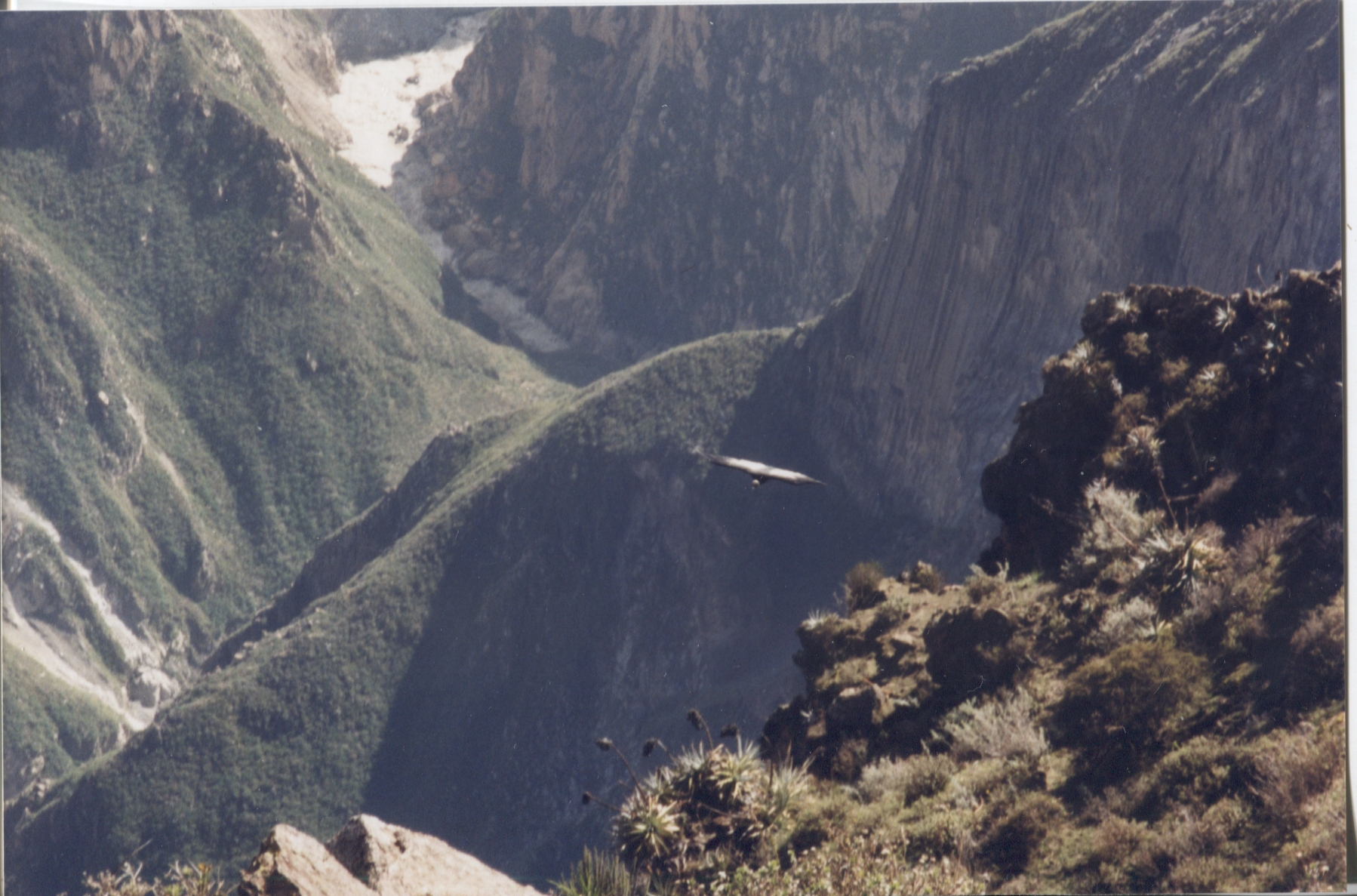
Condor in flight, Colca Canyon

After the Colca Canyon trip we continued on to Arequipa and then on to Lima. We had a extra day in Lima where we did some more sight seeing  before flying back home.
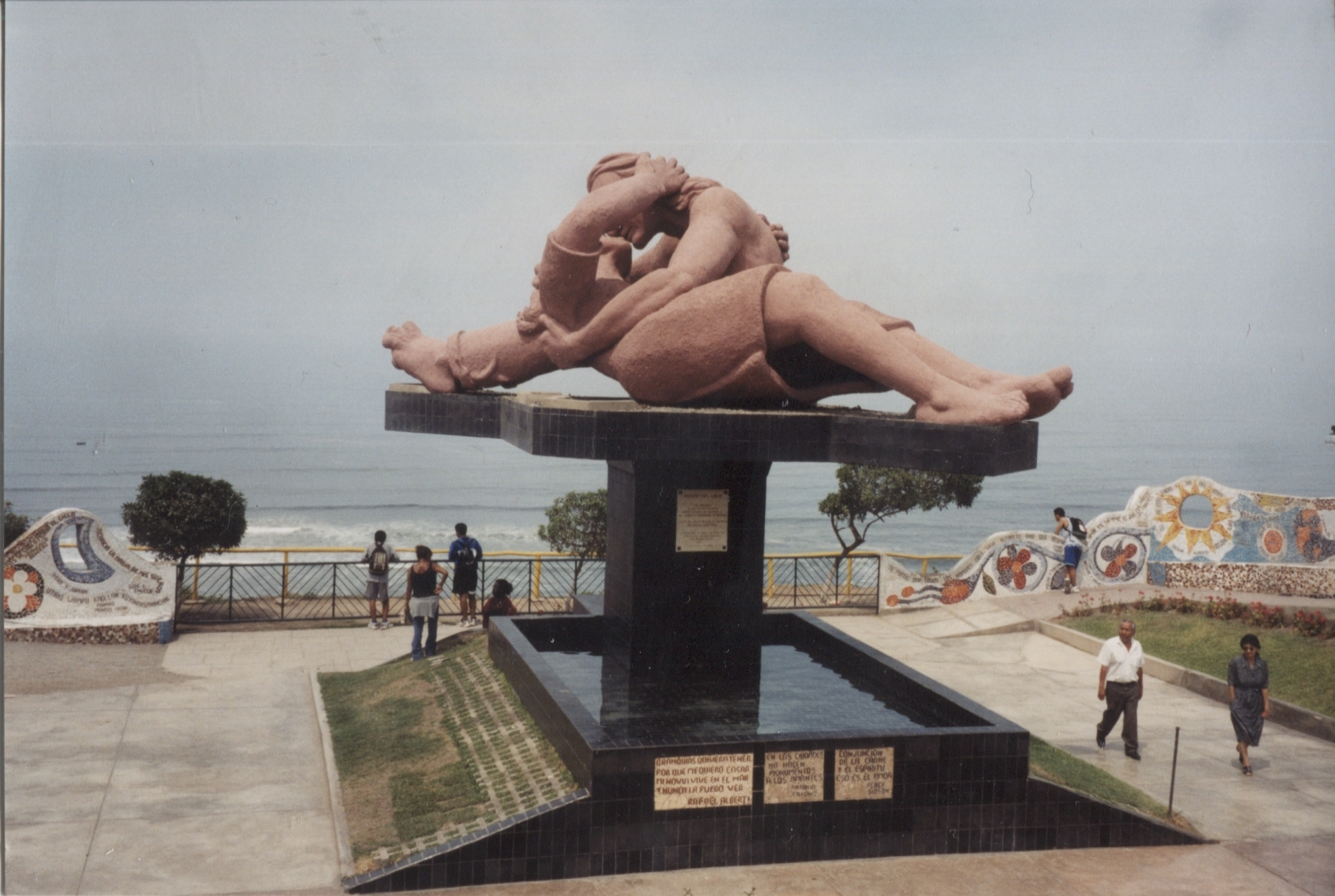
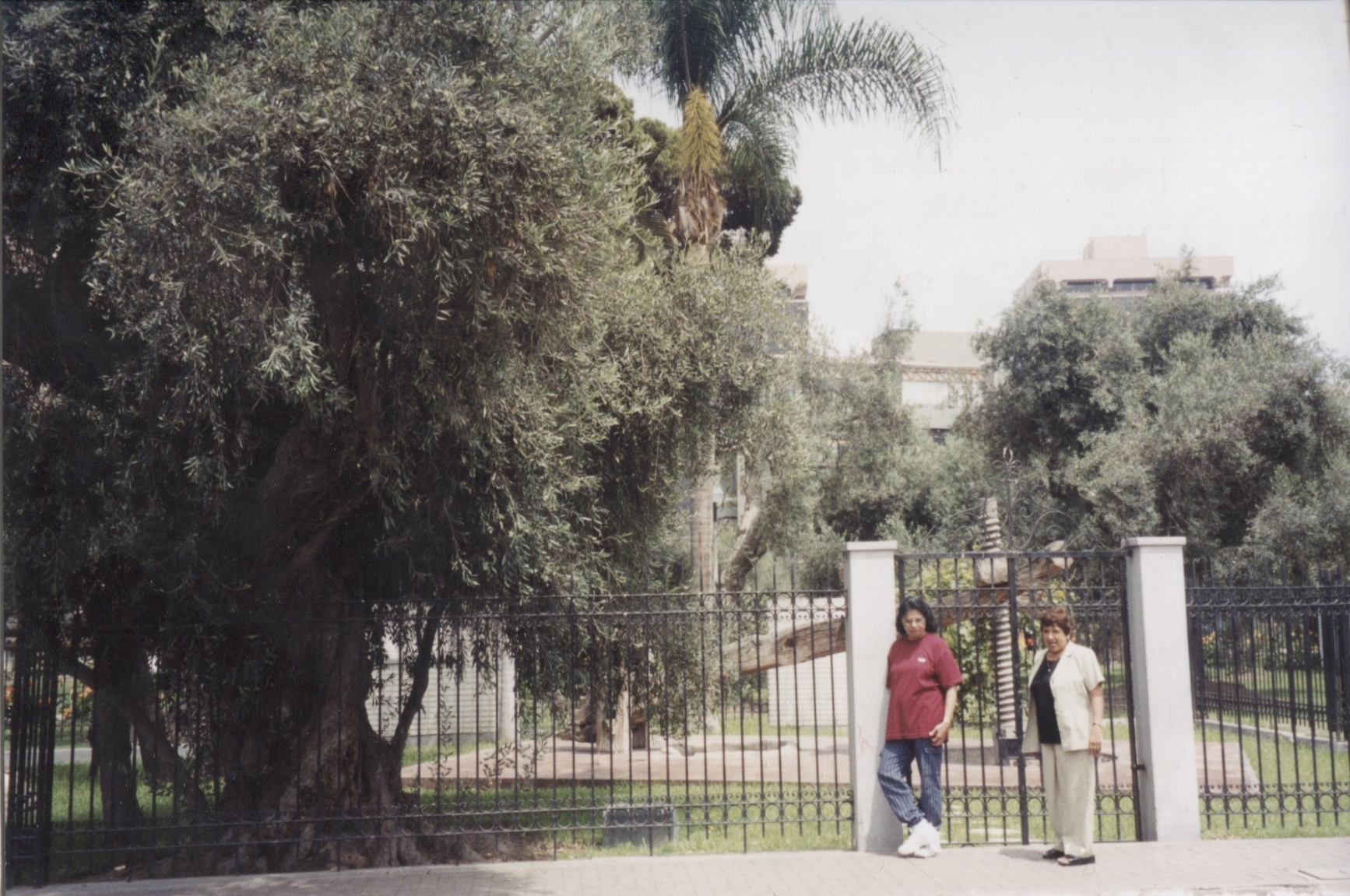
The Kiss, Sculpture, Downtown Lima

I was saddened to leave but at the same time happy to be going back home.
Back to the Top

Train Ride from Cusco to Puno, Peru

Train Ride from Cusco to Puno

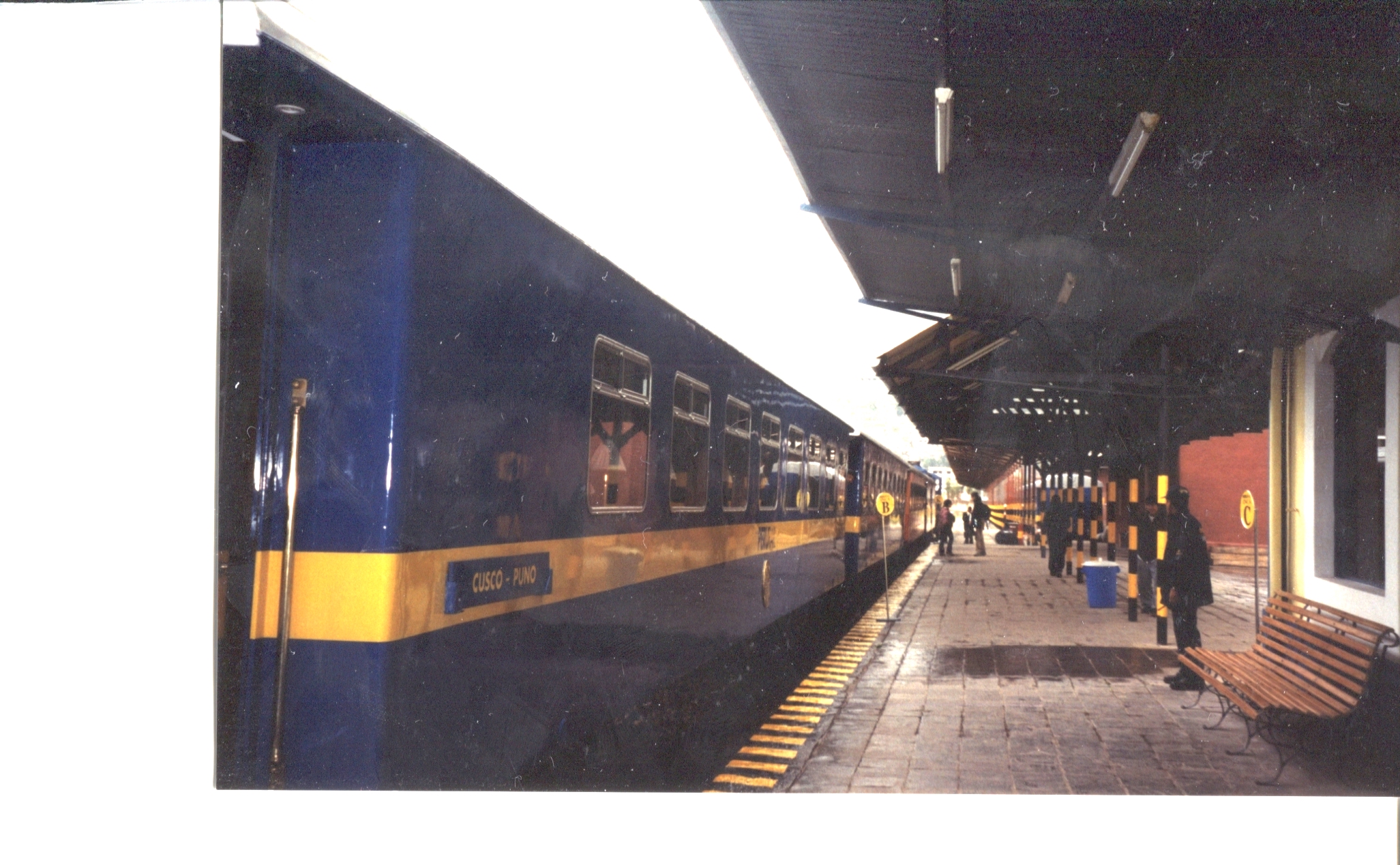
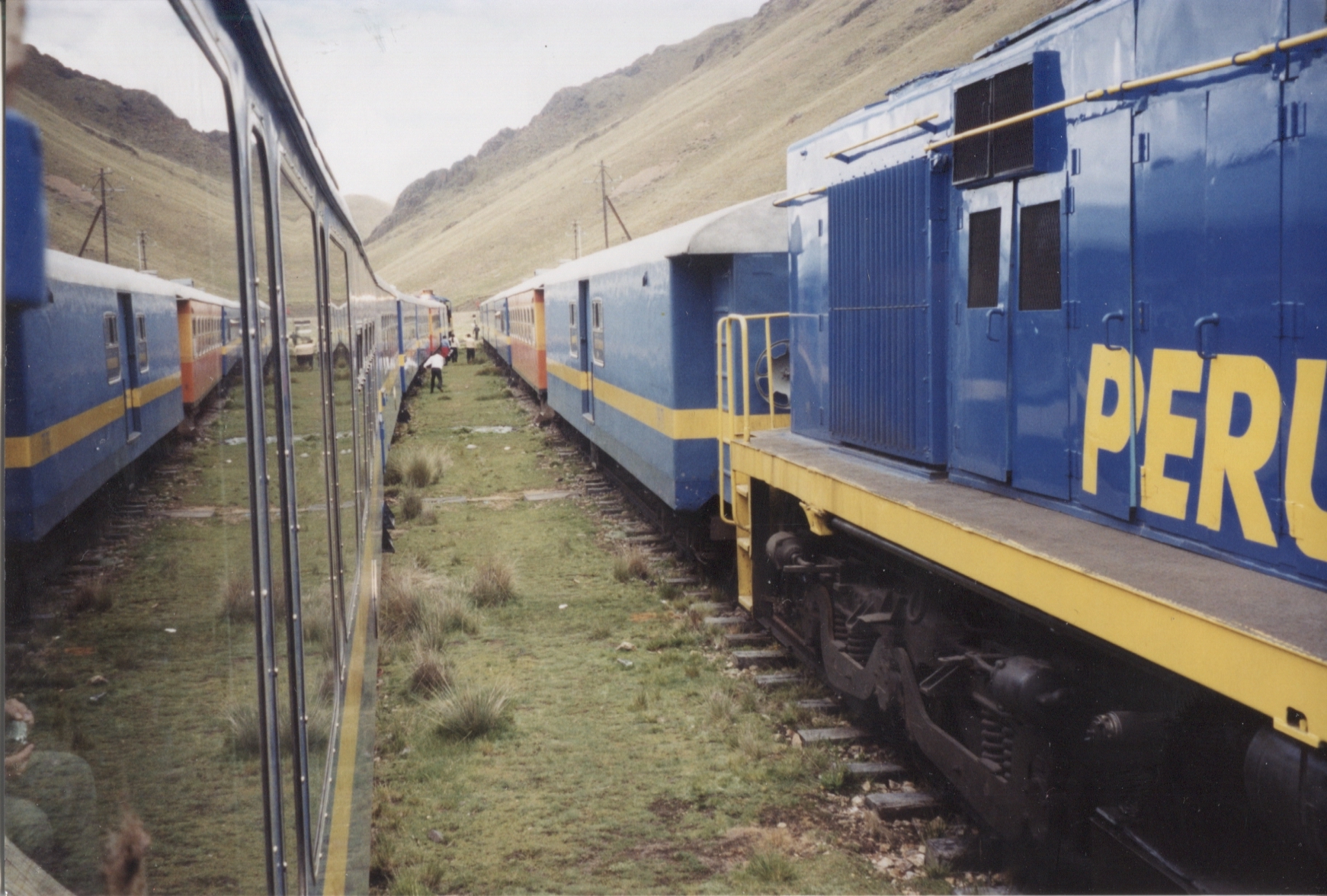
After visiting Macho Picchu and Sacred Valley, we were back in Cuzco.We were leaving for Puno next morning.  Puno is the gateway to Lake Titicaca, highest navigable lake in the world. There were options of traveling by plane, coach bus, or train,  but we decided to do it  by train. I always love to travel by train because it has so much more to offer by the way of comfort and natural beauty even when the train travels with incredibly high speed. We traveled by Perurail’s luxury Pullman train.

Train to puno from Cusco, Peru

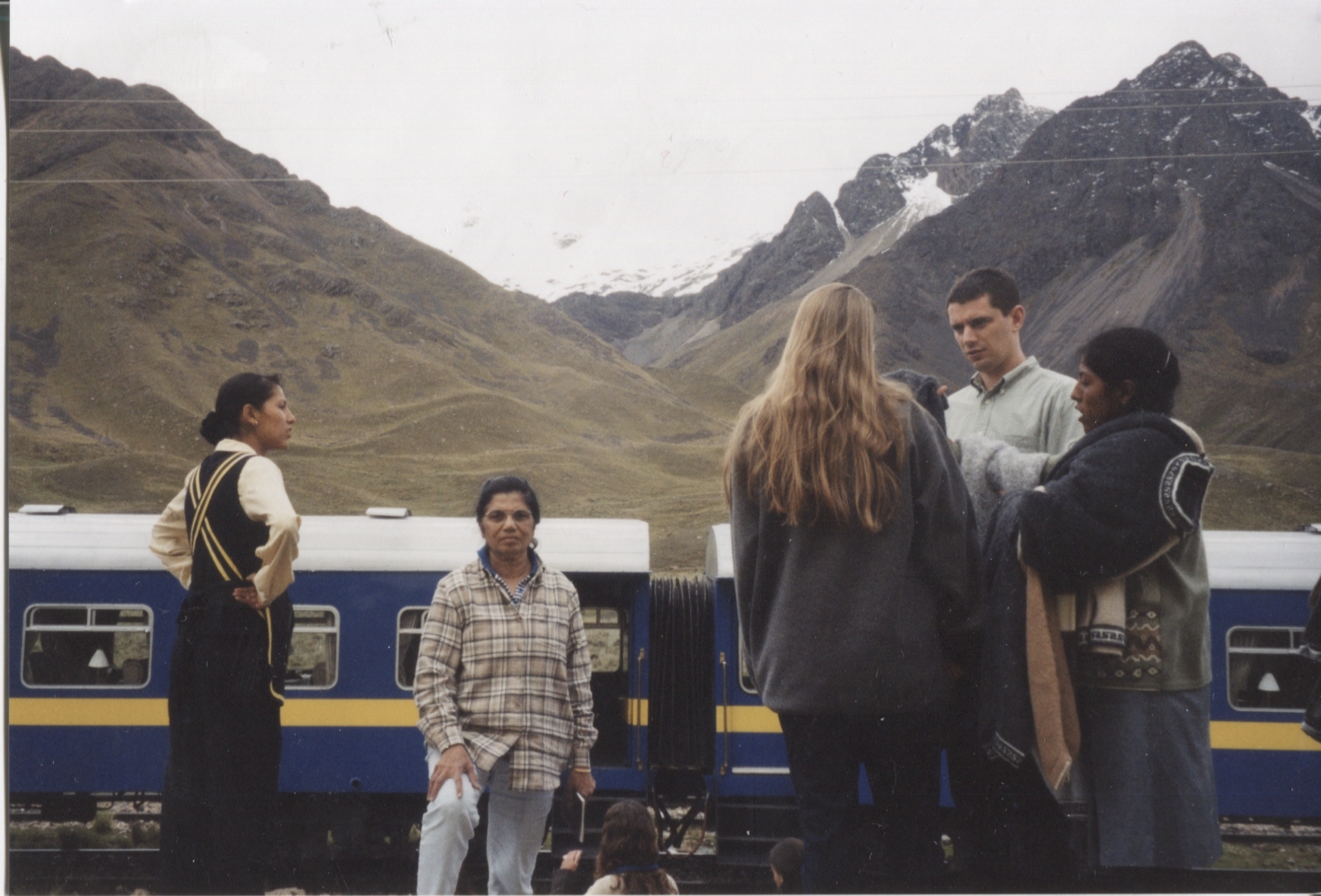
It was one of the most romantic train ride we have ever been on. Train itself offered an amazing amount of fun. It had topclass dinning cars where they served great meals. There was also a bar car, and an observation car which was the last carriage, with large wide windows spanning along the back and the sides  with lot of seating for those who wanted to enjoy the spectacular scenery along the ride. I didn’t  want to move an inch lest I missed something, although we were free to roam along the train all the time.
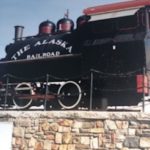
When the train was going through Urubamba valley, I swear it had to be the prettiest scenic ride ever, and  it was nostalgic for me because it reminded me of my train travels in  India where I saw locals working  and enjoying life right along the tracks, so it was  déjá vu in a way. There is one other thing which is engraved in my memory is the time when our train was passing through a huge area  which was covered with what seemed like gray structures behind the trees. We didn’t know what they were.
Petrified forest seen from the train to Puno, Peru

I then found out that we were passing a petrified forest. It made a phenomenal impact on me, I could only think of how God performs his wonders in mysterious ways. But science explains the phenomenon as:
” a natural process that occurs when all the organic matter in a tree dies and is replaced by a combination of quartz, copper, iron, and other minerals. This process takes millions of years. Apparently, volcanic ash is a key step in the process of petrification. As a matter of fact, it is not uncommon for petrified forest to have been covered by mud made out partially by volcanic ash at some point. Volcanic ash produces a chemical reaction in the wood, which in turn accelerates the process of petrification”.

As the train continued to crescendo, we saw huge mountain peaks shrouded in mist and clouds and yet the sun was out there behind creating a beautiful golden line around their edges as if it was deliberately done by an artist,  making the scene definitely picture perfect, and even gave credibility to the proverbial every cloud has a silver lining. 

Disembarking the train in puno

We arrived in Puno later that evening. Stepping off the train in Puno I felt dizzy because we were at a dizzying altitude of over 12,566 ft.  We were to stay in Puno overnight and head out for our trip  to Uros floating Islands on Lake Titicaca. I remember we brought some food to the room (but don’t remember the detail of from where or how) which we both couldn’t eat because were nauseous. Jaffer, of course, did not complain because he has a very high threshold for  pain, whereas I am on the opposite end of the spectrum. Anyway after some food and Diamox we were able to sleep. we got up bright and early to catch the sunrise and get ready for our floating island tour. Our tour bus picked us up from our hotel in Puno to catch the ferry to Uros Floating Islands.


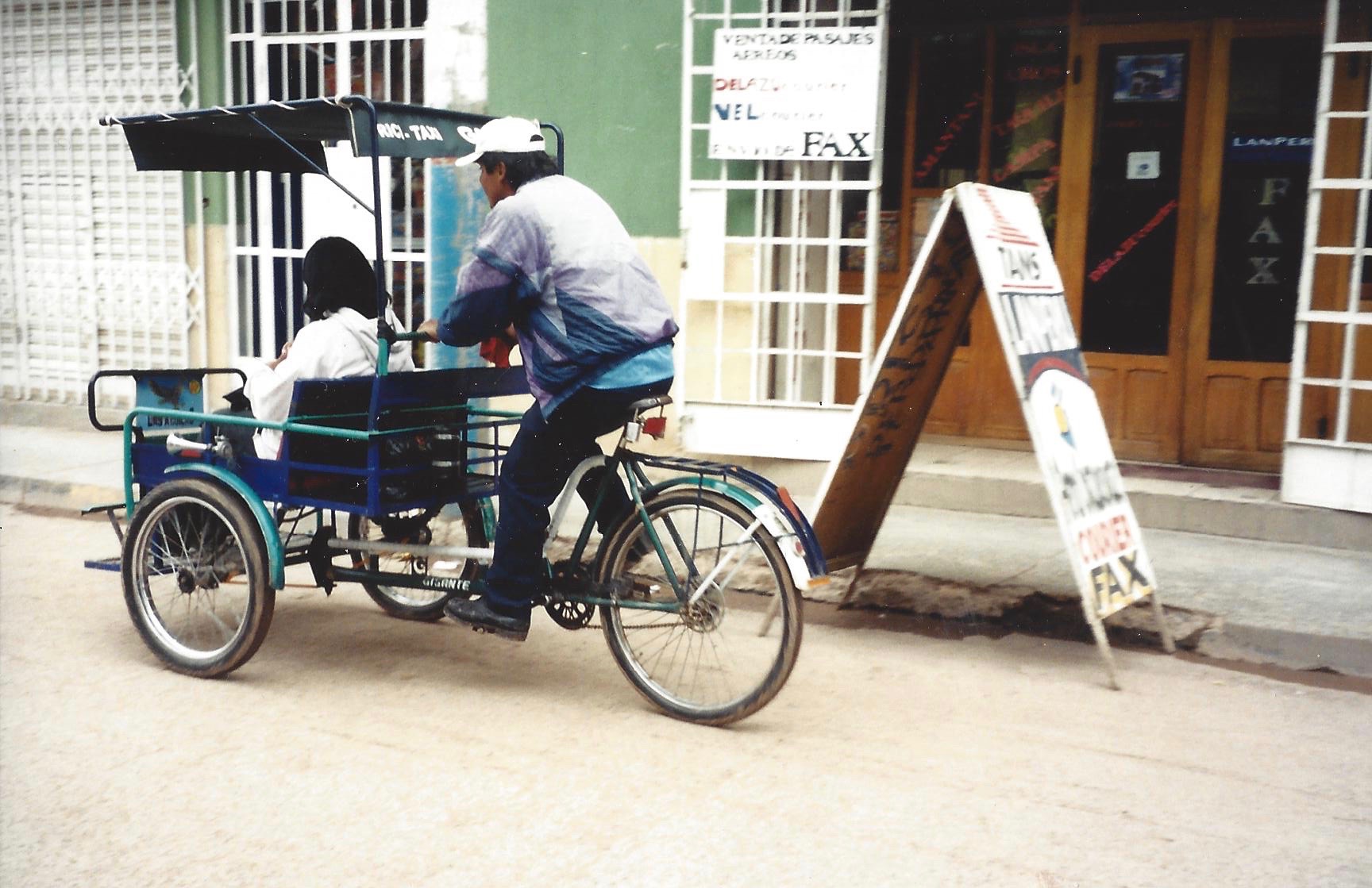
Street scene in Puno

Back to the Top:

Sacred Valley, Peru 2002

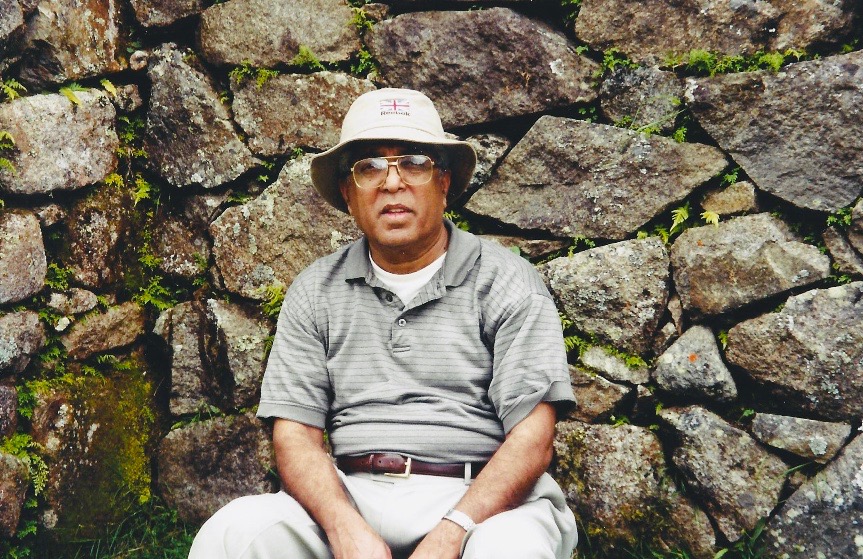
Jaffer in Ollantaytambo sitting infront of the Ollantaytambo ruins.

Our next Jaunt was Ollantaytambo in Sacred Valley. Sacred valley is a lush green area north of Cusco and was the heart of Inca Empire along with Cusco and Machu Picchu. Although there are many villages that populate the region, we had time to visit  Ollantaytambo, and Chinchero. The area has become a very popular tourist destination, because it is on a lot lower altitude than Cusco so it gives tourist the needed time to acclimatize to the high altitude of Cusco. Ollantaytambo has amazing archaeological sites and  has Inca ruins with similar stone work to Sacsayhuaman with carefully cut stones which fit perfectly without mortar. It is a great tourist attraction.  It was a great pleasure to be in the time surrounded by mighty ruins and yet so tranquil. I wanted to do some shopping from the hawkers and vendor who were out there selling their crafts. My Spanish came in handy because I was able to communicate with a lady who was selling caps, and got a cap I really liked.It was difficult to communicate with the_, but would have been  impossible to understand Quechua, a language Peruvians and Bolivians speak- if I didn’t speak Spanish.

Girl selling crafts, Ollantytambo

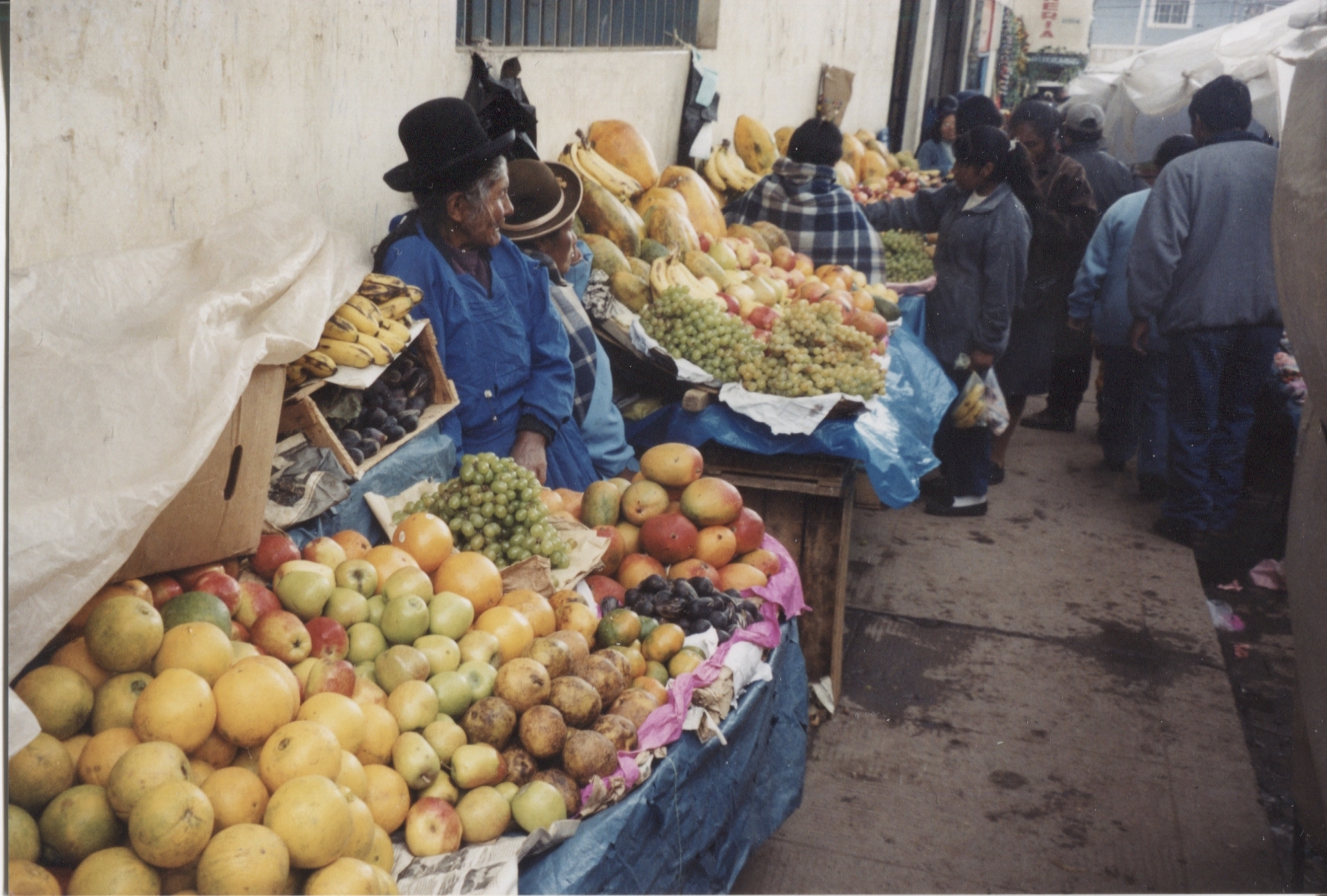
From Ollantaytambo our tour went to Chinchero and our visit was timely. It was a day for both craft market and vegetable market. It was a great time to experience the authenticity of the local market. We were there in off season which meant it was not crowded with tourist. All the vendors from surrounding  villages were there to sell and barter their crafts. And the vegetable market displayed an incredible array of fruits and vegetables.

Vegetable Market, Peru

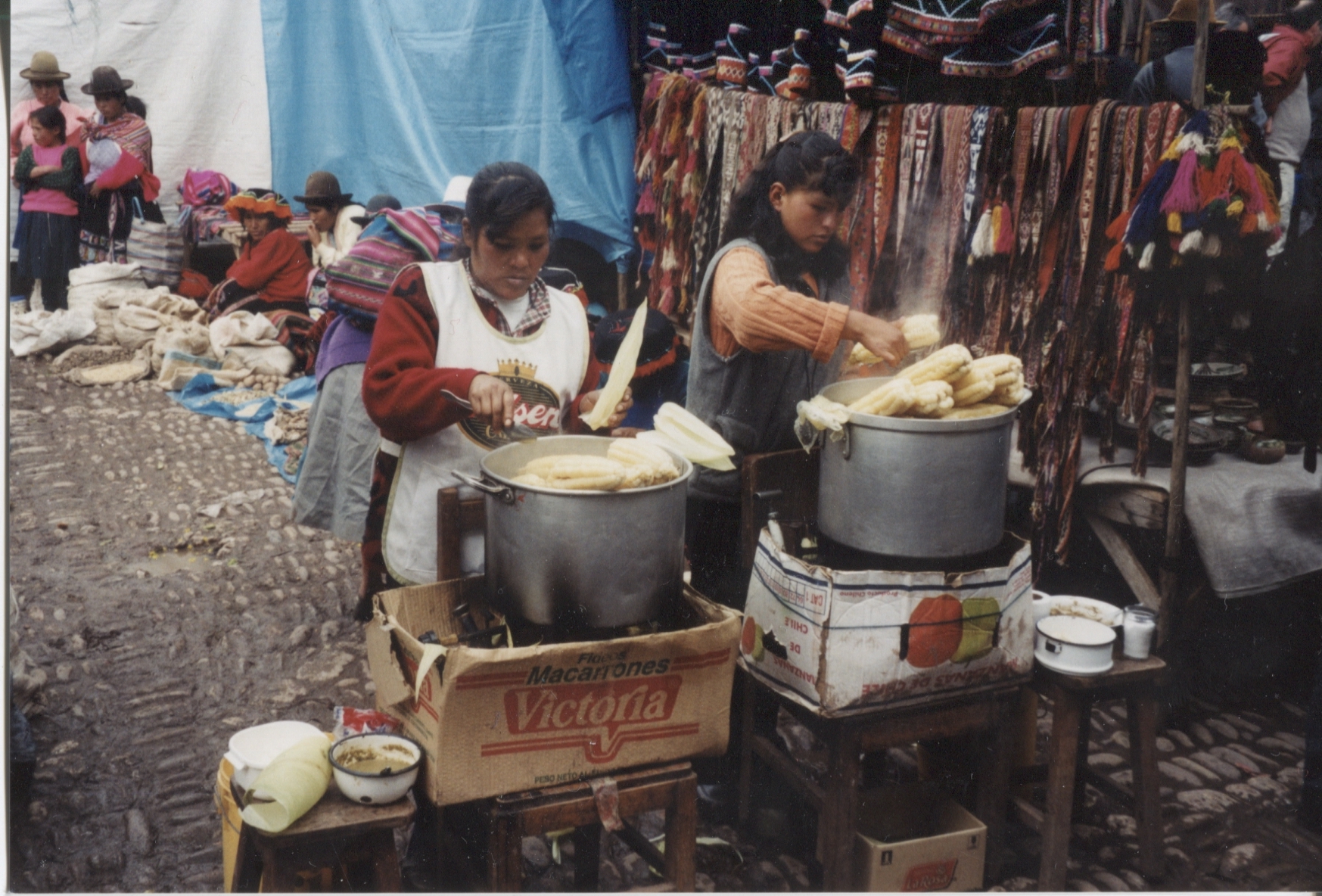
There was an area where variety of  food was being cooked.  we bought corn on the cob which they were boiling in huge pots. They gave it to us sprinkled with salt and pepper making a deliciously fresh snack. We also got a plate of Peruvian rice topped with vegetable stew which we shared. Rice recipe is very simple and I make it all the time.

Cooking Corn, Chinchero Market

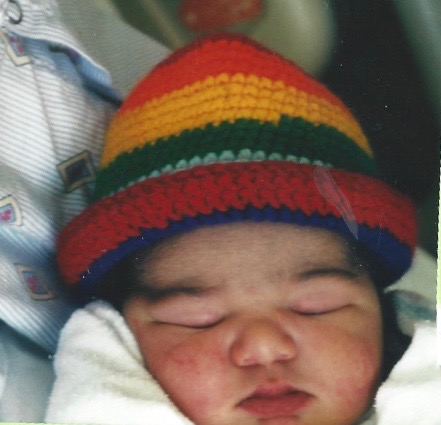
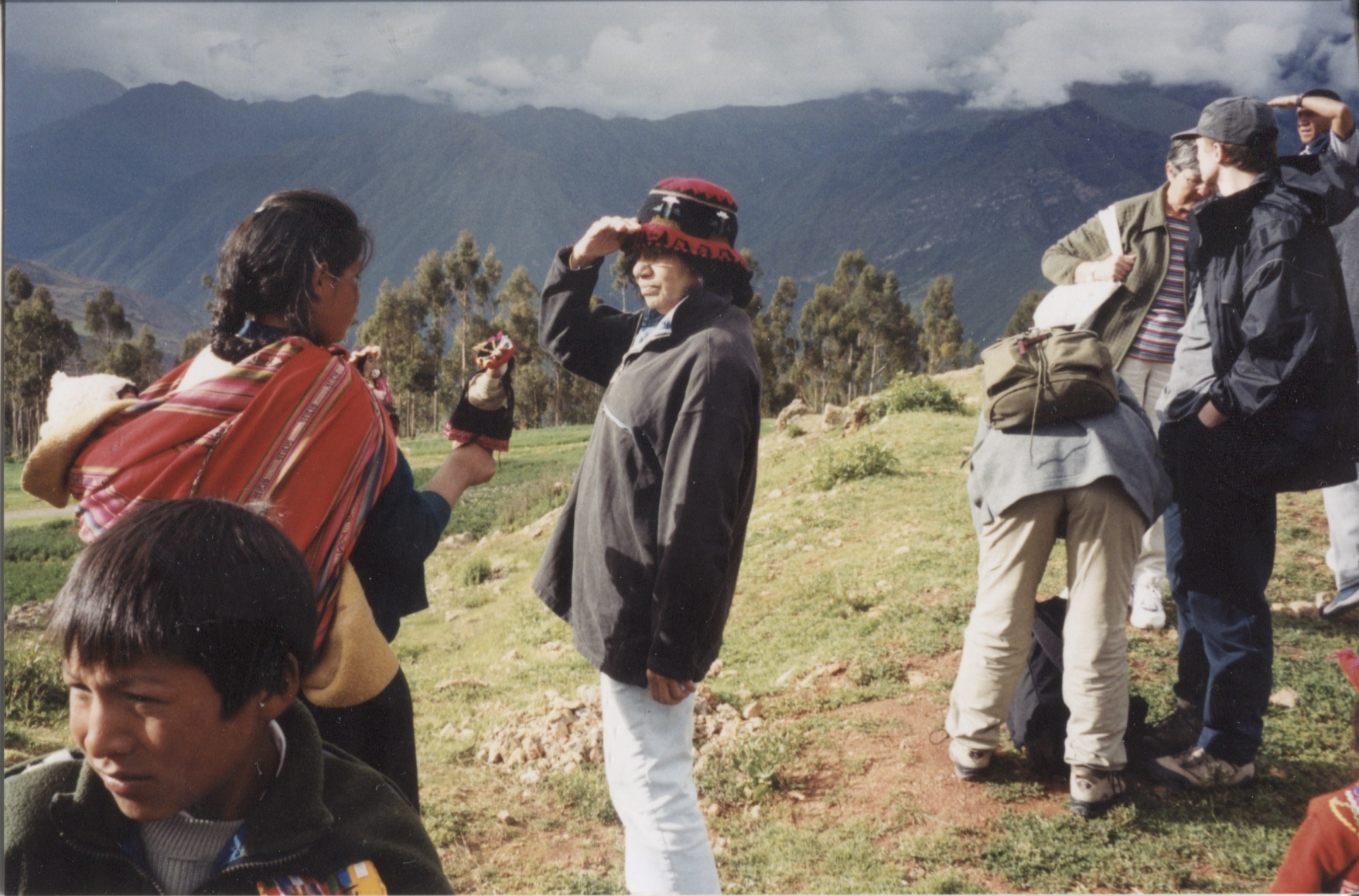
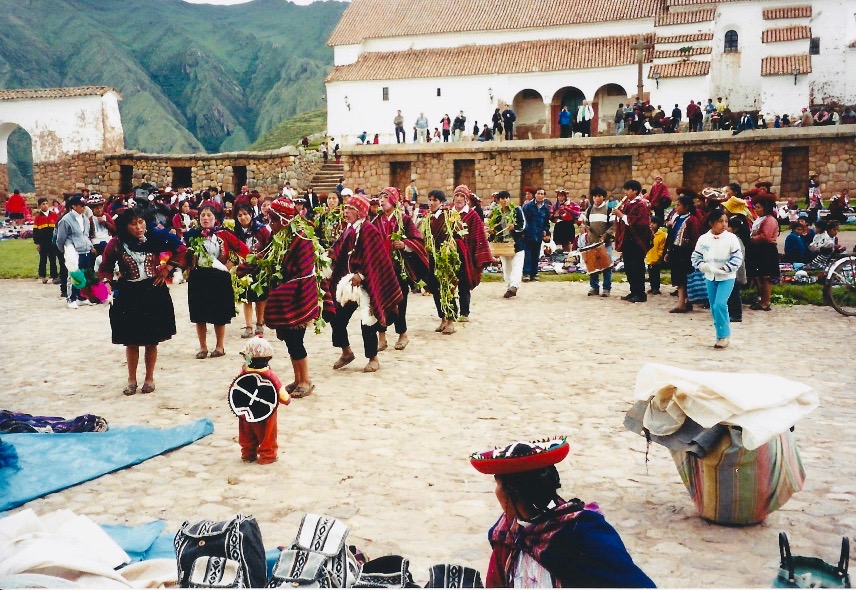
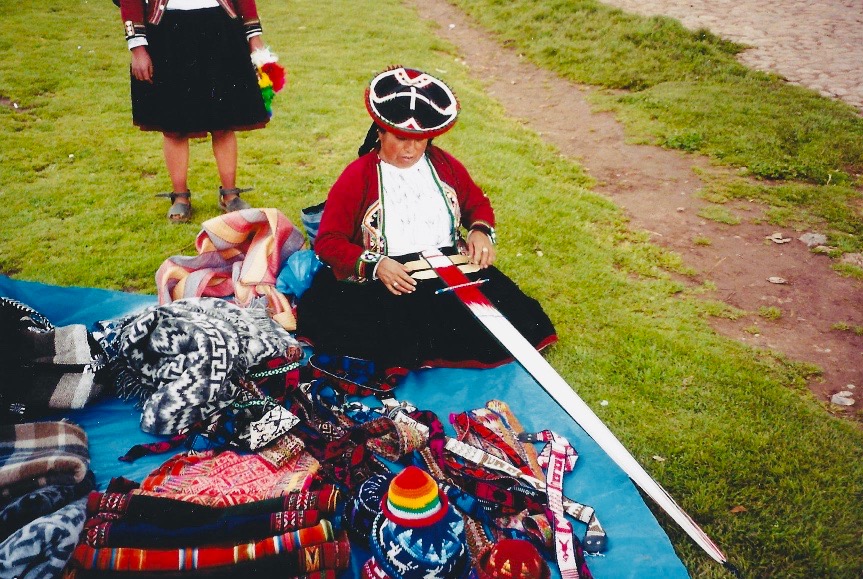
A huge bustling craft market was very impressive against the backdrop of a beautiful adobe church. Since weaving is one of the most popular craft in Peru, this vibrant market provided  enormous variety of  gorgeous locally made items such as shawls, Blanket, sweater, and caps for all ages sold by traditionally dressed villagers and was a perfect place for me. I love to knit, crochet, embroider, and sew which I have done all my life; therefore, I feel emotionally connected with the people who also love doing that. I could have bought a suitcase full of stuff but for the constraint of lugging everything thousands of miles across the oceans. I only purchase was a colorful cap  from this Chinchero craft market for my  granddaughter,Sania, who was due in a few months. you can see the very cap I bought from the woman in the picture below who is demonstrating her weaving.

Chinchero Craft Market with Adobe Church in the background.

Sania, Granddaughter

There were groups of traditionally dressed performer, vendors, and buyer who came from  neighboring  villages, some on business and others for the day out with family for fun.

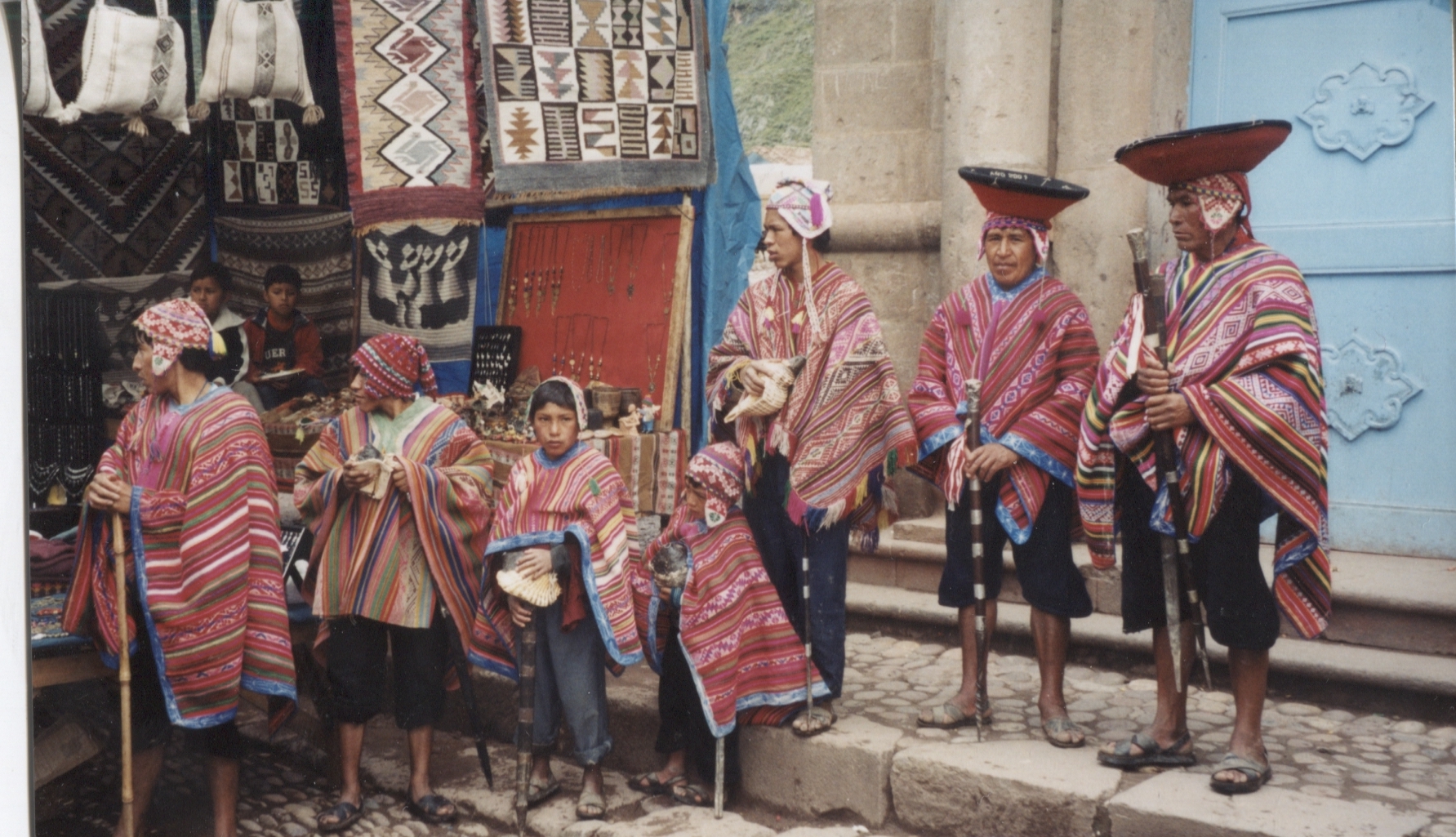
Traditional Dress, Chinchero

Traditional garb was not done just for the tourist, but dressing traditionally, apparently,  is the norm.

weaving is a most popular craft in Chinchero, and Peru in general. In Chinchero craft market women took pride not only in demonstrating their weaving skill but they encouraged visitors to try their hand at weaving too. It was great trip to the area where we got educated about the  unique Peruvian culture while watching them go about their life as they, probably, normally do. I feel very lucky, and thank God for the chance to experience this stupendous feat. From here back to Cusco to take a train to Puno and on to the Floating Islands.

The Woman from whom I bought Sania’s cap (seen in the photo) is demonstrating her Weaving skill, Chinchero

Peru, South America, 2002

We were lucky enough to visit Peru, the world’s most sought after vacation spot, in February 2002. Although we were there only for ten days, we have seen some amazing sights plus we didn’t feel rushed. Had a great time all the while we were there. Even though we first came to Cusco which is at 11,152 ft. above sea-level, the same day as we arrived in Lima, altitude sickness didn’t not hit us until much later.

My husband is a great trip planner, his meticulously planned trip meant he identified all must-sees in the planning process. Our itinerary included Lima, Cusco, Sacred Valley, Machu Picchu, Puno, Lake Titicaca, Ariquippa, and Colca Canyaon. I am sure there is a life time of travel and things to do in Peru, but in ten days we managed a good chunk of the most exciting and mind blowing cultural and culinary experiences.

Since he organized a guided tour, we were met by Maria, our guide, when we arrived in Lima. Maria received us at the

With Maria, our guide in Lima, Peru

airport and took us to downtown area for breakfast, after that we hit the highlights of the city and then on to the airport to fly to Cusco. We arrived in Cusco late that afternoon to a hotel where we were booked, and we were ready for our history and culture fix, and to the scenery like no other. The hotel in Cusco was very comfortable. And after a few hours rest we went down for dinner to find that along the dinning area wall were long tables set with teapots with hot water, some fresh tea leaves, and cups for self help. We were told that the leaves were cocoa and drinking cocoa tea  alleviates severe altitude sickness. Cocoa tea is everywhere in Peru. Yes, it comes from the same plants from where cocaine comes but it is nowhere close to the potency of that illegal drug. It is believed to be safe to drink except that overdoing it could cause palpitations.

After a good night’s rest we got up for our day of sightseeing in Cusco. After breakfast our guided tour began and  the  first stop was Sacsayhuaman which is a citadel in the vicinity of Cusco. our guide told us that it is referred to as ‘sexy woman’ as a technique to remember the name.  It is the most incredible ancient ruins in Peru which, apparently, even predates the Incas. The  most breathtaking part is  how the stones are cut carefully to fit tightly even without the  use of mortar at an altitude of 12,142 feet above the sea level. According to the Inca legend the “site was built by gods who descended from the heavens”.

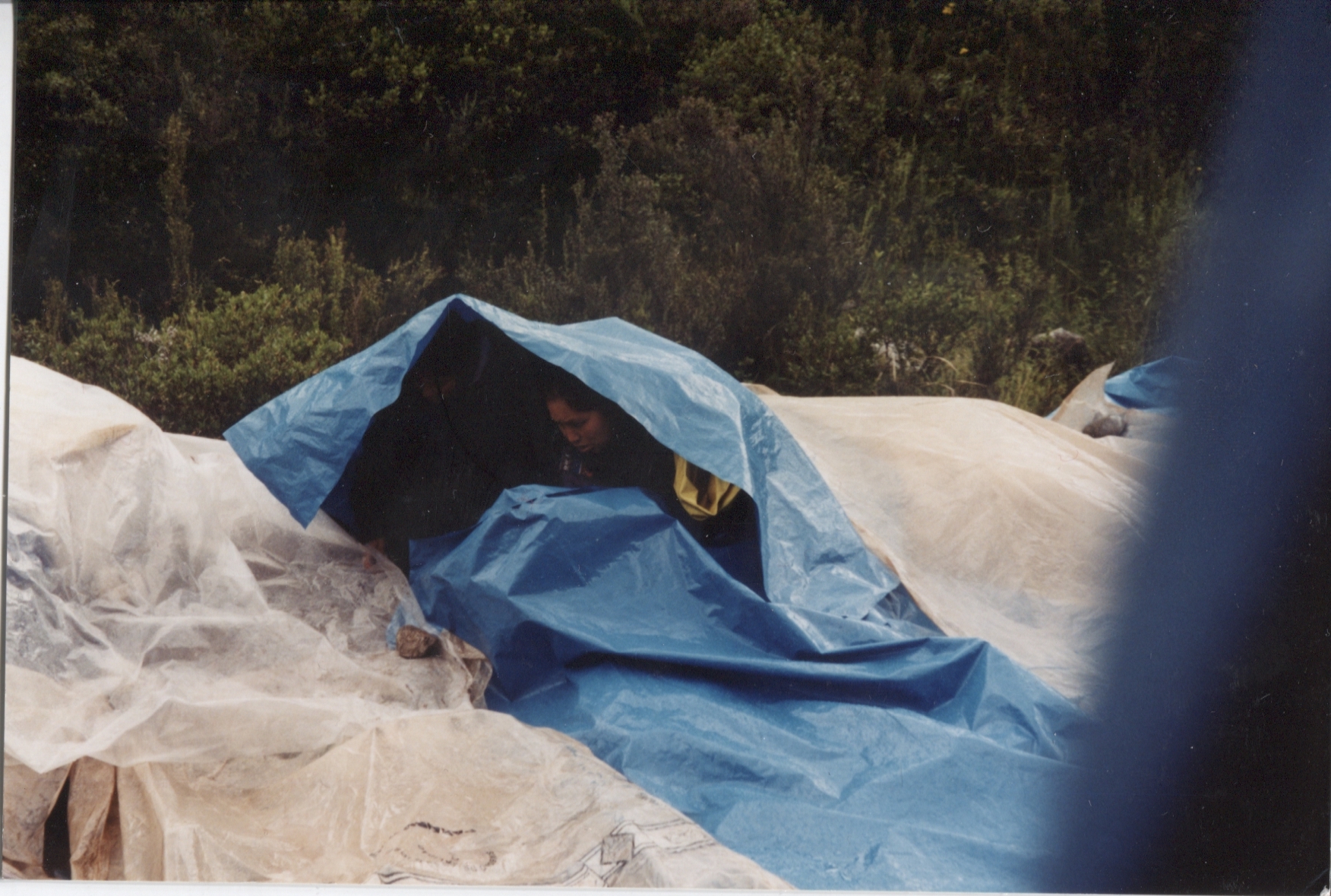
It was a very rainy morning when we arrive at the site. A lot of vendors were lined up along the walls trying to sell their wares. Since it was raining, they covered their articles of sale with thick white plastic sheets while they covered

Vendors infront of Sacsayhuaman Ruins, Cusco

themselves with thick blue plastic sheets for some reason. It was fascinating and at the same time heart rending to see their plight for making a living.

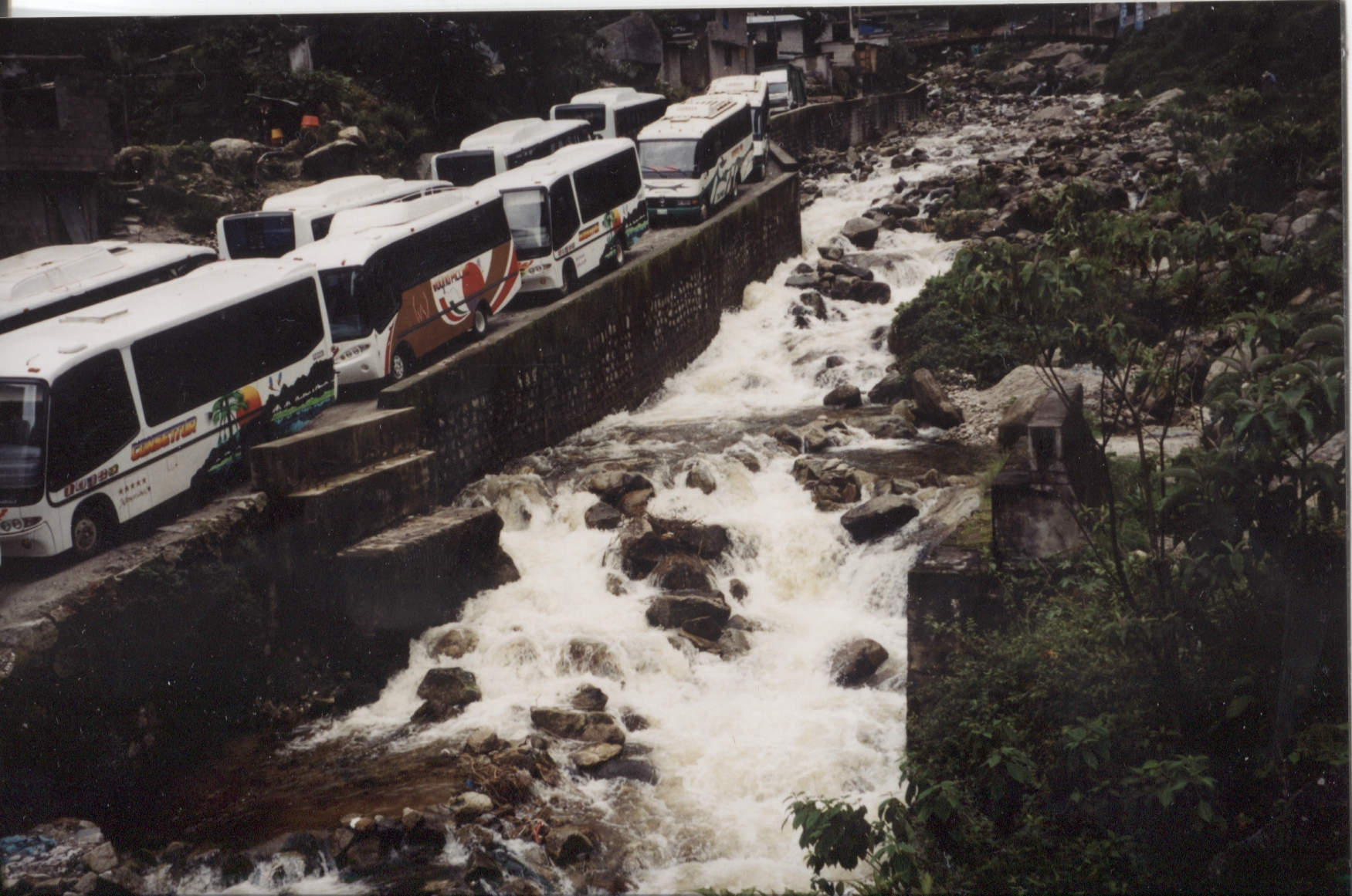
Later we were headed out to Sacred Valley and Machu Picchu by train which offered amazing views of snowy mountains along the route.  The train took us to Agua calientes where we had to disembark. We had a bus ride from Agua Calientes to Machu Picchu. The bus went right along Urubamba River in the Sacred Valley with steep Canyon walls on either side. For us the most fascinating part  was the fast gushing river which seemed to be on a rolling  boil and we tried to figure out why, and realized that the river bed was strewn with gigantic rocks creating mountains and valleys making fast flowing  river go up and down with amazing speed making it look like it was boiling.

Train to Machu Pichu

Urubamba River flowing through the valley of Agua Caliente

My immediate thought was that it was the reason the town was called Agua Calient ( boiling water).  But, apparently, the area is known for its  hot springs; therefore, the name.

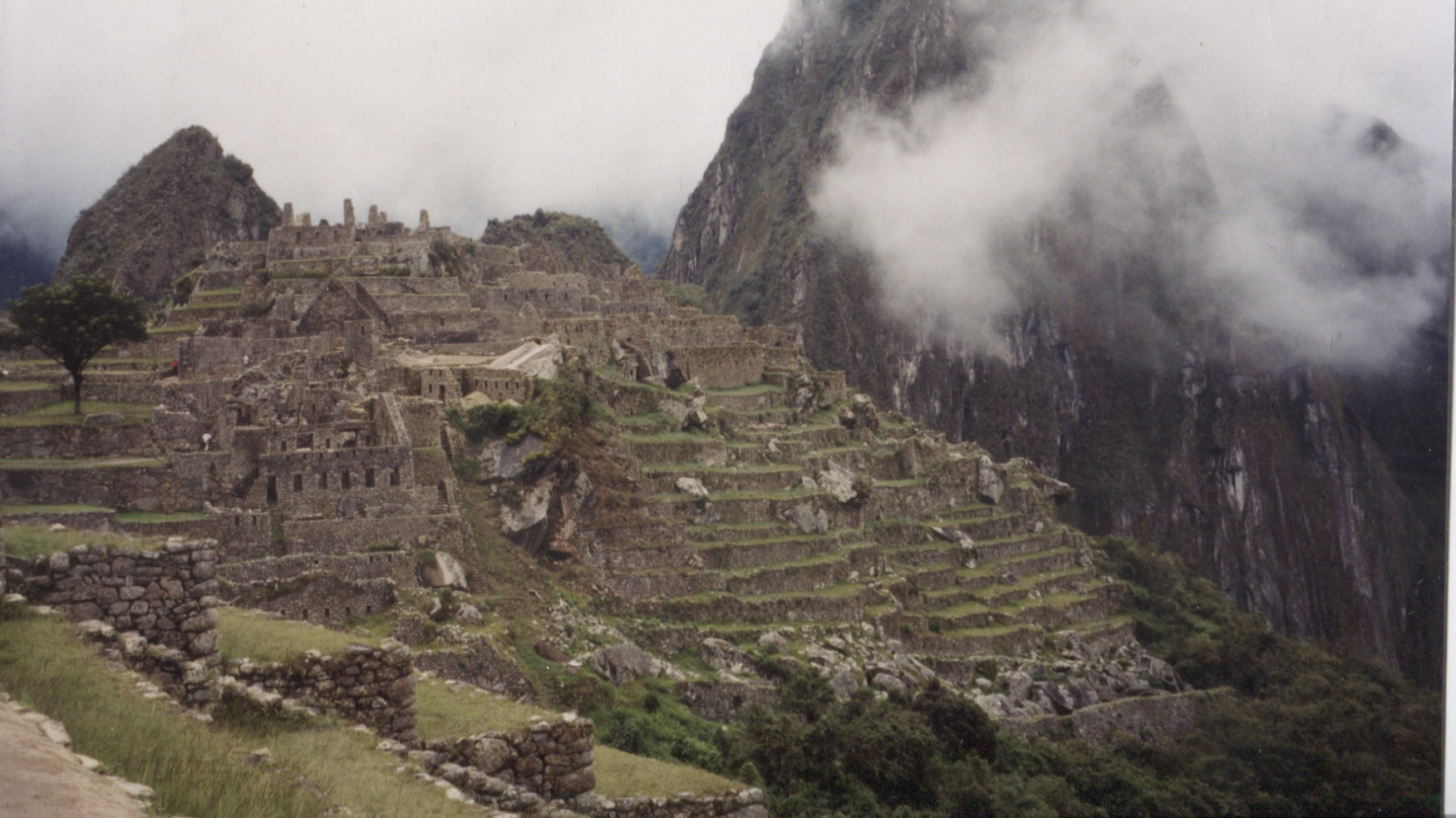
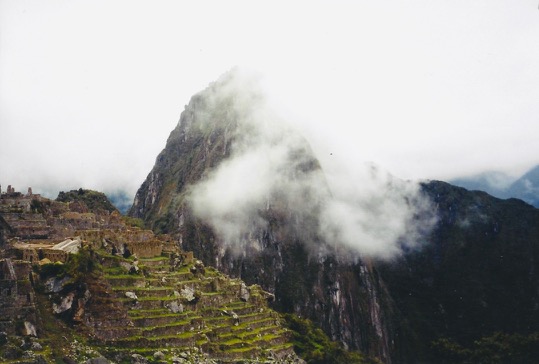
We got to Machu Picchu from Agua Caliente by bus. Machu Picchu sits 7,970 feet above sea level overlooking Urubamba River  below.

Machu Picchu

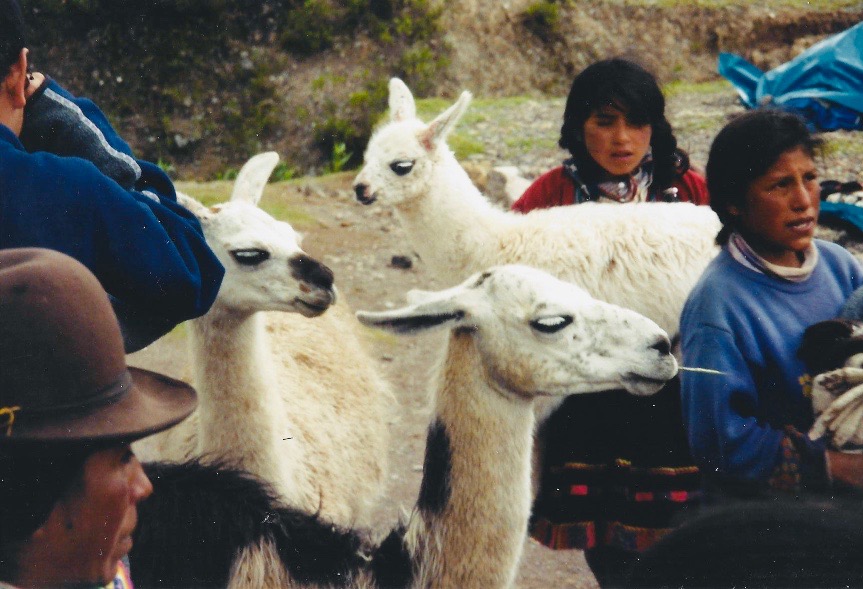
In 1911 a Yale University Professor found the lost city which was covered in vegetations, and  was never visited by Spanish Conquistadors. The building around Machu Picchu are also built with granite stone precisely cut and fit tightly without mortar just as found in Sacsayhuaman ruins in Cusco. It is one of the most famous archaeological sites and probably a dream location on most travel lovers bucket list. It covers 80,000 acres of Terraced fields where the crops like maize and potatoes were grown at one time. The lush green valley with  terraced fields rising from the edge of the site were once used for  growing crops makes you feel like you are in a world which seems so alien that your heart beats with excitement. The place is dotted with local people in their traditional garb tending the llamas and alpacas. Llamas are obviously used for transportation, and their wool for making clothing and blankets, and their meat for food.  The  surrounding two twin mountains, Machu Picchu and Huayna Picchu, are  huge cones with their peaks almost touching the skies  enwrapped in wispy  clouds with their magical beauty enhancing the site to a spiritual significance.

Alpacas, Machu Picchu

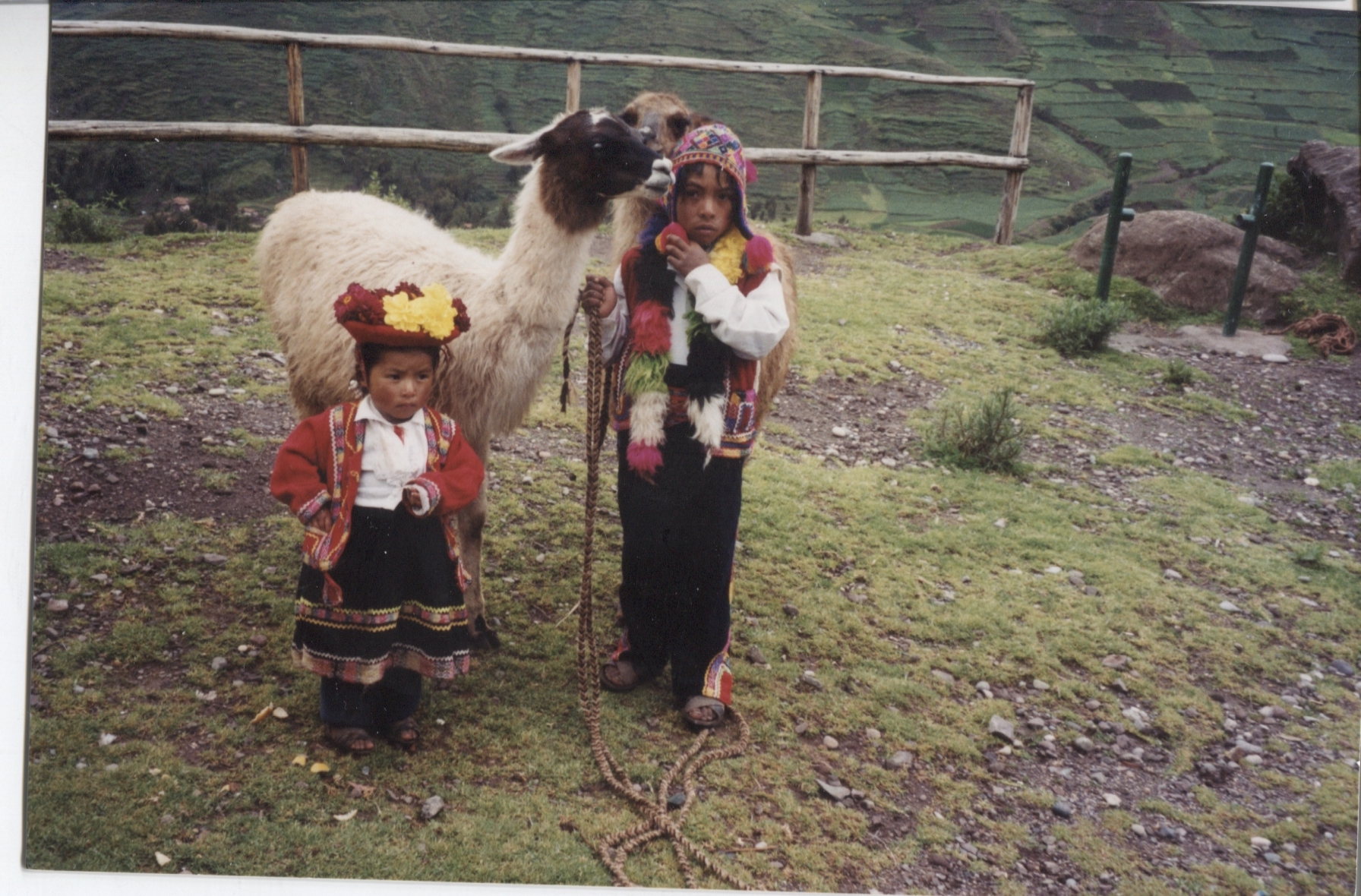
Kids in traditional garb with llama

we were provided the history and fascinating secrets of this archeological site by our tour guide. When the tour came to an end, It was time for lunch and we were all headed to the restaurant in the area. As we entered the restaurant, there was a heavy downpour with no end in sight.  Anyway, it gave us time to  eat our lunch without being rushed to move on to the next place.  But it was interesting that as we finished our lunch, it stopped raining too and we could get back to our normal activity. It was time to head back to Cusco from once in a life time visit to one of the most desired destination in the world. Look for more to come on Peru.


Continue Reading on Peru:

Train to Puno:


Anchorage, Alaska

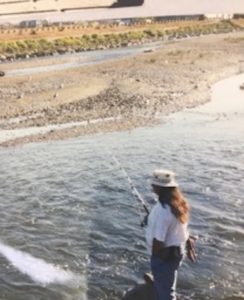
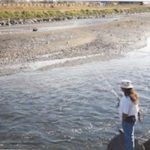
Fishing at midnight in Anchorage

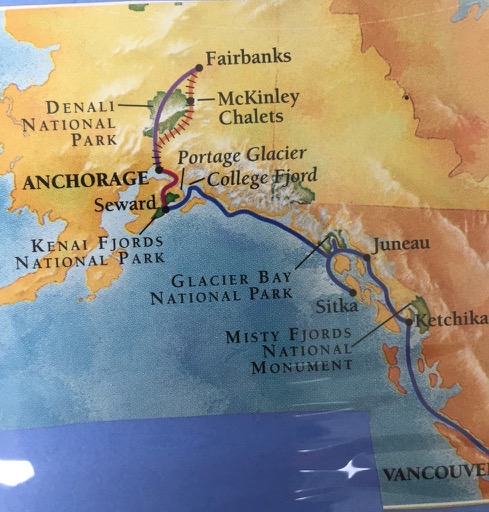
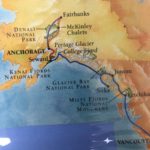
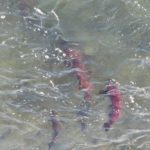
We flew into Fairbanks, Alaska, and from there, we went to Denali and Anchorage. Arriving at the hotel in the evening, we felt exhaustedA and went to bed. After sleeping for several hours, I woke up and looked out of the window and was shocked to see that at midnight it was broad daylight because, in Anchorage, a day lasts 19.5 hours. A woman was fishing in Ship Creek behind the hotel. Apparently, from spring to fall, 24 million gallons of water come through Ship Creek. It is a pristine Creek in which salmon spawn. We got a terrific opportunity to watch salmon run while fishermen attempted to hook them.

Five species of salmon inhabit Alaska waters. Chinook (also known as King); coho (silver); humpback (pink);

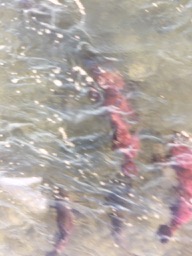
Salmon on run

sockeye (red); and chum (dog) are the varieties that are commercially harvested. Salmon is hatched in freshwater rivers. They live one to two years in freshwater before going to the ocean. They live in the ocean for 3-5 years and return to their natal river for spawning. They change color as they grow older. After spawning, they die.

To see Alaska Photos click here.

Alaska Cruise Photos

Yosemite National Park

Yosemite National Park

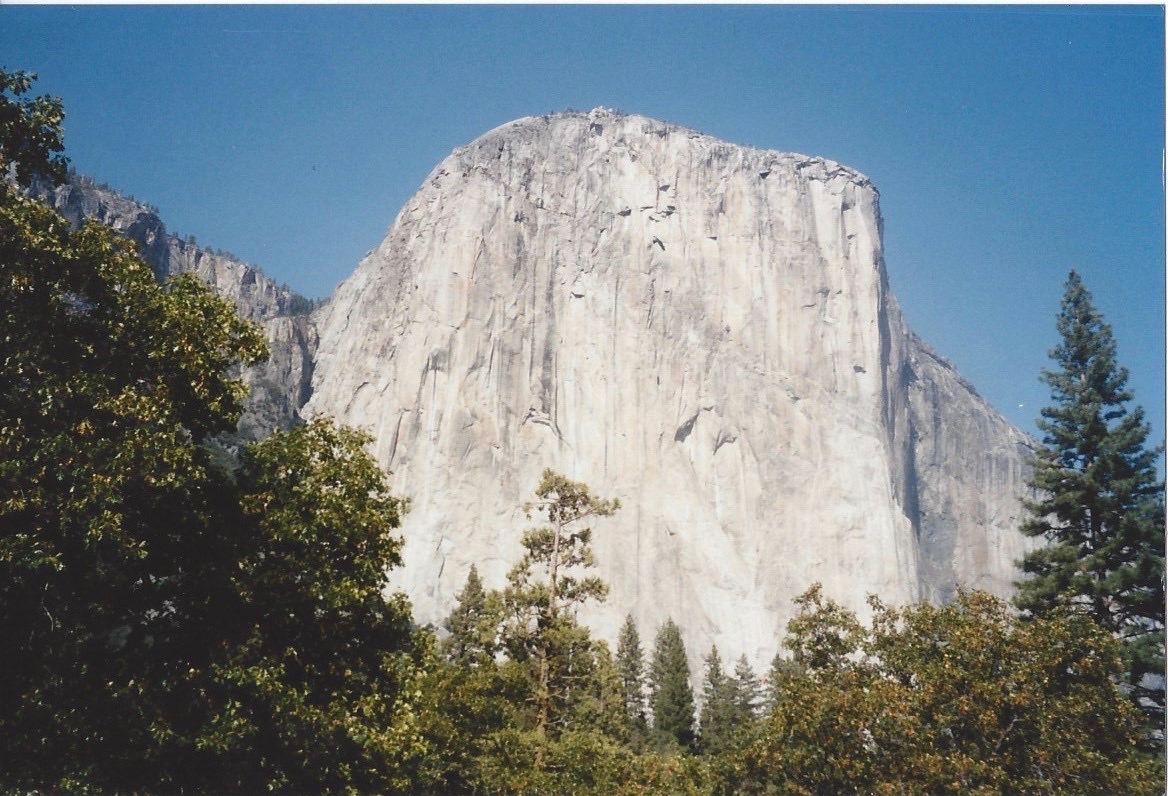
El Capitan, Yosemite

Yosemite National park had been on our list of places to visit. We heard so much about its breathtaking beauty that we could not wait to be there.

We went to Yosemite by way of Lake Tahoe which is a major casino place. After a couple of days in Lake Tahoe, we drove to Yosemite on HWY 120 or Tioga road through Lee veining, a small town where we stopped to eat chili and hamburger for lunch.

Sierra mountain range surrounds Yosemite Valley and protect the whole village. Power of nature is omnipresent in layers, stacks, and folds of these mountains. These daunting, loftiest granite domes become more awe inspiring as you travel higher and higher on the roads cut through these unrelenting range of huge granite cliffs of all shapes and sizes.

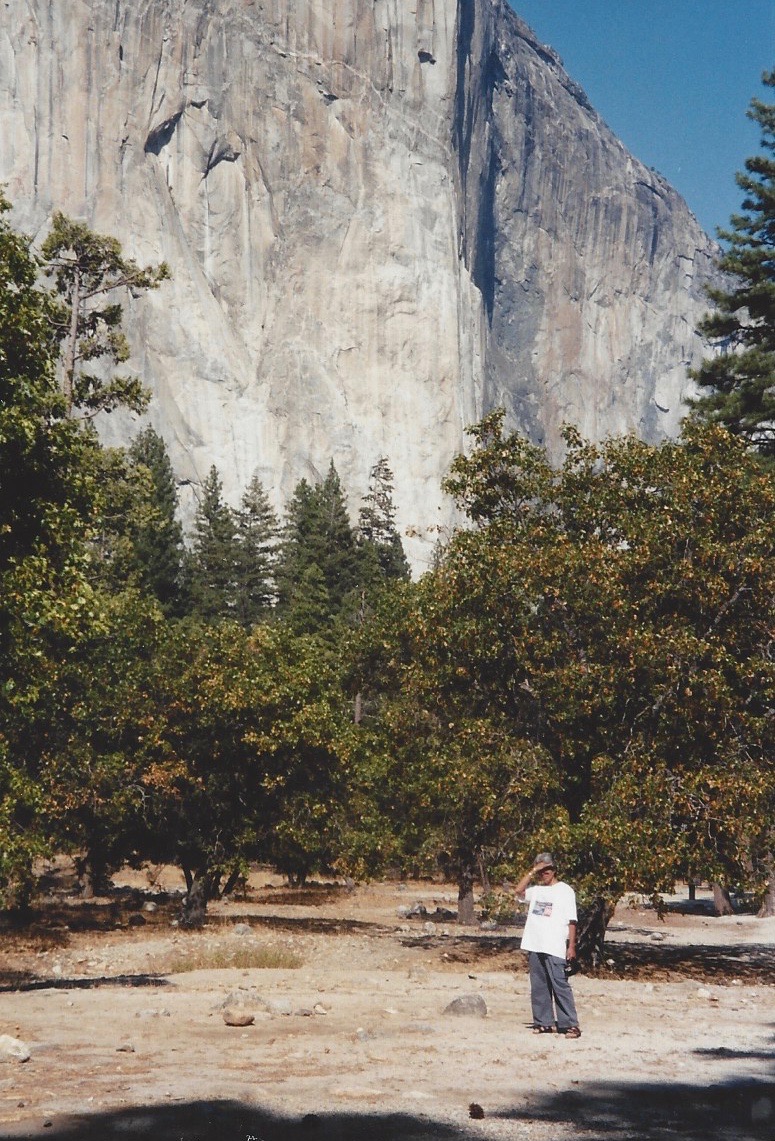
There is no vegetation on these cliffs which are very popular with the climbers. We spotted 3 or 4 climbers during their climb on one of the mountains making us realize how insignificant man is in the backdrop of sheer drop of these rocks on which they were clinging like ants.

Me against the backdrop of El Capitan

And yet hundreds of cars travelling on the roads cut through by immense man power was an evidence that man has not only challenged but conquered nature at least to a large extent. Sierra mountain roads go up to the elevation of 9900 feet. While climbing the mountain is a challenge, coming down is a religious experience because one cannot but think only God could have made it possible for man to achieve this incredible feat.

Valley floor has as much variety of vegetation as there is beautiful scenery around, while pines compete with the mountains for their share of sunshine by growing taller and taller. Even the bushes, and grass around them seemed luscious and green. The greenery is a source of oxygen for all the living things around, but the strange thing is that the evidence of death is very real in the form of dead tree trunks scattered all over the ground. The dry hard wooden trunks with their brittle bark which covered and protected the living trees was now tired and broken. Thousands of branches, twigs, cones and other dry material was lying on the forest ground displaying nature’s powerful creativity.  Huge trunks lying on the ground were as awesome as the ones, which were standing magnificently tall.

Death and destruction does not, somehow, spell sadness, and mortality, but a hope for new life (reincarnation) by becoming part of the land; by becoming a resource for innumerable human endeavors, such as construction, textile, medication and more; and by becoming a source of food for the coming generation of birds, insects, wild life and even humans. To add to that, their presence on the ground lends itself to reducing the impact of heavy rains and preventing soil erosion, while eventually making way for future life by providing space.

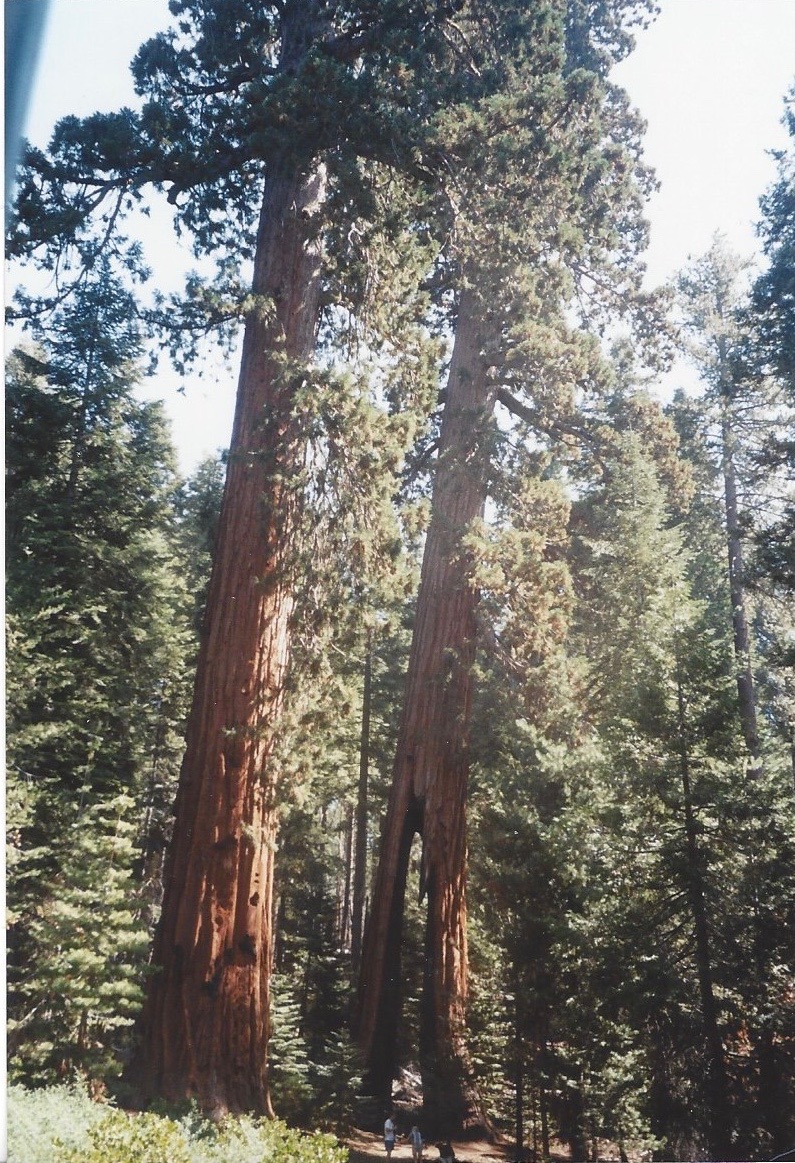
Gaint Sequoias, Tunnel created by fire

Our sight-seeing tour included Mariposa Grove of giant Sequoias which is located 36 miles south of Yosemite Valley. We went there via Wawona road (HWY 41). It offers fantastic sightings of huge redwood Sequoias. Their incredible girth and height is not the only thing to be in awe of, but their life span, strength, and majestic presence blows you away. Some of those trees have been in existence for thousands of years. They are so strong that some even after being hit by lightning, and after being in serious fires are still strong and sturdy. One of the fantastic phenomenon is that they have been used as stables, and shelters etc. Some trees have burnt right through and have a hole through the center. If you go in the opening, you can see the sky through the tunnel created by the fire. And yet the tree is still alive and standing for years and years. California tunnel tree in the Mariposa Grove is a tunnel through the bottom part of the tree and is one of the tourist’s delights and a popular destination within the park.

Also virtually every visitor who comes to Yosemite National Park spends at least some time at Glacier Point, drawn to the breathtaking views. On this four-hour tour, you’ll go from Yosemite Valley to Glacier Point—a 3,200-foot elevation gain.  Be sure to bring your camera to capture awe-inspiring photos of Yosemite’s famous waterfalls and the distant High Sierra mountains.

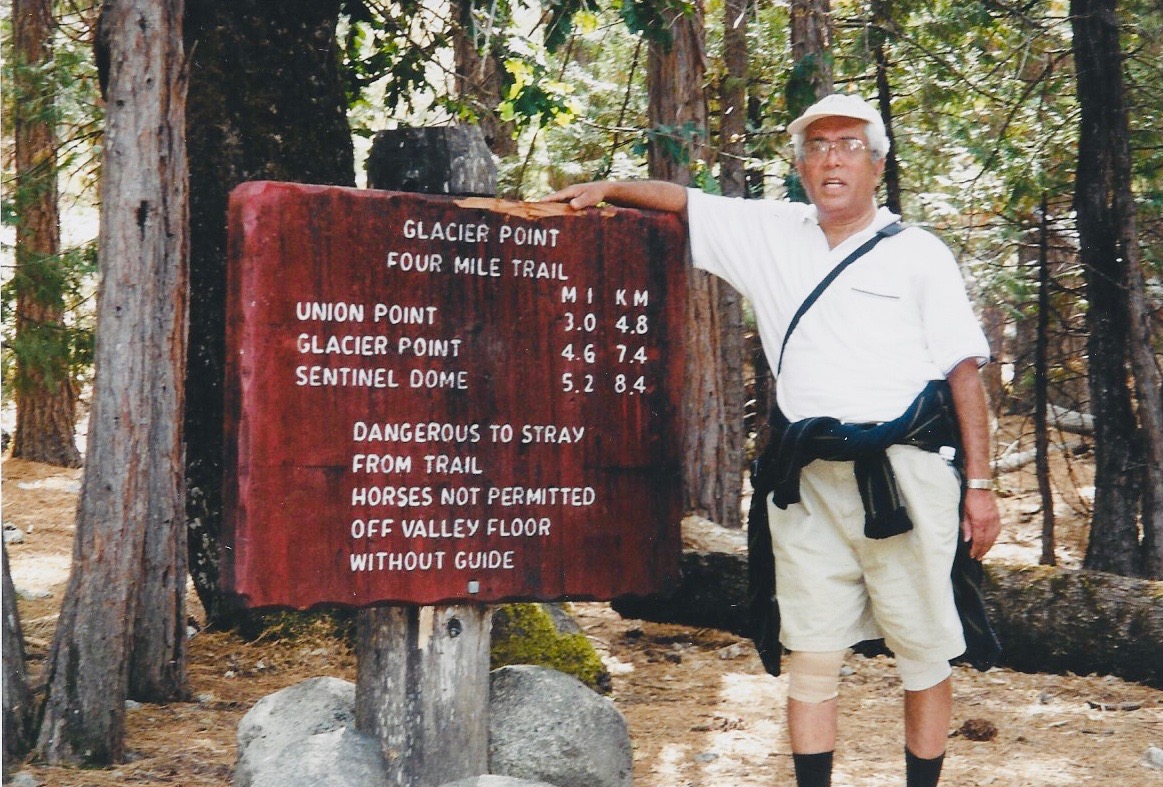
While there, we went on another adventure. We took a bus with a group of people from Yosemite valley to Glacier Point.. We spend time enjoying the breathtaking views and exploring the area. But instead of taking the bus to come down we decided to climb down. No one discouraged us or even hinted that it may not be a great idea. And we did not realize the audacity (or even stupidity) of this move. We neither carried water nor had any company. As we continued to climb down, the path was narrowing and in places was steep and slippery. We couldn’t turn back and had no choice but to carry on the descent carefully. We were neither afraid nor tired so we kept going. Throughout this adventure we saw two or three couples who were either climbing up or down which gave our move a legitimacy.

Glacier Point, 4 mile trail

At one point we got very thirsty but saw really clean spring water running down the mountain side from which we drank. By the time we got to the valley, it was almost 7 pm. It took us six hours to come down that mountain. Jaffer went to the hotel and went to bed straight away. But I showered, and went down to the valley to get some dinner in a nice restaurant. I had a really good meal, came back and went to bed.

Looking back now, it seems really amazing that we were able to do something which sounds almost impossible or even suicidal. In any case, it was an adventure well worth recording for posterity, at least, with a hope that our children and grandchildren will someday read and learn about our escapades.